
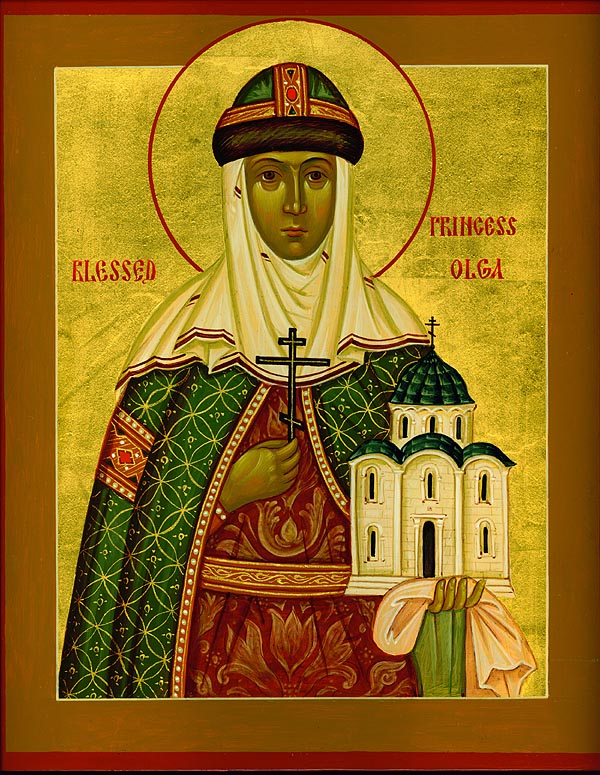
Commemorated Jul 11 (New Calendar), Jul 24 (Old Calendar)
Saint Olga, a pivotal figure in Orthodox Christianity, transformed Kievan Rus through her faith and leadership. Born around 890 in Pskov, she married Prince Igor and later ruled as regent for her son, Svyatoslav. Her journey from pagan princess to Christian saint shaped Russian history.
Early Life of Saint Olga
Olga, originally named Helga, hailed from Pskov, possibly from the Izborsk princely line. Her name, meaning “holy,” reflected her wisdom. She married Igor, Prince of Kiev, around 903. However, tragedy struck when Igor was murdered by the Drevlyani in 945, leaving Olga to rule as regent for her young son.
Saint Olga’s Revenge
After Igor’s death, Olga faced rebellion. The Drevlyani, responsible for his murder, sought to control her. Instead, she outwitted them, using cunning strategies to defeat them. For example, she buried their emissaries alive and burned their city, showcasing her strength. Consequently, this victory unified Kievan Rus under her rule.
Conversion to Christianity
In 954, Olga traveled to Constantinople, where she embraced Christianity. Baptized as Helen by Patriarch Theophylactus, Emperor Constantine became her godfather. This marked a turning point. She returned to Kiev, eager to spread her new faith, building churches like Saint Sophia in Kiev by 960.
Saint Olga’s Legacy
Olga’s efforts laid the groundwork for Russia’s Christianization. Although her son Svyatoslav resisted Christianity, her grandson Vladimir later baptized Rus in 988. She built churches, such as the Holy Trinity in Pskov, and governed wisely, creating administrative centers called “pogosti.” These strengthened trade and unity.
Final Years and Death
By 969, Olga’s health declined. Facing pagan opposition, she practiced her faith quietly, with a secret priest by her side. On July 11, 969, Saint Olga died in Kiev. She was buried as a Christian, and her relics, later deemed incorrupt, were enshrined in the Desyatin Church by 1007.
Impact of Saint Olga
Saint Olga’s faith inspired miracles, with her relics drawing believers. Her wisdom and courage earned her the title “Equal-to-the-Apostles.” Therefore, her influence endures in Orthodox Christianity, as she paved the way for Russia’s spiritual transformation.