
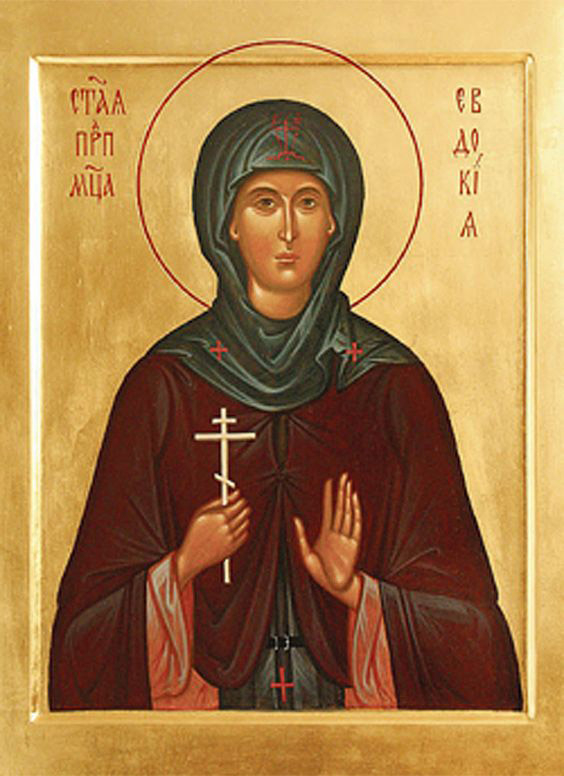
Commemorated Aug 4 (New Calendar) Aug 17 (Old Calendar)
Saint Eudokia was a brave Christian woman from Anatolia, living in the 4th century. She’s honored as a martyr in Orthodox Christianity for her unshakable faith during persecution. Her story is one of courage and devotion.
Early Life of Saint Eudokia
Born in Anatolia (modern-day Turkey) in the early 300s, Saint Eudokia grew up in a time when Christians faced danger for their beliefs. Therefore, her faith was a bold choice. She studied the Bible deeply, which gave her wisdom and strength. However, details about her childhood or family are scarce, as her story shines brightest during her trials.
Captivity Under Persian Rule
Around 362 AD, during the reign of Persian emperor Shapur II, Saint Eudokia was captured along with 9,000 other Christians. Despite being a prisoner, she stayed strong. She used her knowledge of Scripture to teach and comfort her fellow captives. Moreover, she preached to Persian women, converting many to Christianity. This bravery set her apart, but it also drew the attention of the authorities.
Saint Eudokia’s Persecution
Because of her preaching, the Persian authorities targeted Saint Eudokia. They subjected her to harsh tortures, including beatings and imprisonment, to force her to abandon her faith. Yet, she remained steadfast, refusing to deny Jesus. Her courage inspired others, even as she suffered.
Martyrdom and Legacy (Died c. 362 AD)
After enduring months of torture, Saint Eudokia was beheaded around 362 AD. Her death marked her as a martyr, celebrated in the Orthodox Church on August 4. However, some sources confuse her with Eudokia of Heliopolis (commemorated March 1) or Eudokia of Ryazan, a 19th-century monastic. Despite these mix-ups, Saint Eudokia of Persia’s legacy endures as a symbol of faith under pressure.
Why She Inspires
Saint Eudokia’s story shows how faith can shine in the darkest moments. She faced captivity and death but kept sharing God’s love. For young Christians, her life is a call to stay brave and kind, no matter the challenge. Thus, she remains a powerful example.
Eudokia, Evdokia, Evdokea, Kea, Kia