
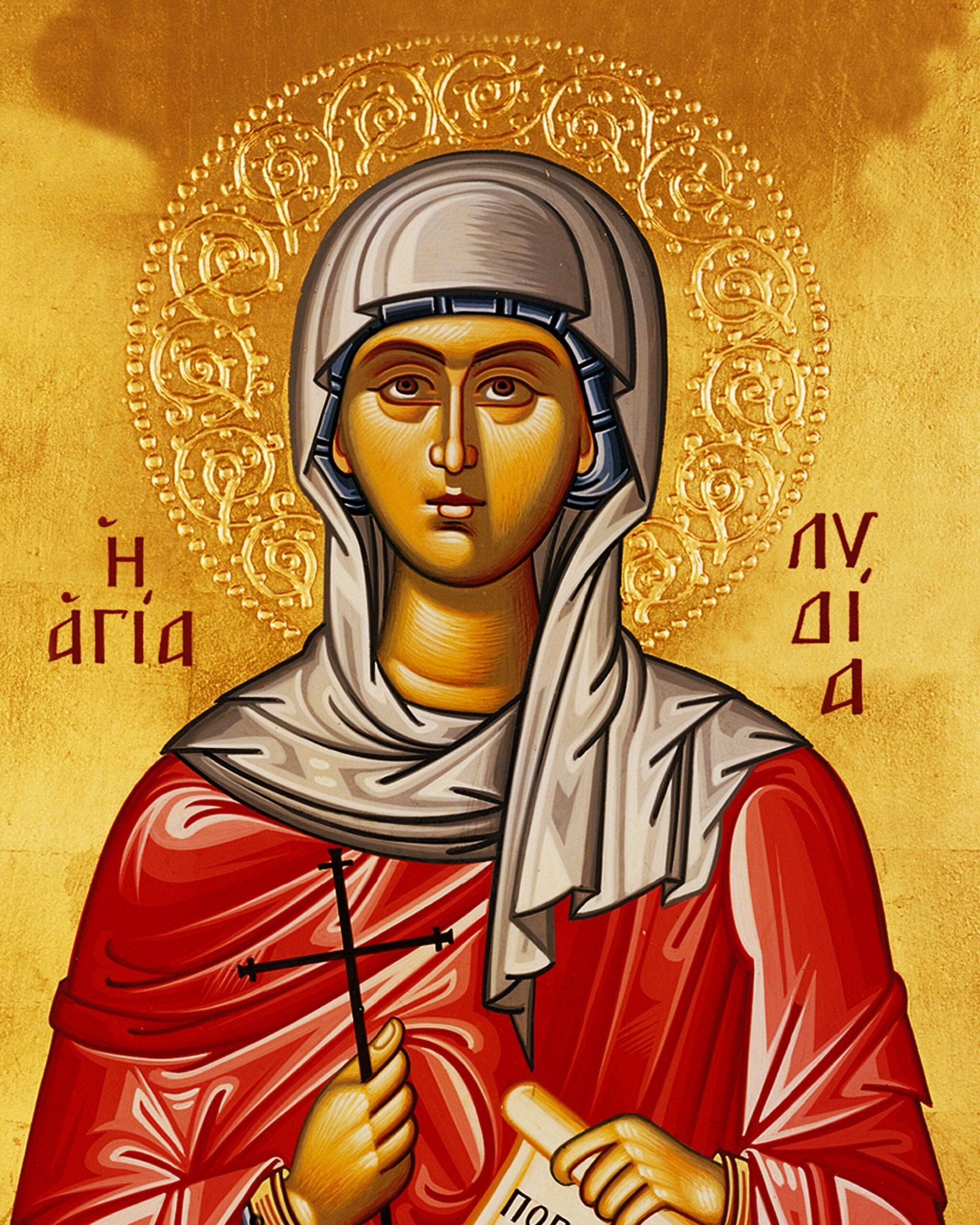
Commemorated March 23 (New Calendar), April 5 (Old Calendar)
Saint Lydia of Illyria, a devoted Christian, lived around 90–121 AD. She was the wife of Philetus, a Roman senator, and mother to their sons, Macedonius and Theoprepius. Her family’s bold faith led to their martyrdom under Emperor Hadrian, as they faced persecution for their belief in Christ.
Saint Lydia’s Life in Rome
Saint Lydia lived in Rome during the early second century, around 90–117 AD. As the wife of Philetus, a high-ranking official at Emperor Hadrian’s court (117–138 AD), she enjoyed a life of status. She was a loving mother, raising her sons, Macedonius and Theoprepius, to follow Christ’s teachings. Therefore, the family was known for their open faith, which drew respect but also danger in a pagan empire.
Persecution Under Hadrian
Around 121 AD, Emperor Hadrian, a fierce opponent of Christians, issued an edict to punish believers. Saint Lydia and her family openly confessed their faith, refusing to worship pagan gods. As a result, Hadrian ordered their arrest. The emperor interrogated them himself, urging them to abandon Christianity. However, Saint Lydia encouraged her husband and sons to stay strong, and they remained steadfast.
Torture in Illyria
Hadrian sent Saint Lydia, Philetus, Macedonius, and Theoprepius to Illyria (modern-day Bosnia and Herzegovina) for torture under Governor Amphilochius. Around 121 AD, they faced brutal trials. They were hung from trees and cut with knives, yet their faith held firm. Consequently, they were thrown into prison, joined by their jailer, Cronides, who also became a Christian.
Miracles and Martyrdom
While in prison, an angel appeared to Saint Lydia and her companions, easing their pain and strengthening their resolve. The next day, Amphilochius ordered them plunged into boiling oil. Miraculously, the oil cooled, and they remained unharmed. Amazed, Amphilochius believed in Christ, entered the oil himself, and was also spared. Hadrian, furious, traveled to Illyria and repeated the torture, but the miracle persisted. Humiliated, he returned to Rome. Thus, Saint Lydia, her family, Cronides, and Amphilochius prayed and peacefully gave their souls to God around 121 AD.
Saint Lydia’s Legacy
The Orthodox Church honors Saint Lydia of Illyria and her family on March 23. Icons of her are cherished, and believers pray to her for family peace and strong faith. Her courage inspires Christians to stand firm in adversity. She remains a symbol of devotion and sacrifice.