Hieromartyr Clement, Pope of Rome
Piece of Humanity / The Saints
Hieromartyr Clement, Pope of Rome
Names & Identity
- Russian First Name
- Климент
- Gender
- Male
Commemorations
Why different dates?Old Calendar: the traditional Julian calendar used for fixed commemorations in some churches. New Calendar: the Gregorian or Revised Julian dating used for fixed commemorations in other churches. In 2026, the traditional Julian calendar is 13 days behind the civil Gregorian calendar. These are this site’s calendar display labels; source traditions may vary. Select a date to explore other commemorations in Calendar Day view.- Old CalendarNovember 25↗
- New CalendarDecember 8↗
Sources & References
Recorded sources
- 🔗
Orthodox Old Believer Church Calendar (2026)Commemorated in the 2026 Old Rite Calendar.
- 🔗
Orthodox Church in America (OCA)Life · OCA commemoration: Hieromartyr Clement, Pope of RomeHymns · OCA commemoration: Troparia and Kontakia — Kliment
- 🔗
Azbuka — Lives of the SaintsAzbyka: Житие и страдание святого священномученика Климента, папы Римского
- 🔗
Pravoslavie.ruСвященномученик Климент, папа РимскийСвященномученик Климент, папа РимскийСвященномученик Климент, папа Римский25 ноября: Священномученика Климента, папы Римского и Петра, архиепископа Александрийского
Sources document the information attributed to them; a listing does not imply that every detail on this page is independently verified.
Life & Witness
Main life · Azbuka — Lives of the Saints · English
Translated by Peace of Humanity using Safari’s built-in translation. This translation may contain errors. To help keep this record accurate, please suggest corrections in the comments below. I’ll review your suggestions carefully and update the translation where needed.
The life and suffering of the Holy Hieromartyr Clement, Pope of Rome
Continue reading (5,922 words · 30 min read)
Memory of November 25
In the glorious and great ancient city of Rome lived a man of noble origin named Faust, who came from the family of ancient Roman kings. He had a wife named Matfidia, also of royal origin and was related to Roman emperors Augustus and Tiberius7706. The husband and wife were zealous pagans and worshiped idols. They first had two twin sons, one of whom was named Faustin and the other Faustinian; then a third son was born, who was named Clement.
Faust had a brother, an evil and immoral man. Seeing the beauty of Matfidia, he was seduced by her and began to seduce her to sin; but she, being very chaste, did not want to violate her loyalty to her husband and desecrate the dignity of her noble family by desecration of the bed; therefore, she tried with all her might to remove the seducer from her. Not wanting to clearly reproach him, she did not tell anyone about it, even her husband, fearing that a bad rumor would spread about them and their house would not be disglorified. But Faust’s brother forced her to submit to his impure desire for a long time with requests and threats. Matfidia, seeing that she was unable to get rid of his persecution if she did not leave meetings with him, decided to do the following.
One morning she addressed her husband with the following speech: “I had a strange dream tonight, my lord: I saw a venerable and old husband, as if one of the gods, who told me: if you and your twin sons do not leave Rome for ten years, you will die a painful and sudden death with them.”
Hearing these words. Faustus was surprised, thought a lot about it and decided to let her and her two sons out of Rome for ten years, reasoning: “It would be better if my beloved wife with children lives in a foreign country than to die a sudden death here.” Having equipped the ship and stocked up on everything necessary for food, he released it with his two sons Faustin and Faustinian to the Greek country, to Athens. With them, he sent many male and female slaves and provided them with great wealth, ordering Matthidia to give her sons to study Greek wisdom in Athens.
So they parted with each other with inexpressible regret and tears. Matfidia with her two sons sailed away in the ship, and Faustus with his youngest son Clement stayed in Rome.
When Matfidia was sailing on the sea, a strong storm broke out at sea and great excitement arose; the ship was carried away by the waves and the wind to an unknown country, at midnight it was smashed, and everyone drowned. Matfidia, carried by stormy waves, was thrown on the stones of one island, near the Asian country7707. And she cried inconsolably about her drowning children, out of bitter sadness she even wanted to throw herself into the sea, but the inhabitants of that country, seeing her naked, screaming and moaning, took pity on her, took her to their city and dressed her.
Some strange women, having come to her, began to comfort her in grief; each of them began to tell her everything that had happened in their lives and regrettable, and with their sympathy somewhat eased her sadness. One of them said at the same time: “My husband was a ship’sman; while he was very young, he drowned in the sea, and I remained a young widow; many wanted to marry me, but I, loving my husband and being unable to forget him even after his death, decided to remain a widow. If you want, stay in my house to live with me, you and I will feed on our labors.”
Matfidia followed her advice, and, having settled in her house, she extracted food for herself by her labors and stayed in this position for twenty-four years.
Her children Faustin and Faustinian after the shipwreck, by the will of God, also remained alive; thrown ashore, they were seen there by sea robbers who took them in their boat, brought them to Caesarea Stratonia7708 and sold them here to a woman named Justina, who raised them instead of the children and gave them to training. Thus, they learned various pagan sciences, but then, having heard the Gospel sermon about Christ, they were baptized and followed the Apostle Peter.
Faustus, their father, living in Rome with Clement and knowing nothing about the disasters that befell his wife and children, sent some slaves to Athens after a year to find out how his wife and children live, and sent many different things with them; but his slaves did not return. In the third year, Faustus, without receiving any news about his wife and children, was very saddened and sent other slaves with everything necessary to Athens. Arriving there, they found no one, and in the fourth year they returned to Faustus and informed him that they could not find their mistress in Athens at all, because no one had even heard of her there, and they could not attack her trail, as they could not find any of their own. Hearing all this, Favst became even more sad and began to cry bitterly. He went around all the seaside cities and piers in the Roman country, asked the shipbuilders about his wife and her children, but learned nothing from anyone. Then, having built a ship and taken with him several slaves and some property, he went to find his girlfriend and kind children, and left his youngest son Clement at home with his faithful slaves to study science. He walked almost the entire universe both on dry land and on the sea, looking for many years for his relatives and not finding them. Finally, already desperate to even see them, he gave in to deep grief, so he did not even want to return home, considering it a heavy burden to enjoy the benefits of this world without his beloved wife, to whom he had great love for her chastity. Having rejected all the honors and glory of this world, he wandered through foreign countries like a beggar, not revealing to anyone who he was.
Meanwhile, the boy Clement came of age and studied all philosophical teachings well. Despite all that, having neither a father nor a mother, he was always in sadness. Meanwhile, he has been twenty-four years old since his mother left home, and twenty years since his father disappeared.
Having lost hope that they were alive, Clement mourned for them as if they were dead. At the same time, he also remembered his death, because he knew well that anyone could die; but, not knowing where he would be after death and whether there was any other life after this short-term life or not, he always cried and did not want to be comforted by any pleasures and worldly joys. At that time, Clement, having heard about the coming of Christ into the world, began to strive to know about it reliably. He happened to talk to one prudent man, who told him how the Son of God came to Judea, giving eternal life to all who will do the will of the Father who sent Him. Having heard about this, Clement ignited an extraordinary desire to learn more about Christ and His teachings. To do this, he decided to go to Judea, where the gospel of Christ was spread. Leaving his house and large estate, he took with him faithful slaves and enough gold, got on a ship and sailed to the Judean country. As a result of the storm that broke out at sea, he was carried by the wind to Alexandria and found Apostle Barnabas there. Then he sailed to Caesarea Stratonia and found the Holy Apostle Peter. Having received holy baptism from him, he followed him with other disciples, among whom were his two brothers, the twins Faustin and Faustinian. But Clement did not recognize them, just as the brothers did not recognize him, because they were very small when they parted and did not remember each other. Peter, going to Syria, sent Faustin and Faustinian ahead of himself, and left Clement with him and got on a ship with him and sailed on the sea.
When they were sailing, the apostle asked Clement about his origin. Then Clement told him in detail: what origin he was and how his mother, under the influence of a dream, went to Rome with two young sons, as his father, after four years, went to look for them and did not return; to this he added that twenty years have passed, how he knows nothing about his relatives, why he thinks that his parents and brothers died. Peter, having heard his story, was touched.
Meanwhile, at the discretion of God, the ship docked to the island where Clement’s mother, Matfidia, was. When some came out of the ship to buy necessary things for everyday needs in the city, Peter also left, and Clement stayed on the ship. Heading to the city, Peter saw an old woman sitting at the gate and begging for alms; it was Matfidiah, who could no longer feed on her labors from the weakness of her hands and therefore asked for alms to feed herself and another old woman who took her into her house, who was also relaxed and lay sick in the house. The apostle, seeing Matfidia sitting, knew in spirit that this woman was a foreigner, and asked about her homeland. Sighing heavily, Matfidia shed tears and said, “Oh, woe to me, wanderer, because there is no one in the world more poor and unhappy than me.”
Apostle Peter, at the sight of her heavy sorrow and tears of heart, began to carefully ask her who she was and where she came from?
From a conversation with her, he realized that she was Clement’s mother, and began to comfort her, saying:
– I know your youngest son Clement: he is in this country.
Matthidia, having heard of her son, became like a dead dead with terror and fear; but Peter took her by the hand and commanded her to follow her to the ship:
– Don’t be sad, old lady, – the apostle told her dear, – because now you will find out everything about your son.
When they were walking towards the ship, Clement came out to meet them and, seeing the woman following Peter, was surprised. She, looking at Clement, immediately recognized him, by his likeness to his father, and asked Peter:
– Isn’t that Clement, my son?
Peter said:
– He is.
And Matfidia fell on Clement’s neck and cried. Clement, not knowing who this woman was and why she was crying, began to remove her from him. Then Peter said to him, “Do not push away, child, who gave birth to you.”
When Clement heard this, he cried and fell at her feet, kissing her and crying. And they had great joy, because they found and recognized each other. Peter prayed to God for her and healed her hands. She began to ask the apostle to heal the old woman where she settled. The Apostle Peter entered her house and healed the latter; Clement gave her 1000 drachms [7709]as a reward for his mother’s food. Then, taking the mother along with the healed old woman, he brought them onto the ship and they sailed away.
Dear Matfidia asked her son about her husband Fausta and, finding out that he had gone to find her and that there had been no news about him for twenty years, she cried bitterly for him as if he had died, not hoping to see him alive. Summing to Antandros7710, they left the ship and continued their journey by land. Having reached Laodicia7711, they were met by Faustin and Faustinian, who arrived there before them. They asked Clement: “Who is this strange woman who is with you with another old woman?”
Clement replied, “My mother, whom I found in a foreign country.”
And he began to tell them in order how long he had not seen his mother and how she left the house with two twins.
Hearing this, they realized that Clement was their brother and that woman was their mother, and they cried with great joy, exclaiming: “So this is our mother Matthydia, you are our brother Clement, because we are the twins of Faustin and Faustinian, who came out of Rome with their mother.”
Having said that, they threw themselves on each other’s necks, cried a lot and kissed kindly. Seeing how the mother rejoices about the children she suddenly found sane, and telling each other by what God’s fates they were saved from drowning, they glorified God; they only grieved about one thing, that no one knew anything about their father. Then they began to ask the Apostle Peter to baptize their mother. Early in the morning they came to the sea, the Holy Apostle Peter in a separate room was baptized over Matfidia and the old woman accompanying her in the name of the Father and the Son and the Holy Spirit, and, sending her and her sons forward to the dwelling, he himself went the other way.
And then on the road he met a good-natted husband, with a gray beard, poorly dressed, waiting for the Apostle Peter, whom he respectfully greeted:
– I see that you are a foreign person and not simple; your very face shows that you are a reasonable person: so I want to talk to you for a while.
Peter said to this:
– Tell me, sir, if you want.
– I saw you, – he said, – today in a secret place on the shore praying; looking imperceptibly, I went away and waited for you here for a while, wanting to say that you are bothering yourself in vain with prayer to God, because there is no God either in heaven or on earth, and there is no God’s providence for us, but everything in this world is accidental. Therefore, do not get carried away and do not work to pray to God, for He does not exist.
Saint Peter, hearing this reasoning, said to him:
– Why do you think that everything is not according to God’s structure and design, but it happens by chance, and how will you prove that there is no God? If there is no God, who created the sky and decorated it with stars? Who created the earth and dressed it with flowers?
The man, sighing from the depths of his heart, said:
– I know, sir, partly astronomy, and I served the gods as hard as no one else; and I learned that all hopes for God are vain, and there is no God; if there was any God in heaven, I would hear the sighs of the weeping, I would listen to the prayers of those who pray, I would look at the sorrow of the heart, wearyed with sadness. But since there is no one who would give consolation in sorrows, I conclude from this that there is no God. If there were God, you would have heard me, praying and sobbing in grief, for my lord, twenty years and even more I have been in great sorrow, and how much I prayed to all the gods, how many sacrifices I have brought to them, how much I shed tears and sobs! And none of the gods heard me and all my work was in vain.
After that, Peter said:
– That’s why you haven’t been heard for so long that you prayed to many gods, vain and false, and not to the One, True God, in whom we believe and to whom we pray.
So talking to that man and talking about God, Peter knew that he was talking to Faustus, the husband of Matthidias, the father of Clement and his brothers, and said to him:
– If you want to believe in the One, True God, who created heaven and earth, now you will see both your wife and children unharmed and healthy.
He replied to this:
– Will my wife and her children rise from the dead? I learned from the stars myself and from the wise astrologer Annuvion I know that both my wife and my two children drowned in the sea.
Then Peter brought Faustus into his dwelling; when he went up there and saw Matfidia, he was horrified and, looking at her with intent surprise, was silent. Then he said: “By what miracle did this happen? Who do I see now?” And coming closer, he exclaimed: “Truly my beloved wife is here!”
Immediately, from sudden joy, both were exhausted, so they could not talk to each other, because Matfidia also recognized her husband. When the last one recovered a little, she said: “Oh, my dear Faust! How did you find yourself alive when we heard that you were dead?”
Then there was indescribable joy for all and great mourning with joy, because the spouses also recognized each other, and the children recognized their parents; and, hugging, they wept, and rejoiced, and thanked God. And all those who were there, seeing their unexpected common meeting after a long separation, shed tears and thanked God. Faustus fell to the apostle, asking for baptism, because he sincerely believed in the One God, and, being baptized, sent prayers of gratitude to God with tears. Then everyone withdrew from there to Antioch.
When they taught faith in Christ there, the hegemon of Antioch learned everything about Fausta, his wife and children, their high origin, as well as their adventures, and immediately sent messengers to Rome to tell the king about everything. The sovereign ordered the igemon to bring Faustus and his family to Rome as soon as possible with great honor. When it was done, the emperor rejoiced at their return, and when he learned everything that had happened to them, he cried for a long time. On the same day he threw a feast in their honor, the next day he gave them a lot of money, as well as slaves. And they were in great honor among everyone.
Spending their lives in deep piety, giving alms to the poor and in old age giving everything to the needy, Faustus and Matfidia went to the Lord.
Their children, when Peter came to Rome, fought in the apostolic doctrine, and blessed Clement was even an inseparable disciple of Peter in all his travels, labors and was a zealous preacher of the teachings of Christ. For this, Peter made him a bishop before his crucifixion, which he suffered from Nero7712. After the death of the Apostle Peter, followed by Bishop Linus and Bishop Anacletus, Clement, during times of unrest and feuds in Rome, wisely managed the ship of the Church of Christ7713, which was then outraged by the tormentors, and pass the flock of Christ with great difficulty and patience, being surrounded from all sides, like roaring lions and predatory wolves, fierce persecutors who tried to absorb and destroy the faith of Christ. Being in such a disaster, he did not cease to care with great diligence about the salvation of human souls, so that he turned to Christ many infidels not only from the common people, but even from the royal court, noble and dignified, among whom was a dignified Sisiny and many of the family of King Nerva7714. With his sermon, St. Clement at one time at Easter turned four hundred and twenty-four people of the noble family to Christ and baptized them all; Domicilla, his niece, who was betrothed to Aurelian, the son of the first Roman dignitary, dedicated to the preservation of virginity. Moreover, he divided Rome among seven scribes to describe the suffering of the martyrs who were then killed for Christ.
When the Church of Christ began to multiply with his teachings and labors, miraculous deeds and virtuous life, then the persecutor of the Christian faith, the committee Torkutian7715, seeing countless believers in Christ, taught by Clement, outraged some of the people to rebel against Clement and against Christians. There was unrest among the people, and the rebels came to the diocese of the city, Mamertin, and began to shout, how long Clement would humiliate our gods; others, on the contrary, protecting Clement, said: “What evil did this man do or what good thing did he not do? Whoever of the infirm came to him, he healed everything; everyone who came to him with sadness received consolation; he never did evil to anyone, but he did a lot of good deeds to everyone.”
However, all the others, filled with the spirit of dislike, shouted: “He does all this with magic, and he eradicates the service to our gods. He does not call Zeus a god, Hercules, our patron, he calls an unclean spirit, he calls the honest Aphrodite nothing but a prostitute, he says about the great Vesta that she should be burned; he also blasphemes and dishonors Athens, Artemis, Hermes, Chronos and Areus; he constantly dishonors and condemns all our gods and temples them. So let him either make a sacrifice to the gods or be punished.”
Then the Eparcht of Mamertin, under the influence of the noise and excitement of the crowd, ordered to bring St. Clement to him and began to say to him: “You came from a noble family, as all Roman citizens say, but you were tempted, and therefore they cannot tolerate you and remain silent; it is not known what kind of God you honor; some new, called Christ, contrary to our gods. You should leave all delusion and fascination and worship the gods we bow to.”
Saint Clement replied: “I pray for your prudence, listen to me, and not the crazy words of the rude mob, rising in vain against me, because although many dogs bark at us, they cannot take away from us what belongs to us; for we are sane and reasonable people, they are dogs without reason, barking senselessly at good deeds; unrest and rebellions have always appeared from an unreasonable and non-sense crowd. Therefore, order them to be silent first, so that when silence comes, a reasonable person can speak about the important matter of salvation, so that they can turn to the search for the True God, Whom must bow with faith.”
This and much more was said by the saint, and the bishop did not find any guilt in him, so he sent the news to King Trajan7716 that the people rebelled against Clement because of the gods, although there is not enough evidence to accuse him. Trajan replied to the diocese that Clement should either sacrifice to the gods or be imprisoned in the deserted place of Ponta near Chersonesos7717. Having received such an answer from the king, the bishop Mamertine felt sorry for Clement and begged him not to choose an arbitrary exile, but to sacrifice to the gods – and then to be free from exile. The saint informed the diocese that he was not afraid of exile, on the contrary, he wanted it even more. Such was the power of grace in the words of Clement, which God gave him, that even the bishop was touched by his soul, cried and said: “God, whom you serve with all your heart, may help you in your exile, to which you are condemned.”
And, having prepared the ship and everything necessary, he let it go.
Together with St. Clement, many Christians also went into exile, deciding to live better with a pastor in exile than to be free without him.
Arriving at the place of imprisonment, Saint Clement found there more than two thousand Christians sentenced to cut stones in the mountains. Clement was also assigned to the same case. Christians, seeing St. Clement, with tears and sorrowfully proceeded to him, saying:
– Pray for us, saint, so that we may become worthy of the promises of Christ.
The saint said:
– I am not worthy of such grace of the Lord, who deified me to be only a member of your crown!
And working with them, Saint Clement comforted them and instructed them with useful advice. Having learned that they have a great lack of water, since they have to bring water on their shoulders for six fields, St. Clement said: “Let us pray to our Lord Jesus Christ that He will reveal to His followers a source of living water, just as He revealed to thirsty Israel in the desert when he broke a stone and the water flowed; and having received such a grace of his, we will rejoice.”
And everyone started praying. At the end of the prayer, Saint Clement saw a lamb standing in one place and lifting one leg, as if showing a place. Clement realized that it was the appeared Lord, whom no one could see except him alone, and went to that place, saying: “In the name of the Father and the Son and the Holy Spirit, dig in this place.”
And everyone, standing in a circle, began to dig with shovels, but so far there was nothing, because they could not attack the place where the Lamb stood.
After that, Saint Clement took a small shovel and began to dig in the place where the leg of the Lamb stood, and immediately a source of delicious pure water appeared; and a whole river was formed from the spring. Then everyone rejoiced, and Saint Clement said: “River streams rejoice the city of God” (Ps. 45:5).
The rumor of this miracle spread throughout the area; and people began to flock in large numbers to see the river, unexpectedly and miraculously formed by the saint’s prayers, as well as to listen to his teachings. Many believed in Christ and were baptized in water from St. Clement. So many people came to the saint, and so many turned to Christ, that every day five hundred people or more were baptized. In one summer, the number of believers increased so much that even seventy-five churches were built, and all idols were broken, and the temples were destroyed throughout the country, as all the inhabitants accepted the Christian faith.
King Trajan, having learned that countless people in Chersonesos believed in Christ, immediately sent a dignitary named Auphidian there, who tortured many Christians upon arrival and killed many. Having seen that everyone was happy to suffer for Christ, the sent dignitary did not want to torture the people anymore and tried with all his might to force only one Clement to make a sacrifice. But, finding him unshakable in faith and firmly believing in Christ, he ordered to put him in a boat, take him to the middle of the sea and there, tying the anchor around his neck, to throw him into the deepest place of the sea and drown him so that Christians would not find his body. When all this happened, the believers stood on the shore and cried a lot. Then his two most faithful disciples, Cornelius and Thebes, said to all Christians: “Let us all pray that the Lord will reveal the body of a martyr to us.”
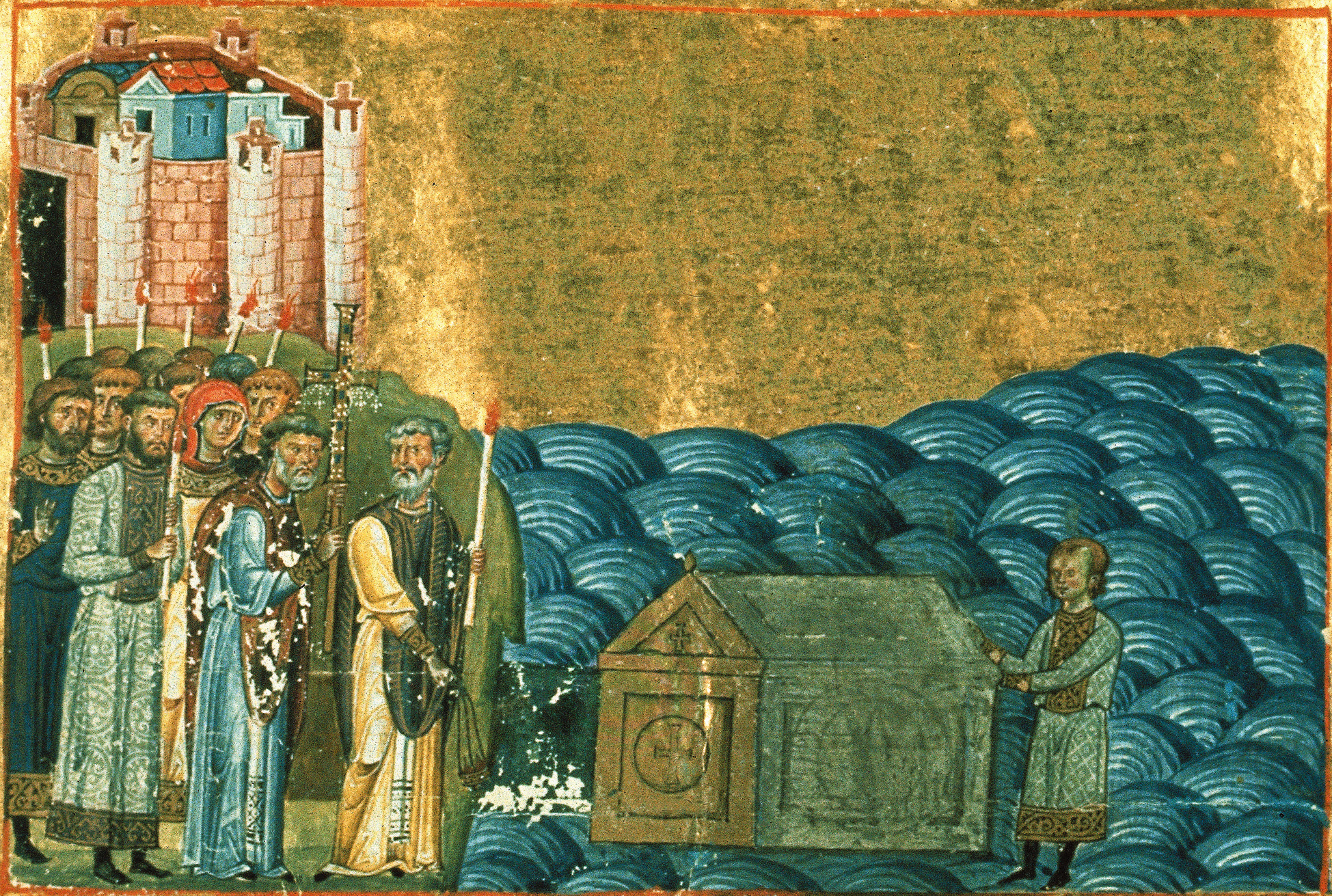
When the people prayed, the sea retreated from the shore at a distance of three fields, and people, like the Israelites in the Red Sea, crossed the dry land, and found a marble cave like the church of God, in which the body of the martyr rested, and also found an anchor near him, with which the martyr Clement was drowned. When the faithful wanted to take the honest body of the martyr from there, it was a revelation to the above-mentioned disciples that his body should be left here, because every year the sea in his memory will retreat for seven days, giving the opportunity to those who want to worship. And so it was for many years, from the reign of Trajan to the reign of Nikephorus, king of Greece7719. Many other miracles were performed there by the prayer of the saint, whom the Lord glorified.
Once upon a time, the sea opened access to the cave at ordinary times, and many people came to worship the relics of the holy martyr. A child was accidentally left in the cave, forgotten by his parents when they left. When the sea began to return to its former place and already covered the cave, everyone who was in it hurried to leave, fearing that they would not be covered by the sea, and the parents of the abandoned child also hurried out, thinking that the child had left earlier with the people. Looking around and looking for it everywhere among the people, they did not find it, and there was no way to return to the cave again, as the sea covered the cave; the parents cried inconsolably and went home with great tears and sorrow. The following year, the sea retreated again and the child’s parents came again to worship the saint. Going up to the cave, they found the child alive and well, sitting near the saint’s tomb. Taking him, his parents with indescribable joy asked him how he stayed alive.
The child, pointing his finger at the martyr’s tomb, said: “This saint kept me alive, fed me, and drove away all sea horrors from me.”
Then there was great joy among the parents and the people who came to the feast, and everyone glorified God and His pleaser.
During the reign of Nikephorus, the Greek king, on the day of St. Clement’s memory, the sea did not retreat, as it happened in previous years, and it was fifty or more years. When George the Blessed became a bishop in Chersonesos, he grieved greatly that the sea did not retreat and the relics of such a great God-pleaser were as if under the spool, covered with water.
During his management of the diocese, two Christian teachers, Methodius and Constantine, the philosopher, later appointed Cyril, came to Chersonesos [7720]; they went to a sermon to the Khazars7721 and on the way asked about the relics of St. Clement; having learned that they were at sea, these two church teachers began to encourage Bishop George to discover a spiritual treasure – the relics of the priest-martyr.
Bishop George, encouraged by teachers, went to Constantinople and told about everything to the then reigning Emperor Michael III7722, as well as to His Holiness Patriarch Ignatius7723. The Tsar and the Patriarch sent with him the chosen men and all the clergy of St. Sophia7724.Arriving in Chersonesos, the bishop gathered all the people, and with psalms and singing everyone went to the seashore, hoping to get what they wanted, but the water did not part. When the sun went down and they got on the ship, suddenly, in the middle of the midnight darkness, the sea lit up with light: first the head appeared, and then all the relics of St. Clement came out of the water. The saints, taking them reverently, put them on the ship and, solemnly bringing them to the city, put them in the church. When the holy liturgy began, many miracles happened: the blind were blind, the lame and all the sick received healing, and the demon-possessed were freed from demons, according to the prayers of St. Clement, by the grace of our Lord Jesus Christ, to Him be the glory forever. Amen7725.
* * *
Notes
Octavian Augustus – the 1st Roman emperor after the destruction of the republic in Rome, reigned from 30 BC. X. on the 14th on R. X. Tiberius, his stepson, reigned from the 14th to the 37th; our Lord Jesus Christ suffered and accepted the death on the cross during his reign.
The Romans called Asia a province located in present-day Asia Minor (Anatolian Peninsula), along the shore of the Mediterranean Sea it included several cities with their regions; Pergamum was considered its capital.
There were many cities with the name of Caesarea or Caesarea in ancient times. The name of Caesarea Stratonia should mean a Palestinian city on the eastern shore of the Mediterranean Sea, better known as Caesarea of Palestine. This city was built by the Jewish king Herod on the site of the ancient city of Straton and named Caesarea in honor of Caesar Augustus (the Roman emperor Octavius Augustus). Currently, there are only ruins covered with wild plants in its place.
Drachma is an ancient Greek scale and a silver coin worth 21 kopecks.
Antandros is a city on the Adramite Bay in Mizia, the northwestern region of Asia Minor. The ruins of this ancient city still exist today.
Laodicea is the main city of ancient Phrygia in the west of Asia Minor. The Laodicean Church was one of the seven famous churches of Asia Minor mentioned in the Apocalypse. Now only the ruins on one low hill, in the devastated village of Eski-Hissar, serve as a monument to the ancient city. In Church history, Laodicea is known for the council that was there in 365, which left detailed rules regarding the order of worship, the moral behavior of the clergy and the laity, and various vices and delusions of that time.
July 29, 67.
Saint Apostle Clement ruled the Roman Church from 91 to 100 AD.
Nerva is a Roman emperor who reigned from 96 to 98 according to R. X.
Comites (Latin word) were called by the Romans the employees and entourage of the governors of the province.
Trajan is a Roman emperor from 98 to 117.
Chersonesos is a city in Tavrid, the Black Sea peninsula (now Crimea); it was located near present-day Sevastopol. In it, the Russian prince, Equal-to-the-Apostles Vladimir, accepted the Christian faith.
The field – originally a ristalishche, a place for competitions; then this word began to mean the same as the stage, i.e. a measure of length of 125 steps.
Byzantine Emperor Nikephorus reigned from 802 to 811.
Saints Methodius and Cyril
Khazars are a people of Turkmen origin who lived near the Caspian Sea in the lower reaches of the Volga and in the Precaucasia. They were partly pagans, partly Mohammedans, and partly professed the Jewish faith.
Byzantine Emperor Michael III reigned from 855 to 867.
Saint Ignatius ruled the Church of Constantinople from 847 to 857, then after Photius from 867 to 877.
St. Sophia is the cathedral church of Constantinople.
It is known that Saints Cyril and Methodius took some of the relics of St. Clement with them and sent them to Rome under Pope Adrian II (867); yet the body of the saint together with the honest head remained in Chersonesos until the time when this city was taken by the Russian Grand Duke, St. Vladimir. The latter, having received holy baptism in Chersonesos, took with him the relics of St. Clement “for his blessing and for the consecration of all people” and laid them in the Kiev Tithe Church of the Blessed Virgin Mary. The relics of the priest-martyr were here before the Tatar invasion. It is not known where these relics were got during the Tatar invasion, whether they were hidden by believers or transferred to another place. Now you can find only particles of these relics, for example, in one altar cross of the Alexander Nev Lavra, in St. Petersburg.
Other Life Sources
English
Orthodox Church in America (OCA)
Source · Orthodox Church in America (OCA)
The Hieromartyr Clement, Pope of Rome, was born at Rome into a rich and illustrious family. Separated from his parents from childhood by force of circumstances, Clement was raised by strangers. Living in Rome, the youth received a fine education, he was surrounded by luxury, and had access to the imperial court. But these comforts brought him no joy, and pagan wisdom failed to attract him. He began to ponder the meaning of life.
Continue reading (795 words · 4 min read)
When the news of Christ and His teaching began to reach the capital, Saint Clement left his home and estate and went to the lands where the Apostles were preaching. At Alexandria Saint Clement met the holy Apostle Barnabas, listening to his words with deep attention, and perceiving the power and truth of the Word of God. Arriving in Palestine, Saint Clement was baptized by the holy Apostle Peter and became his zealous disciple and constant companion, sharing his toil and sufferings with him. Shortly before his own sufferings and death, Saint Peter consecrated Saint Clement as Bishop of Rome. After the death of the Apostle Peter, Saint Linus (67-79) was the next Bishop of Rome, succeeded by Saint Anacletus (79-91), and then Saint Clement (92-101).
The virtuous life, charitable works and prayerful activity of Saint Clement converted many to Christ. He once baptized 424 people on the day of Pascha. Among the baptized were people of all social classes: slaves, officials, and even members of the imperial family.
The pagans, seeing the success of his apostolic preaching, denounced Saint Clement to the emperor Trajan (98-117), accusing the saint of insulting the pagan gods. The emperor banished Saint Clement from the capital, sending him to the Crimea, to work at a stone quarry near the city of Cherson. Many of the saint’s disciples followed after him voluntarily, preferring to go into exile rather than live without their spiritual Father.
When he arrived at the place of exile, Saint Clement found many Christian believers there, sentenced to labor under harsh conditions amidst a scarcity of water. He prayed together with the condemned, and the Lord appeared to him in the form of a lamb and revealed the location of a spring, from which gushed forth a veritable river of water. This miracle attracted a multitude of people to Saint Clement. Hearing the zealous preacher, hundreds of pagans were converted to Christ. Each day 500 or more men were baptized. And there in the stone quarry, a church was built, in which he served as priest.
The apostolic activity of the saint aroused the wrath of the emperor Trajan, and he ordered that Saint Clement be drowned. They threw the martyr into the sea with an anchor tied to his neck. This occurred in the year 101.
The saint’s faithful disciples Cornelius and Fibius asked the people to pray that the Lord would permit them to see the martyr’s body. The sea drew back a distance of three miles from the shore and the people walked out on the seabed until they found a marble cave shaped like a church. There they found the incorrupt body of their archpastor in this “Angelic Church” formed by God. After this, each year on the anniversary of Saint Clement’s martyric death the sea receded, and for seven days Christians were able to venerate his holy relics.
During the reign of the Byzantine Emperor Nikēphóros (802-811), by divine providence, the sea failed to withdraw, and the relics of Saint Clement became inaccessible for fifty years. In the time of the emperor Michael and his mother Theodora (855-867), Saints Cyril and Methodius visited Cherson. When they learned of the concealed relics of Saint Clement, they asked Bishop George of Cherson to pray that the Lord would show them the relics of the hieromartyr.
Saints Cyril and Methodius walked along the shore in procession with the clergy who came with them from Constantinople. Through the fervent prayers of everyone gathered there, the holy relics of Saint Clement miraculously appeared on the surface of the sea at midnight. They solemnly took them to the Church of the Holy Apostles at Constantinople. A portion of the relics were then brought to Rome by Saints Cyril and Methodius, but a large portion of the relics was later brought to Kiev by the holy Prince Vladimir (July 15) and placed in the Desyatin-Tithe church, together with the relics of Saint Fibius, where a chapel dedicated to Saint Clement had been built. The hieromartyr Clement is widely venerated in Russia. From ancient times, many churches have been dedicated to him.
Saint Clement, who belongs to the Apostolic Fathers, has left to us a spiritual legacy (two Epistles to the Corinthians) the first written examples of Christian teaching after the writings of the holy Apostles.
Pravoslavie.ru
Source · Pravoslavie.ru
Translated by Piece of Humanity using Safari’s built-in translation. This translation may contain errors. To help keep this record accurate, please suggest corrections in the comments below. I’ll review your suggestions carefully and update the translation where needed.
The Holy Martyr Clement, Pope, was born in Rome in a rich and noble family. Due to circumstances, separated from his parents since childhood, Clement was brought up by strangers. Living in Rome, the young man received an excellent education, was surrounded by luxury, close to the imperial court. But he was not pleased with pleasures, he was not fascinated by pagan wisdom. He began to think about the meaning of life.
Continue reading (761 words · 4 min read)
When the news of Christ and His teachings reached the capital, Saint Clement left the house and estate and went to the lands where the apostles preached. In Alexandria, Clement met the Holy Apostle Barnabas, whose words he listened to with deep attention, wholeheartedly perceiving the power and truth of the Word of God. Arriving in Palestine, Saint Clement was Baptized by the Holy Apostle Peter and became his zealous disciple and constant companion, sharing with him his labors and sufferings. The Holy Apostle Peter, shortly before his suffering, ordained St. Clement as the bishop of the city of Rome. After the death of the apostle, followed by St. Lin, Bishop of Rome (67 – 79), and his successor, Holy Bishop Anacletus (79 – 91), St. Clement (from 92 to 101) was on the Roman Cathedral.
The virtuous life, mercy and prayer feat of Saint Pope Clement have turned many to Christ. So, once on Easter Day, 424 people were baptized by them at once. Among the baptized were people of all classes: slaves, rulers, members of the imperial family.
The pagans, seeing the success of his apostolic sermon, reported St. Clement to Emperor Trajan (98 – 117), accusing the saint of blaspheming pagan gods. The emperor expelled St. Clement from the capital, sending him to Crimea to work in the Inkerman quarries near the city of Chersonesos. Many of the saint’s disciples followed him, preferring voluntary exile to separation from the spiritual father. Arriving at the place of exile, Saint Clement met many Christian believers, condemned to work in difficult conditions, completely without water. He prayed together with the condemned, and the Lord, in the image of the Lamb, revealed to him the place of the spring, from which a whole river poured out. This miracle attracted many people to St. Clement. Listening to the zealous preacher, hundreds of pagans turned to Christ. 500 people or more were baptized every day. And there, in the quarries, the temple in which he was a priest was cut down.
The apostolic activity of the saint caused the anger of Emperor Trajan, and he ordered to drown Saint Clement. The martyr was threw into the sea with an anchor on his neck. It happened in 101.
According to the prayers of the faithful disciples of the saint, Cornelius and Thebes, and all the people, the sea receded, and people found the incorruptible body of their shepherd at the bottom in the non-man-made temple (“Angel Church”). After that, every year on the day of the martyrdom of St. Clement, the sea retreated and for seven days Christians could worship his holy relics. Only in the 9th century, during the reign of Constantinople Emperor Nikephoros (802 – 811), by God’s will, the relics of St. Clement became inaccessible for worship for 50 years. Under Emperor Michael and his mother Theodora (855 – 867) Chersonesos was visited by Equal-to-the-Apostles Cyril and Methodius. Having learned about the hidden relics of St. Clement, they encouraged Bishop George of Chersonesos to pray to the Lord for the discovery of the relics of the priest-martyr. After the cathedral service of Saints Cyril and Methodius and the clergy who arrived with them from Tsargrad and the diligent prayer of all those gathered on the surface of the sea at midnight, the holy relics of Bishop Clement miraculously appeared. They were solemnly transferred to the city to the Church of the Holy Apostles. Some of the relics were brought by Saints Cyril and Methodius to Rome, and the holy head was subsequently brought to Kiev by the Holy Equal-to-the-Apostles Prince Vladimir (+ 1015) and was laid in the Tithe Church together with the relics of St. Thebes, where a side chapel in the name of St. Clement was arranged. The memory of the Holy Martyr is sacred in Russia. Many temples have been dedicated to him in ancient times.
Saint Clement, who is referred to as an apostolic husband, left us a spiritual legacy – two epistles to the Corinthians – the first written monuments of Christian doctrine after the writings of the Holy Apostles. (They are published in Russian translation in the “Wrises of the Apostolic Men”.)
Russian
Azbuka — Lives of the Saints
Source · Azbuka — Lives of the Saints
Житие и страдание святого священномученика Климента, папы Римского
Continue reading (4,857 words · 25 min read)
Память 25 ноября
В славном и великом древнем городе Риме жил один человек знатного происхождения по имени Фавст, происходивший из рода древних римских царей. У него была жена по имени Матфидия, также царского происхождения и бывшая в родстве с римскими императорами Августом и Тиверием7706. Муж и жена были ревностными язычниками и поклонялись идолам. У них родились сначала два сына близнеца, из которых одного назвали Фавстином, а другого Фавстинианом; затем родился третий сын, которому дали имя Климента.
У Фавста был брат, злой и безнравственный человек. Видя красоту Матфидии, он прельстился ею и стал соблазнять ее на грех; но она, будучи весьма целомудренной, не пожелала нарушить верность мужу и осквернением ложа обесчестить достоинство своего знатного рода; поэтому всеми силами старалась отстранить от себя соблазнителя. Не желая явно обличать его, она не говорила об этом никому, даже своему мужу, боясь, чтобы о них не распространилась дурная молва и не обесславился бы дом их. Но брат Фавста долгое время просьбами и угрозами принуждал ее к тому, чтобы она покорилась его нечистому желанию. Матфидия, видя, что она не в состоянии избавиться от его преследований, если не удалится от встреч с ним, решилась на следующее.
Однажды утром она обратилась к своему мужу со следующею речью: «Дивный сон видела я сегодня ночью, господин мой: видела я почтенного и старого мужа, как бы одного из богов, который говорил мне: если ты и твои близнецы сыновья не уйдете из Рима на десять лет, то вместе с ними умрешь мучительной и внезапной смертью».
Услышав эти слова. Фавст удивился, много размышлял об этом и решился отпустить ее и двух сыновей из Рима на десять лет, рассуждая: «Лучше если любимая моя супруга с детьми жива будет в чужой стране, нежели здесь умрет внезапной смертью». Снарядив корабль и запасшись всем нужным для продовольствия, он отпустил ее с двумя сыновьями Фавстином и Фавстинианом в страну греческую, в Афины. С ними отправил множество рабов и рабынь и снабдил их большим имуществом, повелев Матфидии, чтобы она в Афинах отдала сыновей обучаться греческой мудрости.
Так расстались они друг с другом с невыразимым сожалением и слезами. Матфидия с двумя сыновьями в корабле отплыла, а Фавст с младшим сыном Климентом остался в Риме.
Когда Матфидия плыла по морю, на море разразилась сильная буря и поднялось большое волнение; корабль был отнесен волнами и ветром в неведомую страну, в полночь был разбит, и все потонули. Матфидия же, носимая бурными волнами, была выброшена на камни одного острова, недалеко от Асийской страны7707. И неутешно плакала она об утонувших детях своих, от горькой печали хотела даже броситься в море, но жители той страны, увидав ее нагую, сильно кричащую и стонавшую, сжалились над ней, взяли ее в свой город и одели ее.
Некоторые страннолюбивые женщины, придя к ней, стали утешать ее в горе; каждая из них стала рассказывать ей все, что случилось и в их жизни прискорбного, и своим сочувствием несколько облегчили ее печаль. Одна из них сказала при этом: «Муж мой был корабельщиком; еще очень молодым он потонул в море, и я осталась молодой вдовой; многие желали на мне жениться, но я, любя мужа и будучи не в силах забыть его и по его смерти, решила остаться вдовой. Если хочешь, то оставайся в доме моем жить со мной, я и ты будем кормиться своими трудами».
Матфидия последовала ее совету, и, поселившись в ее доме, своими трудами добывала себе пищу и двадцать четыре года пробыла в таком положении.
Дети ее Фавстин и Фавстиниан после кораблекрушения, по изволению Божиему, тоже остались живыми; выброшенные на берег, они были увидены находившимися там морскими разбойниками, которые взяли их в свою лодку, привезли в Кесарию Стратонийскую7708 и продали здесь одной женщине по имени Иустина, которая воспитала их вместо детей и отдала их в обучение. Таким образом они научились различным языческим наукам, но потом, услышав Евангельскую проповедь о Христе, приняли святое крещение и последовали за Апостолом Петром.
Фавст же, отец их, живя в Риме с Климентом и ничего не зная о бедствиях, постигших жену и детей, послал по истечении года некоторых рабов в Афины узнать, как живут его жена и дети, и послал с ними много различных вещей; но рабы его не возвратились. На третий год Фавст, не получая никакого известия о жене и детях его, очень опечалился и послал других рабов со всем необходимым в Афины. Прибыв туда, они никого не нашли, и на четвертый год возвратились к Фавсту и сообщили ему, что совсем не могли отыскать в Афинах госпожи своей, ибо никто о ней там даже не слыхал, и они не могли напасть на след ее, так как никого из своих не могли найти. Услышав все это, Фавст еще больше опечалился и стал горько плакать. Он обошел все приморские города и пристани в римской стране, расспрашивал корабельщиков о своей жене и ее детях, но ни от кого не узнал ничего. Потом, соорудив корабль и взяв с собой несколько рабов и немного имущества, отправился сам отыскивать подругу свою и любезных детей, а младшего сына Климента оставил с верными рабами дома учиться наукам. Чуть не всю вселенную он обошел и по суху, и по морю, отыскивая многие годы своих родных и не находя их. Наконец, уже отчаявшись даже видеть их, предался глубокой скорби, так что не хотел даже возвращаться домой, считая тяжелым бременем наслаждаться благами мира этого без возлюбленной супруги своей, к которой питал великую любовь за ее целомудрие. Отвергнув все почести и славу мира этого, он скитался по чужим странам, как нищий, не открывая о себе никому, кто он.
Между тем отрок Климент пришел в совершеннолетний возраст и хорошо изучил все философские учения. При всем том, не имея ни отца, ни матери, он всегда находился в печали. Между тем ему пошел уже двадцать четвертый год от рождения с тех пор, как мать вышла из дому, и двадцать лет, как исчез его отец.
Потеряв надежду на то, что они живы, Климент скорбел о них, как о мертвых. Вместе с этим он памятовал и о своей смерти, так как хорошо знал, что всякий может умереть; но, не зная, где он будет находиться после смерти и есть ли другая какая жизнь после этой кратковременной жизни или нет, всегда плакал и не хотел утешиться никакими наслаждениями и радостями мирскими. В это время Климент, услыхав о пришествии Христовом в мир, стал стремиться узнать о том достоверно. Случилось ему беседовать с одним благоразумным человеком, который и рассказал ему, как пришел в Иудею Сын Божий, даруя всем, кто будет исполнять волю Пославшего Его Отца, жизнь вечную. Услыхав об этом, Климент возгорелся необычайным желанием узнать подробнее о Христе и о Его учении. Для этого он решил идти в Иудею, в которой распространялось благовестие Христово. Оставив дом свой и большое имение, он взял с собой верных рабов и достаточное количество золота, сел на корабль и отплыл в Иудейскую страну. Вследствие разразившейся на море бури он занесен был ветром в Александрию и там нашел Апостола Варнаву. Потом он отплыл в Кесарию Стратонийскую и нашел святого Апостола Петра. Приняв от него святое крещение, он последовал за ним с прочими учениками, между которыми были и два брата его, близнецы Фавстин и Фавстиниан. Но Климент не узнал их, равно как и братья его не узнали, потому что они были очень малы, когда разлучились и не помнили друг друга. Петр, отправляясь в Сирию, послал вперед себя Фавстина и Фавстиниана, а Климента оставил при себе и вместе с ним сел на корабль и поплыл по морю.
Когда они плыли, апостол спросил Климента о его происхождении. Тогда Климент подробно рассказал ему: какого он происхождения и как мать его, под влиянием сновидения, ушла в Рим с двумя малолетними сыновьями, как отец, по прошествии четырех лет, ушел разыскивать их и не возвратился; к этому он присоединил и то, что прошло уже двадцать лет, как он ничего не знает о своих родных, почему он думает, что родители его и братья умерли. Петр, выслушав рассказ его, умилился.
Между тем по усмотрению Божиему, корабль пристал к тому острову, где находилась Климентова мать – Матфидия. Когда некоторые вышли из корабля, чтобы купить в городе необходимое для житейских потребностей, то и Петр вышел, а Климент остался на корабле. Направляясь к городу, Петр увидал старицу, сидящую при вратах и просящую милостыню; то была Матфидия, которая не могла уже питаться своими трудами от слабости рук и потому просила милостыню, чтобы питать себя и другую старицу, принявшую ее в свой дом, которая также была расслабленной и лежала больной в доме. Апостол, увидав сидящую Матфидию, уразумел духом, что эта женщина чужестранка, и спросил об отечестве ее. Тяжко вздохнув, Матфидия прослезилась и сказала: «О, горе мне, страннице, потому что нет в мире беднее и несчастнее меня».
Апостол Петр, при виде ее тяжкой скорби и сердечных слез, начал внимательно расспрашивать ее, кто она и откуда?
Из разговора с ней он понял, что она мать Климента, и стал утешать ее, говоря:
– Я знаю младшего сына твоего Климента: он находится в этой стране.
Матфидия, услыхав о своем сыне, сделалась от ужаса и страха, как мертвая; но Петр взял ее за руку и повелел ей идти за собой к кораблю:
– Не печалься, старица, – говорил ей апостол дорогой, – потому что сейчас узнаешь все о сыне твоем.
Когда они шли к кораблю, то к ним навстречу вышел Климент и, увидев женщину, шедшую за Петром, удивился. Она же, всмотревшись в Климента, тотчас же узнала его, по сходству с отцом, и спросила Петра:
– Не это ли Климент, сын мой?
Петр сказал:
– Он и есть.
И упала Матфидия на шею Климента, и заплакала. Климент же, не зная, кто эта женщина и почему она плачет, стал ее отстранять от себя. Тогда Петр сказал ему: «Не отталкивай, чадо, родившую тебя».
Климент, услышав это, прослезился и упал к ногам ее, целуя ее и плача. И была у них великая радость, ибо они нашли и узнали друг друга. Петр помолился о ней Богу и исцелил руки ее. Она же стала просить апостола об исцелении старицы, у которой поселилась. Апостол Петр вошел в дом ее и исцелил последнюю; Климент же дал ей 1000 драхм7709, в награду за пропитание матери своей. Потом, взяв мать вместе с исцелившеюся старицею, ввел их на корабль и они отплыли.
Дорогой Матфидия спросила сына о муже своем Фавсте и, узнав, что он отправился отыскивать ее и что двадцать лет нет о нем никакого известия, плакала по нем горько, как по умершем, не надеясь видеть его живым. Доплыв до Антандроса7710, они оставили корабль и продолжали путь свой по суше. Достигнув Лаодикии7711, они встречены были Фавстином и Фавстинианом, которые прибыли туда прежде их. Они спросили Климента: «Кто эта чужая женщина, которая находится при вас с другой старицею?»
Климент отвечал: «Мать моя, которую я отыскал в чужой стране».
И начал им по порядку рассказывать, сколько времени с матерью не видался и как ушла она из дому с двумя близнецами.
Услыхав это, они поняли, что Климент брат их и та женщина – мать их, и заплакали от большой радости, воскликнув: «Значит это – мать наша Матфидия, ты же – брат наш Климент, ибо мы и есть близнецы Фавстин и Фавстиниан, вышедшие с матерью из Рима».
Сказав это, они бросились друг другу на шею, плакали много и любезно целовались. Видя, как мать радуется о детях, которых неожиданно нашла здравыми, и рассказывая друг другу, какими Божиими судьбами были спасены от потопления, они прославили Бога; только об одном скорбели они, что никто ничего не знал об отце их. Потом они стали просить Апостола Петра, чтобы он крестил мать их. Рано утром они пришли к морю, святой Апостол Петр в отдельном помещении совершил крещение над Матфидией и сопровождавшей ее старицей во имя Отца и Сына и Святого Духа, и, отослав ее с сыновьями вперед себя в жилище, сам пошел другой дорогой.
И вот на дороге встретился ему благообразный муж, с седой бородой, бедно одетый, ожидавший Апостола Петра, которого он почтительно приветствовал:
– Вижу, что ты человек чужестранный и не простой; самое лицо твое показывает, что ты человек разумный: поэтому желаю немного побеседовать с тобой.
Петр на это сказал:
– Говори, господин, если хочешь.
– Я видел тебя, – сказал тот, – нынче в сокровенном месте на берегу молящимся; незаметно посмотрев, я отошел и немного подождал тебя здесь, желая сказать, что вы напрасно утруждаете себя молитвой Богу, потому что нет никакого Бога ни на небе, ни на земле, и нет никакого Божия промысла о нас, но все в мире этом случайно. Поэтому не увлекайтесь и не трудитесь молиться Богу, ибо Его не существует.
Святой Петр, услышав эти рассуждения, сказал ему:
– Почему ты думаешь, что все не по Божиему устройству и промыслу, но случайно бывает, и чем ты докажешь, что нет Бога? Если нет Бога, то кто сотворил небо и украсил его звездами? Кто сотворил землю и одел ее цветами?
Человек тот, воздохнув из глубины сердца, промолвил:
– Знаю я, господин, отчасти астрономию, а богам так усердно служил, как никто другой; и познал я, что все надежды на Бога суетны, и нет никакого Бога; если бы был на небе какой-нибудь Бог, то услышал бы вздохи плачущих, внял бы молитвам молящихся, призрел бы на горесть сердца, изнемогающего от печали. Но так как нет того, кто бы подавал утешение в скорбях, то отсюда заключаю, что нет Бога. Если бы был Бог, то услышал бы меня, в горе молящегося и рыдающего, ибо, господин мой, двадцать лет и даже больше я нахожусь в великой печали, и как много я молился всем богам, как много я жертв принес им, как много пролил слез и рыданий! И ни один из богов не услышал меня и весь труд мой был напрасен.
После этого Петр сказал:
– Потому ты и не услышан был столько времени, что молился многим богам, суетным и ложным, а не Единому, Истинному Богу, в Которого мы веруем и Которому молимся.
Так беседуя с тем человеком и рассуждая о Боге, Петр уразумел, что говорит с Фавстом, мужем Матфидии, отцом Климента и братьев его, и сказал ему:
– Если ты желаешь веровать в Единого, Истинного Бога, сотворившего небо и землю, то сейчас увидишь невредимыми и здоровыми и жену, и детей своих.
Он на это ответил:
– Неужели жена моя с детьми восстанет из мертвых? Я по звездам сам узнал и от премудрого астролога Аннувиона мне известно, что и жена моя и двое детей моих утонули в море.
Тогда Петр ввел Фавста в жилище свое; когда тот взошел туда и увидел Матфидию, то ужаснулся и, пристально с удивлением смотря на нее, молчал. Потом сказал: «В силу какого чуда совершилось это? Кого теперь вижу?» И подойдя поближе, воскликнул: «Воистину моя возлюбленная супруга здесь!»
Тотчас от внезапной радости оба обессилели, так что и говорить друг с другом не могли, ибо и Матфидия узнала своего мужа. Когда же последняя немного пришла в себя, то так сказала: «О, любезный мой Фавст! Как ты нашелся живым, когда мы слышали, что ты умер?»
Тогда была неописуемая радость для всех и от радости великий плач, потому что и супруги узнали друг друга, и дети узнали своих родителей; и, обнявшись, плакали, и веселились, и благодарили Бога. И все там бывшие, видя неожиданную их общую встречу после долгой разлуки, прослезились и благодарили Бога. Фавст же припал к апостолу, прося крещения, потому что искренно уверовал во Единого Бога, и, будучи крещен, воссылал со слезами благодарственные молитвы Богу. Потом все удалились оттуда в Антиохию.
Когда они учили там вере во Христа, то игемон Антиохийский узнал все о Фавсте, его жене и детях, о их высоком происхождении, а также о приключениях их, и тотчас послал вестников в Рим, чтобы известить обо всем царя. Государь повелел игемону, чтобы он поскорее доставил в Рим Фавста и его семейство с большой честью. Когда это было исполнено, император радовался их возвращению, а когда узнал все случившееся с ними, долго плакал. В тот же день он устроил в честь их пир, на другой день дал им много денег, а также рабов и рабынь. И были они в большом почете у всех.
Проводя жизнь в глубоком благочестии, творя милостыню бедным и в преклонной старости раздав все нуждающимся, Фавст и Матфидия отошли ко Господу.
Дети же их, когда Петр пришел в Рим, подвизались в апостольском учении, а блаженный Климент был даже неразлучным учеником Петра во всех его путешествиях, трудах и был ревностным проповедником учения Христова. За это Петр поставил его епископом прежде своего распятия, которое претерпел от Нерона7712. После смерти Апостола Петра, а за ним епископа Лина и епископа Анаклета, Климент, во времена волнений и усобиц в Риме, управлял мудро кораблем Церкви Христовой7713, которая была тогда возмущаема от мучителей, и пас стадо Христово с большим трудом и терпением, будучи окружен со всех сторон, подобно рыкающим львам и хищным волкам, лютыми гонителями, которые старались поглотить и уничтожить Христову веру. Находясь в таком бедствии, он не переставал заботиться с великим старанием и о спасении душ человеческих, так что обратил ко Христу много неверных не только из простого народа, но даже из царского двора, благородных и сановитых, в числе которых был некто сановник Сисиний и немало из рода царя Нервы7714. Своей проповедью святой Климент в одно время на Пасхе обратил ко Христу четыреста двадцать четыре человека знатного рода и всех крестил; Домициллу же, племянницу свою, которая была обручена Аврелиану, сыну первейшего римского сановника, посвятил на сохранение девства. Сверх того, он разделил Рим между семью писцами, чтобы они описывали страдания мучеников, которых тогда убивали за Христа.
Когда же его учением и трудами, чудными делами и добродетельной жизнью стала Церковь Христова умножаться, тогда гонитель веры христианской комит Торкутиан7715, увидев бесчисленное множество уверовавших во Христа, наученных Климентом, возмутил некоторых из народа восстать против Климента и против христиан. Произошло волнение в народе, и мятежники пришли к епарху города, Мамертину, и стали кричать, до каких пор Климент будет унижать наших богов; другие же напротив, защищая Климента, говорили: «Какое зло сделал этот человек или какого доброго дела он не сделал? Кто бы из недужных ни приходил к нему, он всякого исцелял; каждый, с печалью придяй к нему, получал утешение; никому никогда он не сделал зла, но всем – много сделал благодеяний».
Однако все прочие, исполненные духа неприязни, кричали: «Волшебством все это он делает, а службу нашим богам искореняет. Зевса не называет богом, Геркулеса, нашего покровителя, называет нечистым духом, честную Афродиту называет не иначе, как блудницей, о великой Весте говорит, что ее нужно сжечь; также и Афину, Артемиду, Гермеса, Хроноса же и Арея хулит и бесчестит; всех наших богов и храмы их постоянно бесчестит и осуждает. Поэтому пусть он или принесет жертву богам или будет наказан».
Тогда епарх Мамертин, под влиянием шума и волнения толпы, приказал привести к себе святого Климента и начал говорить ему: «Ты произошел из благородного рода, как говорят все римские граждане, но соблазнился, и поэтому не могут терпеть тебя и молчать; неизвестно, какого ты Бога почитаешь; какого-то нового, называемого Христом, противного нашим богам. Тебе следует оставить всякое заблуждение и увлечение и поклониться богам, которым мы кланяемся».
Святой Климент ответил: «Молю твое благоразумие, послушай меня, а не безумных слов грубой черни, напрасно восстающей на меня, ибо хотя и многие собаки лают на нас, но они не могут отнять от нас того, что принадлежит нам; ибо мы люди здравые и разумные, они же – собаки без разума, лающие бессмысленно на доброе дело; волнения и мятежи всегда появлялись от неразумной и неосмысленной толпы. Поэтому прикажи сначала им замолчать, чтобы, когда наступит тишина, мог говорить человек разумный о важном деле спасения, чтобы можно было обратиться к поискам Истинного Бога, Которому с верой должно кланяться».
Это и многое другое говорил святой, и епарх в нем не нашел никакой вины, потому и послал к царю Траяну7716 известие, что на Климента восстал народ из-за богов, хотя достаточного свидетельства для обвинения его не имеется. Траян ответил епарху, что Климент должен или принести жертву богам, или быть заточенным в пустынное место Понта близ Херсонеса7717. Получив такой ответ от царя, епарх Мамертин сожалел о Клименте и умолял его не избирать себе самовольного изгнания, но принести жертву богам – и тогда быть свободным от ссылки. Святой возвестил епарху, что изгнания он не боится, напротив, еще сильнее желает его. Такая была сила благодати в словах Климента, которую дал ему Бог, что даже епарх умилился душою, заплакал и сказал: «Бог, Которому ты служишь всем сердцем, да поможет тебе в твоем изгнании, на которое ты осужден».
И, приготовив корабль и все необходимое, он отпустил его.
Вместе со святым Климентом отправились в изгнание также многие из христиан, решившись лучше жить вместе с пастырем в изгнании, чем остаться без него на свободе.
Прибыв на место заточения, святой Климент нашел там более двух тысяч христиан, осужденных на тесание камней в горах. К такому же делу был приставлен и Климент. Христиане, увидев святого Климента, со слезами и скорбно приступили к нему, говоря:
– Помолись о нас, святитель, чтобы нам сделаться достойными обетований Христа.
Святой сказал:
– Я недостоин такой благодати Господа, сподобившего меня быть только участником вашего венца!
И работая с ними, святой Климент утешал их и наставлял полезными советами. Узнав, что у них имеется большой недостаток в воде, так как им приходится за шесть поприщ7718 приносить себе воду на плечах, святой Климент сказал: «Помолимся Господу нашему Иисусу Христу, чтобы Он Своим последователям открыл источник живой воды, подобно тому как открыл жаждущему Израилю в пустыне, когда разбил камень и потекла вода; и получив таковую благодать его, – возвеселимся».
И начали все молиться. По окончании молитвы святой Климент увидал агнца, стоявшего на одном месте и поднимавшего одну ногу, как бы показывая место. Климент понял, что это явившийся Господь, которого никто не видит, кроме него одного, и пошел на то место, сказав: «Во имя Отца и Сына и Святого Духа, копайте на этом месте».
И все, став кругом, начали копать лопатами, но пока ничего не было, так как не могли напасть на то место, где стоял Агнец.
После этого святой Климент взял маленькую лопату и начал копать на том месте, где стояла нога Агнца, и тотчас явился источник вкусной чистой воды; и образовалась из источника целая река. Тогда все возрадовались, а святой Климент сказал: «Речные потоки веселят город Божий» (Пс. 45:5).
Слух об этом чуде распространился по всей окрестности; и стали стекаться люди в большом количестве, чтобы видеть реку, неожиданно и чудесно образовавшуюся по молитвам святого, а также и послушать его учения. Многие уверовали во Христа и крещены были в воде от святого Климента. Столько народу приходило к святому, и столько обращалось ко Христу, что всякий день крестилось по пятисот человек и более. В одно лето настолько увеличилось число верующих, что даже было построено семьдесят пять церквей, и разбиты были все идолы, а капища – во всей стране разрушены, так как все жители приняли христианскую веру.
Царь Траян, узнав, что в Херсонесе бесчисленное множество людей уверовало во Христа, тотчас послал туда одного сановника по имени Авфидиан, который по прибытии подверг многих христиан пыткам и многих умертвил. Увидав же, что все с радостью идут на мучение за Христа, посланный сановник не пожелал более мучить народ и только одного Климента всеми силами старался принудить к принесению жертвы. Но, найдя его непоколебимым в вере и крепко верующим во Христа, повелел посадить его в лодку, отвезти на средину моря и там, привязав якорь на шею, повергнуть в самое глубокое место моря и утопить, дабы христиане не нашли его тела. Когда все это произошло, верующие стояли на берегу и сильно плакали. Потом два вернейших ученика его, Корнилий и Фив, сказали всем христианам: «Помолимся все, чтобы Господь открыл нам тело мученика».
Когда молился народ, то море отступило от берега на расстояние трех поприщ, и люди, подобно израильтянам в Чермном море, перешли посуху, и нашли мраморную пещеру наподобие церкви Божией, в которой покоилось тело мученика, а также нашли близ него и якорь, с которым был потоплен мученик Климент. Когда верные хотели взять оттуда честное тело мученика, то было откровение вышеупомянутым ученикам, чтобы тело его здесь оставили, ибо каждый год море в память его будет отступать так в течение семи дней, давая возможность приходить желающим поклониться. И так было много лет, начиная с царствования Траяна до царствования Никифора, царя греческого7719. Много и других совершилось там чудес по молитве святого, которого прославил Господь.
Однажды море в обычное время открыло доступ к пещере, и много народу пришло для поклонения мощам святого мученика. Случайно был оставлен в пещере ребенок, забытый родителями при уходе их. Когда море стало опять возвращаться на прежнее место и уже покрывало пещеру, то все, бывшие в ней, поспешили уйти, боясь, чтобы и их не покрыло море, и родители оставленного ребенка также поспешили выйти, думая, что ребенок раньше вышел с народом. Осмотревшись и ища его везде среди народа, они не находили его, а возвратиться снова в пещеру не было уже возможности, так как море покрыло пещеру; неутешно плакали родители и пошли к себе домой с великим плачем и скорбью. На следующий год море снова отступило и родители ребенка пришли опять для поклонения святому. Взойдя в пещеру, они нашли ребенка живым и здоровым, сидящим у гробницы святого. Взяв его, родители с неописанной радостью, спрашивали его, как он остался жив.
Ребенок, показывая пальцем на гробницу мученика, сказал: «Этот святой меня сохранил живым, питал меня, и все морские ужасы отгонял от меня».
Тогда великая радость была у родителей и у народа, пришедшего на праздник, и все прославляли Бога и угодника Его.
В царствование Никифора, царя греческого, в день памяти святого Климента, море не отступило, как бывало в прежние годы, и было так лет пятьдесят и более. Когда же в Херсонесе епископом сделался Георгий блаженный, то он сильно скорбел о том, что море не отступает и мощи столь великого угодника Божия находятся как бы под спудом, покрытые водой.
Во время его управления епархией пришли в Херсонес два христианских учителя Мефодий и Константин философ, нареченный впоследствии Кириллом7720; они направлялись на проповедь к хазарам7721 и по дороге расспрашивали о мощах святого Климента; узнав же, что они находятся в море, эти два учителя церковные стали побуждать епископа Георгия к открытию духовного сокровища – мощей священномученика.
Епископ Георгий, побуждаемый учителями, отправился в Константинополь и поведал обо всем царствовавшему тогда императору Михаилу III7722, а также святейшему патриарху Игнатию7723. Царь и патриарх послали с ним избранных мужей и весь клир святой Софии7724. Прибыв в Херсонес, епископ собрал весь народ, и с псалмами и пением все отправились к морскому берегу, в надежде получить желаемое, но вода не расступилась. Когда зашло солнце и сели в корабль, вдруг, среди полуночного мрака, море озарилось светом: сначала явилась голова, а затем все мощи святого Климента вышли из воды. Святители, благоговейно взяв их, положили на корабль и, торжественно внеся в город, поставили их в церковь. Когда началась святая литургия, то много совершилось чудес: слепые прозирали, хромые и всякие больные получали исцеление, и бесноватые освобождались от демонов, по молитвам святого Климента, благодатью Господа нашего Иисуса Христа, Ему же слава вовеки. Аминь7725.
* * *
Примечания
Октавиан Август – 1-й римский император после уничтожения в Риме республики, царствовал с 30 года до Р. Х. по 14-й по Р. Х. Тиверий, пасынок его, царствовал с 14-го по 37-й г.; в царствовании его пострадал и приял крестную смерть Господь наш Иисус Христос.
Асией называлась у римлян провинция, расположенная в теперешней Малой Азии (Анатолийский полуостров), по берегу Средиземного моря в состав ее входило несколько городов с их областями; столицей же ее считался Пергам.
Городов с именем Кесария или Цезария в древнее время было много. Под именем Кесарии Стратонийской нужно подразумевать палестинский город на восточном берегу Средиземного моря, известный более под именем Кесарии Палестинской. Город этот построен иудейским царем Иродом на месте древнего города Стратон и назван Кесарией в честь Кесаря Августа (римского императора Октавия Августа). В настоящее время на месте его одни только развалины, покрытые дикими растениями.
Драхма – древнегреческий вес и серебряная монета ценностью в 21 коп.
Антандрос – город при Адрамитском заливе в Мизии, северо-западной области Малой Азии. Развалины этого древнего города существуют и поныне.
Лаодикия – главный город древней Фригии на западе Малой Азии. Лаодикийская церковь принадлежала к числу семи знаменитых малоазийских церквей, упоминаемых в Апокалипсисе. Сейчас одни только развалины на одном невысоком холме, при опустошенном селении Эски – Гиссара, служат памятником древнего города. В Церковной истории Лаодикия известна по бывшему там в 365-м году собору, оставившему подробные правила касательно порядка Богослужения, нравственного поведения клира и мирян и различных пороков и заблуждений того времени.
29 июля 67 года.
Святой апостол Климент управлял Римской церковью с 91 по 100 г.
Нерва – римский император, царствовавший с 96 по 98 г. по Р. Х.
Комитами (лат. слово) назывались у римлян сотрудники и свита правителей провинции.
Траян – римский император с 98 по 117 г.
Херсонес – город в Тавриде, полуострове Черного моря (ныне Крым); находился близ теперешнего Севастополя. В нем принял христианскую веру русский князь, равноапостольный Владимир.
Поприще – первоначально – ристалище, место для состязаний; затем это слово стало означать то же, что стадия, т.е. мера длины в 125 шагов.
Византийский император Никифор царствовал с 802 по 811 г.
Святые Мефодий и Кирилл
Хазары – народ туркменского происхождении, обитавший около Каспийского моря в низовьях Волги и в Предкавказьи. Они были частью язычниками, частью магометанами, частью же исповедовали еврейскую веру.
Византийский император Михаил III царствовал с 855 по 867 г.
Святой Игнатий управлял Константинопольской церковью с 847 по 857 г. потом после Фотия с 867 по 877 г.
Святая София – соборный храм Константинополя.
Известно, что святые Кирилл и Мефодий часть мощей святого Климента взяли с собой и отправили в Рим при папе Адриане II (867 г.); все же тело святого вместе с честной главой оставалось в Херсонесе до того времени, когда этот город был взят русским великим князем, святым Владимиром. Последний, приняв в Херсонесе святое крещение, взял с собой и мощи святого Климента «на благословение себе и на освящение всем людям» и положил их в Киевской Десятинной Церкви Пресвятой Богородицы. Здесь мощи священномученика находились до нашествия татар. Куда девались эти мощи во время татарского нашествия, сокрыты ли верующими или перенесены в другое место, – не известно. Сейчас можно встретить только частицы этих мощей, например в одном напрестольном кресте Александро-Невской Лавры, в Петербурге.
Pravoslavie.ru
Source · Pravoslavie.ru
Священномученик Климент, папа Римский, родился в Риме в богатой и знатной семье. Силой обстоятельств с детства разлученный с родителями, Климент воспитывался у чужих людей. Живя в Риме, юноша получил прекрасное образование, был окружен роскошью, приближен к императорскому двору. Но его не радовали утехи, языческая премудрость не увлекала его. Он стал задумываться над смыслом жизни.
Continue reading (595 words · 3 min read)
Когда в столицу дошли вести о Христе и Его учении, святой Климент оставил дом и имение и отправился в те земли, где проповедовали апостолы. В Александрии Климент встретил святого апостола Варнаву, слова которого слушал с глубоким вниманием, всем сердцем воспринимая силу и истину Слова Божия. Прибыв в Палестину, святой Климент принял Крещение от святого апостола Петра и стал его ревностным учеником и постоянным спутником, разделяя с ним его труды и страдания. Святой апостол Петр незадолго до своих страданий рукоположил святого Климента во епископа города Рима. После кончины апостола, а за ним святого Лина, епископа Римского (67 – 79), и его преемника, святого епископа Анаклета (79 – 91), на Римской кафедре находился святой Климент (с 92 по 101 год).
Добродетельная жизнь, милосердие и молитвенный подвиг святого папы Климента обратили многих ко Христу. Так, однажды в день Пасхи им были крещены сразу 424 человека. Среди крещеных были люди всех сословий: рабы, правители, члены императорской семьи.
Язычники, видя успехи его апостольской проповеди, донесли на святителя Климента императору Траяну (98 – 117), обвинив святого в том, что он хулит языческих богов. Император изгнал святого Климента из столицы, отправив его в Крым, на работы в инкерманские каменоломни недалеко от города Херсонеса. Многие из учеников святителя последовали за ним, предпочтя добровольное изгнание разлуке с духовным отцом. Прибыв на место ссылки, святой Климент встретил много верующих христиан, осужденных работать в тяжелых условиях, совершенно без воды. Он помолился вместе с осужденными, и Господь в образе Агнца явил ему место источника, из которого излилась целая река. Это чудо привлекло к святителю Клименту множество людей. Слушая ревностного проповедника, сотни язычников обращались ко Христу. Каждый день крестилось по 500 человек и более. И там, в каменоломнях, был вырублен храм, в котором он священнодействовал.
Апостольская деятельность святого вызвала гнев императора Траяна, и он приказал утопить святого Климента. Мученика ввергли в море с якорем на шее. Это произошло в 101 году.
По молитвам верных учеников святителя, Корнилия и Фивы, и всего народа море отошло, и люди нашли на дне в нерукотворном храме (“Ангельской церкви”) нетленное тело своего пастыря. После этого ежегодно в день мученической кончины святителя Климента море отступало и в течение семи дней христиане могли поклоняться святым его мощам. Только в IX веке, во время царствования Константинопольского императора Никифора (802 – 811), по Божиему попущению, мощи святого Климента стали недоступны для поклонения на 50 лет. При императоре Михаиле и матери его Феодоре (855 – 867) Херсонес посетили равноапостольные Кирилл и Мефодий. Узнав о сокрытых мощах святого Климента, они побудили епископа Херсонесского Георгия к соборной молитве ко Господу об открытии мощей священномученика. После соборного служения святых Кирилла и Мефодия и прибывшего с ними из Царьграда духовенства и усердной молитвы всех собравшихся на поверхности моря в полночь чудесно появились святые мощи епископа Климента. Их торжественно перенесли в город в церковь святых Апостолов. Часть мощей была принесена святыми Кириллом и Мефодием в Рим, а святая глава впоследствии принесена в Киев святым равноапостольным князем Владимиром (+ 1015) и положена в Десятинной церкви вместе с мощами святого Фивы, где был устроен придел во имя святого Климента. Память священномученика свято чтится в России. Издревле ему посвящались многие храмы.
Святитель Климент, которого относят к мужам апостольским, оставил нам духовное наследие – два послания к Коринфянам – первые после писаний святых Апостолов письменные памятники христианского учения. (Они изданы в русском переводе в “Писаниях мужей апостольских”.)
Liturgical Hymns
Hymns sung in honor of the saint in the Church’s worship. What are these?Troparion: a short liturgical hymn celebrating a saint or feast. Kontakion: a hymn reflecting on the saint’s witness or the meaning of the feast. Not every saint has individually recorded hymns.
English
Orthodox Church in America (OCA) (2)
Troparion · Tone 4
O God of our Fathers, / always act with kindness towards us; / take not Your mercy from us, / but guide our lives in peace / through the prayers of the hierarchs Clement and Peter.
Kontakion · Tone 4
(Podoben: “Today You have shown forth…”)Unshakeable and godlike towers of the Church, / truly inspired and mighty pillars of the Faith, / all-praised Clement and Peter, protect us all by your prayers.
Russian
Pravoslavie.ru (4)
Troparion · Tone 4
Боже отец наших,/ творяй присно с нами по Твоей кротости,/ не отстави милость Твою от нас,/ но молитвами их// в мире управи живот наш.
Kontakion · Tone 4
Церкве недвижимии и Божественнии пиргове,/ благочестия Божественнии столпи/ воистинну крепцыи,/ Клименте с Петром всехвальнии,// вашими молитвами соблюдите вся.
Troparion · Tone 4
Иже от Бога чудодействы/ преславно удивляя вселенныя концы мира,/ священный страдальче,/ паче естества морю составы водам содеваеши разделение/ в честней памяти твоей/ всегда притекающим усердно в Богозданную ти церковь/ чудесным твоим мощем,/ и по всенародном хождении,/ море во едино течение чудодетельне твориши,/ Клименте предивный,/ моли Христа Бога спастися душам нашим.
Kontakion · Tone 2
Божественнаго винограда священноодеянна/ всем лоза явися,/ каплющи сладость премудрости,/ молитвами твоими, всечестне,/ да тебе исткану, яко багряницу,/ песнь мысленную принесем,/ Клименте святе,/ спаси рабы твоя.