
These notes name what you will meet on this site and possibly when you visit a parish: two rites, two calendars, two ways of blessing, the hymns beside each saint, Church Slavonic, and why we honor the saints.
What you read here is only a lamp. A parish priest walks you through the rest.
One Church
From Jesus Christ came the Apostles.
From the Apostles came the Orthodox Church.
The Church still prays this supper in the liturgies that bear the names of the Apostle James, Saint Basil the Great, and Saint John Chrysostom. The prayers were written down in the early centuries. The gift is from Jesus Christ.
In 1054 Rome and the East parted.
In 1666 Old Rite and New Rite parted.
In 1800 Edinoverie was blessed, so Old Rite could be served under the Church.
Old Rite — the older Slavonic and Russian books, chant, and two-finger cross.
New Rite — the newer 17th century books and three-finger cross.
One Lord. One faith. One Church.
Theotokos / Mother of God
Theotokos means God-bearer. We honor Mary as the mother of Jesus Christ. We do not worship her. Worship belongs to God alone.
The title guards the Incarnation: the Child she bore is God in the flesh. That is why the Church names her first among the saints, keeps her icons, and asks her prayers. The honor passes through her to her Son.
You will hear her named in every Liturgy. Her feasts stand on both the old calendar and the new. Old Rite and New Rite keep the same confession.
You will see her icon to the left of the royal doors, and the icon of Christ to the right. That pair is in every parish.
Saints
We do not worship the saints. Worship belongs to God alone.
The world already bows to fame and noise. The saints chose stillness, where God can be heard. They are not gone. Orthodox and Catholic families keep their names and ask their prayers. Icons are windows, not idols. The honor passes through the saint to Christ.
The calendars are not identical. Old Rite books keep the names received before the change of books in the 1600s. Later New Rite glorifications are often not on those lists, and some Old Rite names are not on New Rite lists. Orthodox and Catholic lists also differ. A parish may honor one of its own before the whole Church writes the name down.
This site builds first the lives both Old Rite and New Rite already share. Read their lives.
Prayer and the Holy Mysteries
Prayer at home is real. The saints prayed in houses, fields, and prisons. No one is barred from calling on Jesus Christ.
The same saints also ran to the Church. They were baptized. They all had a spiritual father who pastored them. They confessed with them as a witness to Jesus Christ. They stood at the Holy Liturgy. They received Holy Communion. Those acts are the Holy Mysteries (also called sacraments): God at work through the prayer of the Church, not a performance and not magic.
The Church names these Mysteries:
- Baptism
- Chrismation (anointing with holy oil after Baptism)
- Holy Communion
- Confession
- Holy Unction (anointing of the sick)
- Marriage
- Ordination
A website can give you words. It cannot baptize you or give you Communion. That is why every page here sends you to a parish.
Ask a priest how to begin. Pray at home until you get there. Then let the Mysteries do what reading cannot.
Relics
We do not worship relics. Worship belongs to God alone.
Every Orthodox altar is consecrated with the relics of a martyr. A small relic is placed in the Holy Table. Another is sewn into the antimension, the cloth the priest unfolds for every Divine Liturgy. The tabernacle on the altar holds the reserved Holy Gifts, not the relics.
Some parishes also keep relics in a reliquary that may be brought out for veneration. If you visit a parish and wish to see them, ask the priest. Do not approach the altar yourself.
The honor passes through the relic to the saint, and through the saint to Christ.
Names of Honor
Great Martyr, Equal-to-the-Apostles, Hieromartyr, Venerable, etc. These titles name how the saint finished the race. They are not ranks of worship.
Commemoration
The date a saint is “commemorated” is the Church’s memory of the saint, often the day of repose.
St. Demetrius of Rostov / The Great Collection
The information shared on the Lives of the Saints pages of this site is from that collection. Old Rite and New Rite both unify in honoring these lives. See the collection here: https://azbyka.ru/otechnik/Dmitrij_Rostovskij/zhitija-svjatykh
Troparion and Kontakion
Short hymns of the saint or the feast. You will see the words on the saint pages.
A troparion (from the Greek tropos, a manner or refrain) names the day. The Church has sung this form since early Byzantine worship.
A kontakion (from the Greek kontos, the rod a scroll was wound on) first meant a long sung sermon. St. Romanos wrote the great ones in the sixth century. Parishes now usually sing the opening stanza.
Old Rite and New Rite both keep these hymns. The number after a hymn is its melody, one of eight tones.
Old Calendar and New Calendar
Some parishes keep either the Julian (old) calendar or the new calendar. The same Saints are commemorated 13 days apart and both dates are reflected throughout this website’s content about Saints.
A Russian Orthodox Old Rite Church Calendar is available HERE. The Facebook Page HERE
The Sign of the Cross
The right hand: forehead, belly button, right shoulder, left shoulder. Two ancient ways of holding the fingers are still used:
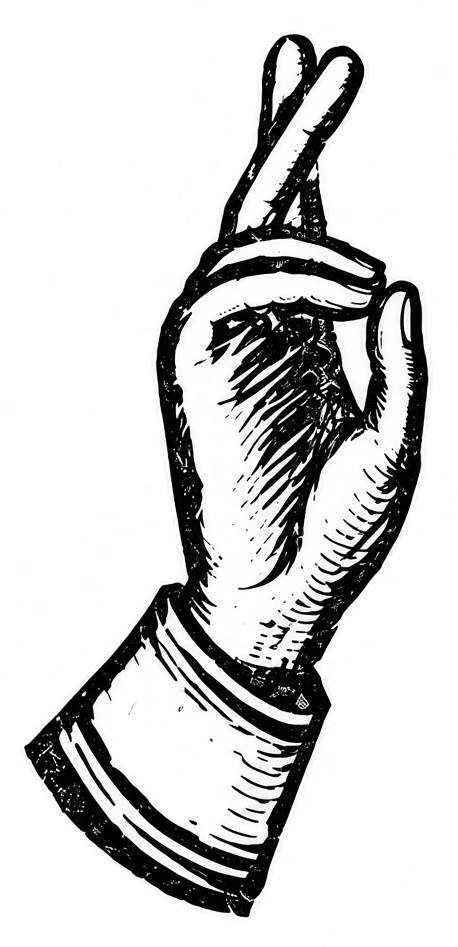
Old Rite: Christ’s two natures; three gathered: the Holy Trinity.
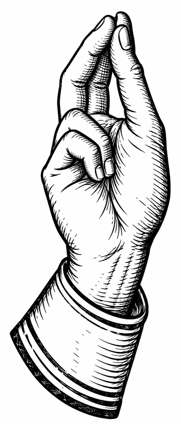
New Rite: the Holy Trinity; two folded: Christ God and man.
Guests will meet both.
Church Slavonic
Church Slavonic is the inherited liturgical language of the Slavic Churches. Saints Cyril and Methodius invented the language to evangelize the Slavs of the regions in the 9th century.
If a custom, a date, or a word on these pages raises a question, find a parish and ask a local ordained priest.
This work is an offering. Your prayers matter.
A website cannot pastor you. Find a parish.
May God bless you.