Holy, All-Praised Apostle Philip
Apostle of Christ
Holy, All-Praised Apostle Philip
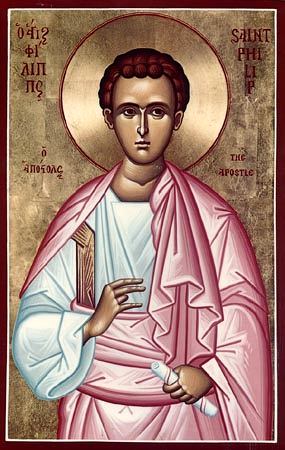
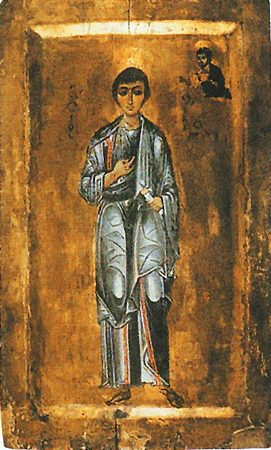
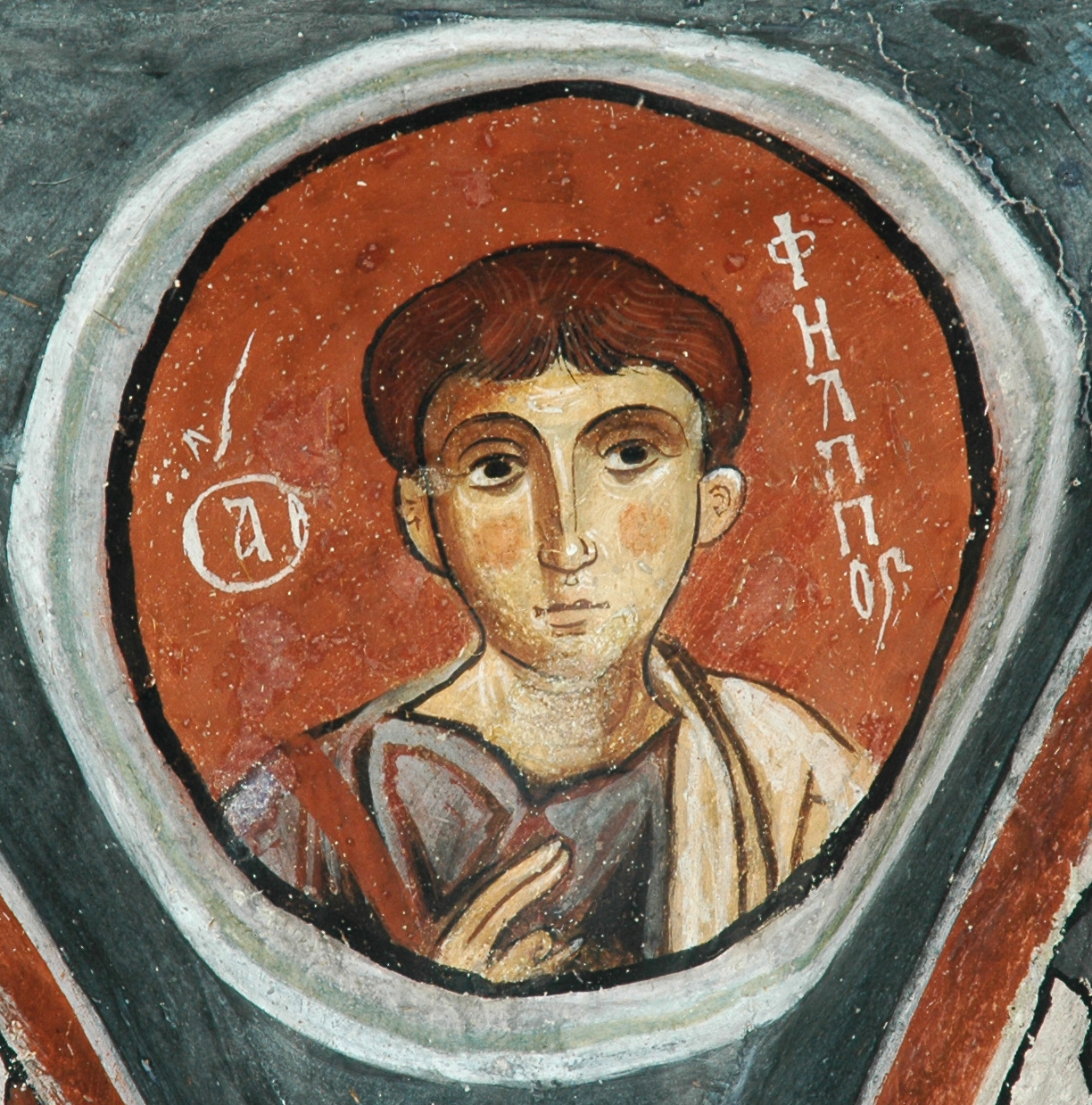
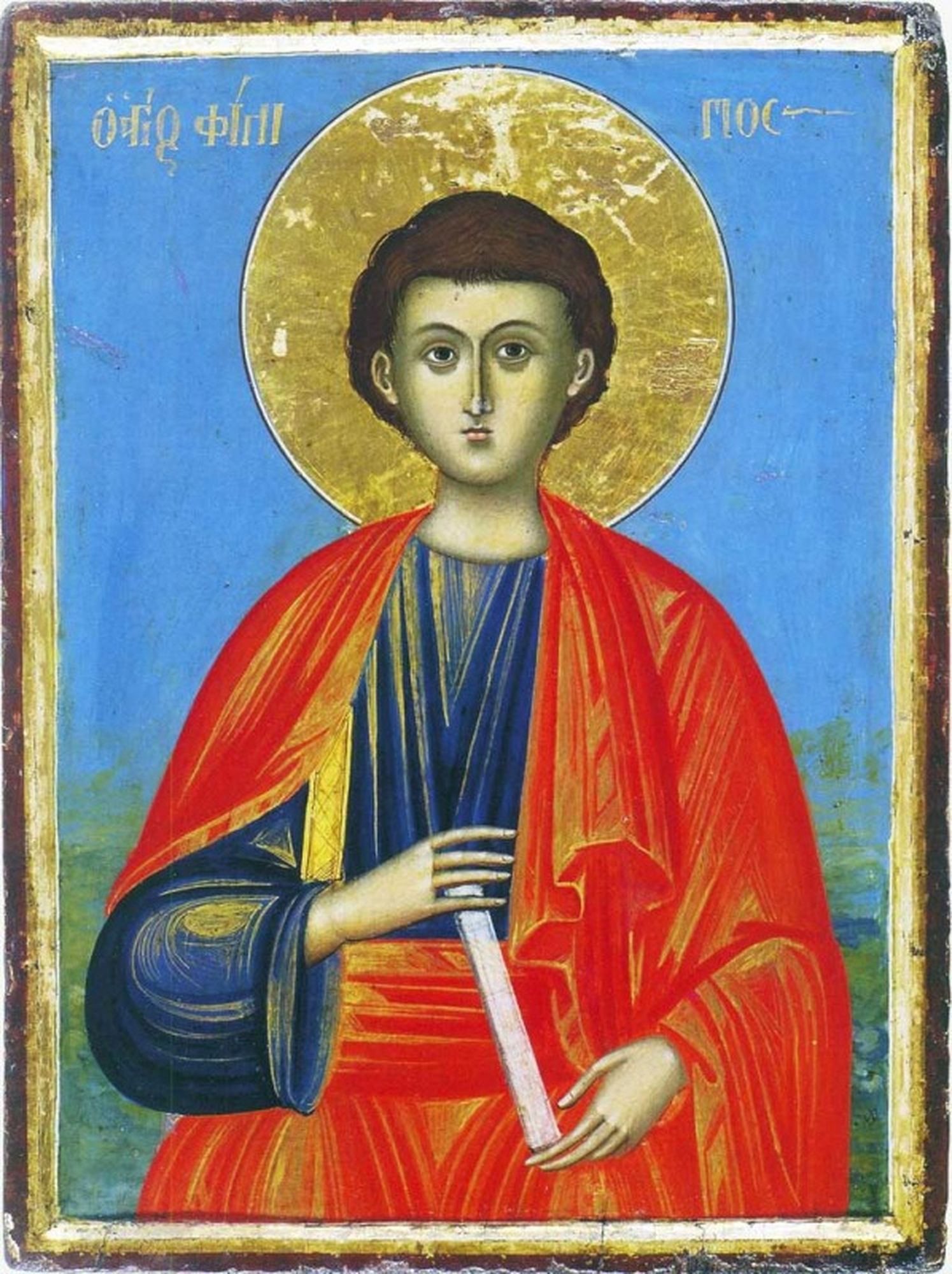
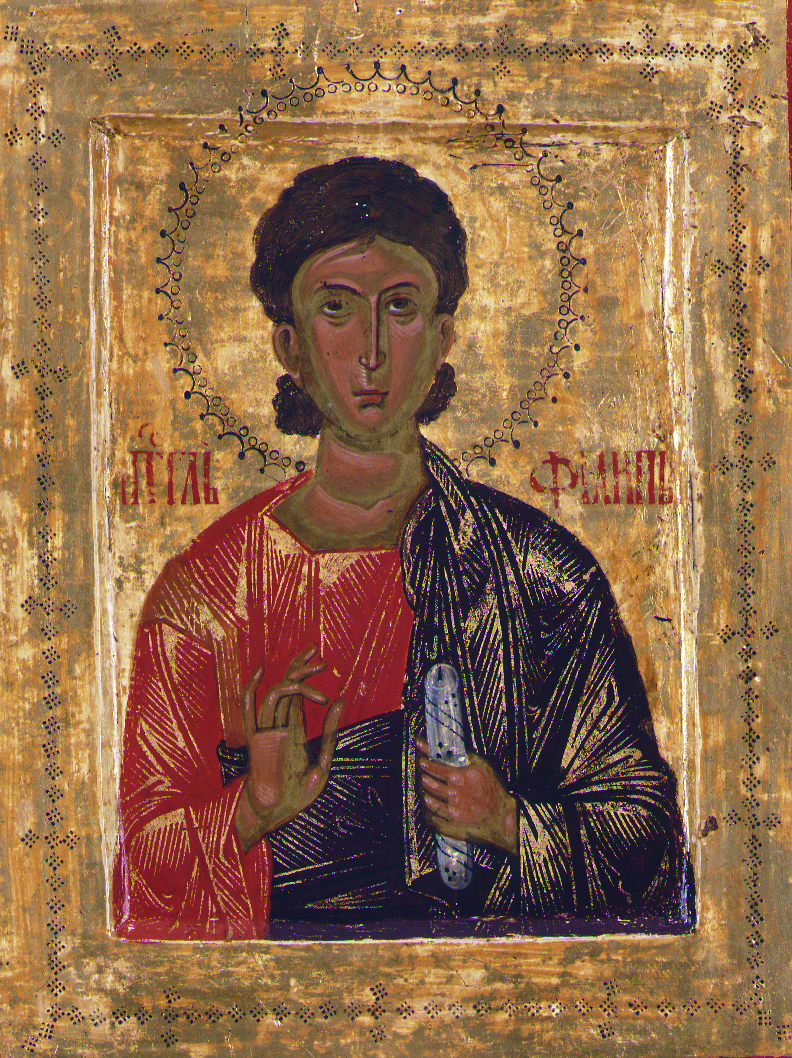
“Go ye therefore, and teach all nations.”
Commemorations
Why different dates?Old Calendar: the traditional Julian calendar used for fixed commemorations in some churches. New Calendar: the Gregorian or Revised Julian dating used for fixed commemorations in other churches. In 2026, the traditional Julian calendar is 13 days behind the civil Gregorian calendar. These are this site’s calendar display labels; source traditions may vary. Select a date to explore other commemorations in Calendar Day view.- Old CalendarNovember 14↗
- New CalendarNovember 27↗
Apostolic Commemorations
Life & Witness
Main life · Orthodox Church in America (OCA) · English
The Holy and All-praised Apostle Philip was a native of the city of Bethsaida in Galilee. He had a profound depth of knowledge of the Holy Scripture, and rightly discerning the meaning of the Old Testament prophecies, he awaited the coming of the Messiah. Through the call of the Savior (John 1:43), Philip followed Him. The Apostle Philip is spoken about several times in the Holy Gospel: he brought to Christ the Apostle Nathaniel (i.e. Bartholomew, April 22, June 30, and August 25. See John.
Continue reading (775 words · 4 min read)
1:46). The Lord asks him where to buy bread for five thousand men (John. 6: 5-7). He brought certain of the Hellenized Jews wanting to see Jesus (John. 12:21-22); and finally, at the Last Supper he asked Christ to show them the Father (John. 14:8).
After the Ascension of the Lord, the Apostle Philip preached the Word of God in Galilee, accompanying his preaching with miracles. Thus, he restored to life a dead infant in the arms of its mother. From Galilee he went to Greece, and preached among the Jews that had settled there. Some of them reported the preaching of the Apostle to Jerusalem. In response, some scribes arrived in Greece from Jerusalem, with one of the Jewish chief priests at their head, to interrogate the Apostle Philip.
The Apostle Philip exposed the lie of the chief priest, who said that the disciples of Christ had stolen away and hidden the body of Christ. Philip told instead how the Pharisees had bribed the soldiers on watch, to deliberately spread this rumor. When the Jewish chief priest and his companions began to insult the Lord and lunged at the Apostle Philip, they suddenly were struck blind. By his prayer the Apostle restored everyone’s sight. Seeing this miracle, many believed in Christ. The Apostle Philip provided a bishop for them, by the name of Narcissus (one of the Seventy Apostles, January 4).
From Greece the Apostle Philip went to Parthia, and then to the city of Azotus, where he healed an eye affliction of the daughter of a local resident named Nikoklides, who had received him into his home, and then baptized his whole family.
From Azotus the Apostle Philip set out to Syrian Hieropolis (there were several cities of this name) where, stirred up by the Pharisees, the Jews burned the house of Heros, who had taken in the Apostle Philip, and they wanted to kill the apostle. The apostle performed several miracles: the healing of the hand of the city official Aristarchus, withered when he attempted to strike the apostle; and restoring a dead child to life. When they saw these marvels, they repented and many accepted holy Baptism. After making Heros the bishop at Hieropolis, the Apostle Philip went on to Syria, Asia Minor, Lydia, Emessa, and everywhere preaching the Gospel and undergoing sufferings. Both he and his sister Mariamne (February 17) were pelted with stones, locked up in prison, and thrown out of villages.
Then the Apostle Philip arrived in the city of Phrygian Hieropolis, where there were many pagan temples. There was also a pagan temple where people worshiped an enormous serpent as a god. The Apostle Philip by the power of prayer killed the serpent and healed many bitten by snakes.
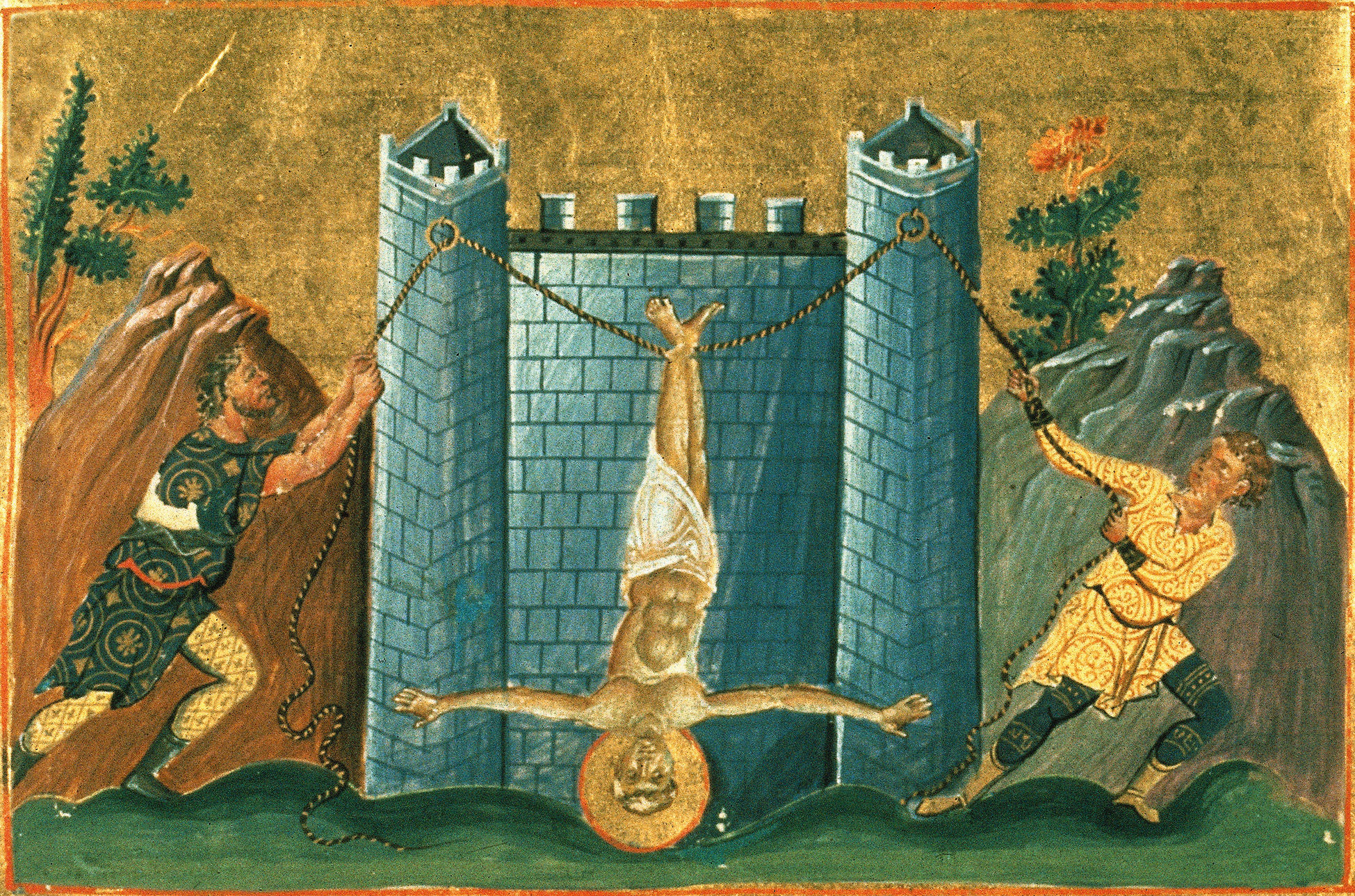
Among those healed was the wife of the city prefect, Amphipatos. Having learned that his wife had accepted Christianity, the prefect Amphipatos gave orders to arrest Saint Philip, his sister, and the Apostle Bartholomew traveling with them. At the urging of the pagan priests of the temple of the serpent, Amphipatos ordered the holy Apostles Philip and Bartholomew to be crucified.
Suddenly, an earthquake struck, and it knocked down all those present at the place of judgment. Hanging upon the cross by the pagan temple of the serpent, the Apostle Philip prayed for those who had crucified him, asking God to save them from the ravages of the earthquake. Seeing this happen, the people believed in Christ and began to demand that the apostles be taken down from the crosses. The Apostle Bartholomew was still alive when he was taken down, and he baptized all those believing and established a bishop for them.
But the Apostle Philip, through whose prayers everyone remained alive, except for Amphipatos and the pagan priests, died on the cross.
Mariamne his sister buried his body, and went with the Apostle Bartholomew to preach in Armenia, where the Apostle Bartholomew was crucified (June 11); Mariamne herself then preached until her own death at Lykaonia.
The holy Apostle Philip is not to be confused with Saint Philip the Deacon (October 11), one of the Seventy.
Other Life Sources
English
Azbuka — Lives of the Saints
Source · Azbuka — Lives of the Saints
Translated by Piece of Humanity using Google Cloud Translation. This translation may contain errors. To help keep this record accurate, please suggest corrections in the comments below. I’ll review your suggestions carefully and update the translation where needed.
By the Sea of Galilee, near Chorazin and Capernaum, stood a city called Bethsaida [7401] . Three of Christ’s 12 apostles were born in this city: Peter, Andrew, and Philip. Peter and Andrew were fishermen, a trade they pursued until their calling by Christ; Philip, however, was devoted by his parents to book learning from his youth. Diligently reading and studying the Holy Scriptures and the prophecies about the longed-for Messiah, he became inflamed with a fervent love for Him and a strong desire to see the Lord face to face, although he did not yet know that He whom so many had longed to see, awaiting His coming, had already come to earth.
Continue reading (4,782 words · 24 min read)
But Christ came into the region of Galilee and found Philip there, who was burning with such love for the Messiah. “Follow me,” Jesus said to Philip ( John 1:43 ).
Philip, hearing the Lord’s call, believed with all his heart that He was the true Messiah, promised by God through the prophets, and followed Him. Heeding the Lord’s most holy life, Philip strove to imitate Him and learned from Him divine wisdom, the power of which later overcame pagan folly. Rejoicing at the discovery of such a Treasure, by which the whole world would be redeemed, Philip did not wish to be enriched by Him alone, but desired that others also share in the same gift. Meeting his friend Nathanael, he joyfully announced to him: “We have found Him of whom Moses in the Law and the prophets wrote—Jesus, son of Joseph, of Nazareth.”
Nathanael, hearing this and not believing that the Messiah, the King of Israel, could come from a small town and from a simple family, said: “Can anything good come out of Nazareth?”
Then Philip, without saying anything, advised him only to look at Him.
“Go,” he said, “and see.”
He felt that as soon as Nathanael saw Jesus and heard His saving words, he would immediately believe that He was the Messiah. And so it indeed happened. When Philip walked with him to Jesus, the Lord, who searches the hearts and minds of men and reads the secret thoughts and hearts of men, saw Nathanael coming to Him, recognized him, and said of him: “Behold, an Israelite indeed, in whom is no guile.”
When Nathanael heard these words, he was greatly surprised and said to Him, “How do You know me?”
The Lord answered him: “Before Philip called you, when you were under the fig tree, I saw you.”
Nathanael, while he was under the fig tree, was contemplating the Divine Messiah, in whose hope lay all the joy and gladness of God’s faithful servants. And God granted him at that time a contrite heart and warm tears, which he added to his fervent prayer that the Lord would fulfill His promise to the fathers of old and send to earth the Savior of the world. The all-seeing eye of God beheld Nathanael at that time, who was in a spirit of compunction. Therefore, the Lord told him that when Nathanael was under the fig tree, He saw him.
Nathanael was even more astonished by these words. He remembered what he had been thinking while under the fig tree, and with what tenderness he had prayed to God for the sending of the Messiah; he knew that no one had been there with him to see him, and that no one could discern his thoughts except God. Therefore, Nathanael immediately believed that Jesus was the Messiah, whom God had promised to send for the salvation of the human race, and he recognized the divine nature in Jesus Christ, who foresaw the secrets of his heart, and therefore exclaimed: “Teacher! You are the Son of God, You are the King of Israel.” John 1:45–49 )!
How much gratitude Nathanael subsequently felt toward Philip for announcing to him the Savior who had come to earth and drawing him to the promised Messiah! And Saint Philip rejoiced in his heart that people had found the Divine Treasure hidden in the depths of human nature, and he burned with even greater love for his Lord. Nevertheless, Saint Philip saw in his Divine Teacher only the highest human perfections, but did not yet recognize His Divinity in Him. And so Christ desired to correct him. One day, the Lord, walking on the other side of the Sea of Tiberias [7402] with five thousand people and desiring to miraculously feed such a multitude of His listeners, said to Philip: “Where shall we buy bread to feed these?” John 6:5–6 ).
He said this to test him, for He knew that there was no bread to be had; He also knew in advance what Philip would answer. That is why He asked Philip about this, so that he might know himself better and, ashamed of his lack of faith, correct himself. And indeed, Philip did not remember the omnipotence of God and did not say: “You, Lord, can do everything; it is not fitting for You to ask anyone about this: just desire it, and everyone will immediately be satisfied: “You give to them, and they receive; You open Your hand, and they are filled with good things” ( Ps. 103:28 ).
Philip did not say this, but, thinking of his Lord as a man and not as God, he said: “Two hundred denarii worth [7403] of bread will not be enough for them to get even a little bit” ( John 6:7 ).
Then, together with the other disciples, he added: “Send the people away so that they can go to the surrounding villages and buy food for themselves.” Mark 6:36 ).
When the Lord had broken the five loaves and the two fish for the five thousand people ( (Luke 9:16 ) Philip saw that from the Lord’s hand, as from an inexhaustible granary, everyone received sufficient food until the entire people were satisfied. Then the apostle was deeply ashamed of his lack of faith and, strengthened in his faith, he glorified, together with others, the power of God in Jesus Christ.
Philip was subsequently counted by the Lord among the twelve chosen apostles, received grace from Him, and was granted close communion with Him. One day, during a feast, some Greeks gathered in Jerusalem and were unable to approach Jesus, being unbelieving pagans. Therefore, approaching Philip, they pleaded with him, saying, “Sir, we want to see Jesus!”
He, first of all, told Andrew about this and together with him already dared to inform Jesus about the desire of the Greeks, rejoicing that the pagans were also seeking to see and hear his Lord and Teacher. Then he heard from Jesus a wondrous teaching and prophecy about the pagans who were to believe in Him not then, but after His death. “Unless a grain of wheat falls to the ground and dies, it remains alone; but if it dies, it bears much fruit” ( John 12:24 ).
By this Christ seemed to say: “While I live on earth, I have only a part of the house of Israel who believe in Me; but if I die, then not only the house of Israel, but also many Gentiles will believe in Me.”
Another time, after the Last Supper, Philip dared to ask the Lord about the great mystery of the Divinity, when he prayed to Him for the revelation of the Father to them, saying: “Lord, show us the Father, and it is enough for us!” ( John 14:8 ).
With this question he brought great benefit to the Church of Christ, since from this we learned to recognize the consubstantiality of the Son with the Father and to stop the mouths of heretics who reject this Divine truth. The Lord responded to this with a gentle reproach: “Have I been with you so long time, and yet you do not know Me, Philip! He who has seen Me has seen the Father; how then do you say, ‘Show us the Father?’ Do you not believe that I am in the Father, and the Father in Me? The words that I speak to you I do not speak on My own authority. The Father who dwells in Me, He does the works. Believe Me that I am in the Father, and the Father in Me.” John 14:9–11 ).
This answer of the Lord taught Saint Philip and with him the whole Catholic Apostolic Church to worthily believe in the equality of the Divinity of the Son with the Father and denounces the blasphemy of Arius, who said that the Son of God is a creation, and not the Creator.
After the voluntary suffering and resurrection of the Son of God, Saint Philip saw with the other apostles his Lord already in an immortal and glorified body, received peace and blessing from Him, and also saw His ascension.
After this, he was granted the grace of the Holy Spirit and became a preacher of Christ among the pagans, for his lot fell to him to preach in Asia Minor and Syria. He first preached in Galilee. There, one day, a woman met him, carrying her dead infant in her arms and weeping inconsolably. Seeing her, the apostle of Christ took pity on her and, stretching out his hand over the dead child, said, “Arise! This is what Christ, whom I preach, commands you.”
And immediately the infant came to life. The mother, seeing her resurrected son alive and well, joyfully fell at the apostle’s feet, giving him thanks for his resurrection and asking for his baptism, for she believed in Christ the Lord whom he preached. The apostle, having baptized mother and son, departed for pagan lands. Preaching the Gospel in Greece, he performed many miracles by the power of Christ, healing the sick, and raising a dead man. This miracle astonished the Jews living there, and they sent word to the Jewish high priests and princes in Jerusalem that an unknown man named Philip had come to them, preaching the name of Jesus, by which he cast out demons and healed all manner of illnesses. He had even raised a dead man by the same name, Jesus. Many had already come to believe in Christ. Soon a high priest arrived from Jerusalem with scribes, embittered and irritated with Philip. Having donned his high priestly robes, he arrogantly and proudly sat upon the judgment seat in the presence of a multitude of people, both Jews and Gentiles. Apostle Philip was also brought there and placed among the assembled crowd. Casting a stern glance at him, the high priest began to speak angrily: “Was it not enough for you to live in Judea, Galilee, and Samaria, deceiving simple and uneducated people? Yet you have come here among the wise Greeks to spread the scandal you learned from Jesus, the enemy of the law of Moses, for which He was condemned, crucified, and died a shameful death. He was buried only because of the Passover feast that was then taking place. You, His disciples, stole Him away secretly and, to deceive many, proclaimed everywhere that He Himself had risen from the dead.”
When the bishop said these words, the crowd shouted at Philip: “What will you answer to this, Philip?”
A great uproar arose among the people: some wanted Philip killed immediately, while others wanted him taken to Jerusalem for execution. Then the holy apostle opened his mouth and said to the high priest: “In vain have you loved vanity and spoken lies! Why does your heart remain hardened, and you refuse to confess the truth? Were you not the ones who sealed the tomb and posted a guard, and when our Lord arose without breaking the tomb seal, did you not then give gold to the soldiers so that they would lie, claiming that His disciples had stolen Him from the dead while they slept? How is it that you are now not ashamed to distort the truth? The very seals of the tomb will serve on the day of judgment as clear denunciations of your lies, as witnesses to the true resurrection of Christ.”
At these words of the apostle, the bishop became even more enraged and, in a frenzied rage, rushed at him, intending to seize and kill the apostle himself. But at that very moment, he was struck blind and turned completely black. Those present, seeing what had happened, attributed it to sorcery and, rushing at Philip, wanted to destroy him as a sorcerer. However, all who sought to seize him suffered the same punishment as the bishop. At the same time, the earth shook terribly, and everyone trembled with fear and recognized the great power of Christ. Apostle Philip, seeing their blindness of soul and body, wept over them and turned in prayer to God, asking for enlightenment. And so, through the saint’s prayer, healing was sent from above to all those afflicted. This miracle led many to turn to Christ and believe in Him. But the bishop, still blinded by malice, not only refused to reform and recognize the truth after the punishment he had suffered, but also again began to utter many blasphemies against our Lord Jesus Christ. Then an even greater punishment struck him. Suddenly, the earth, opening its depths, swallowed him up, as it had once swallowed Dathan and Abiron [7404] .
After the death of the bishop, Saint Philip baptized many there and ordained a venerable and worthy man named Narcissus as their bishop. He himself departed for Parthia. On the way, he asked God for help in his labors. And as he knelt in prayer, the image of an eagle with golden wings outstretched like the crucified Christ appeared to him from the sky. Strengthened by this vision, Saint Philip set out again to preach and, having toured the Arabian and Candacean cities, boarded a ship and sailed to the Syrian city of Azotus [7405] . That night, a violent storm arose at sea, and everyone despaired of their lives. Then the holy apostle rose to pray, and immediately the sign of a luminous cross appeared in the sky, illuminating the darkness of the night. The sea suddenly became calm, and its waves subsided. Having reached the shores of Azotus, Philip disembarked and was received into the home of a pilgrim named Nicoclida, whose daughter Charitina suffered from an affliction in one eye. Entering Nicoclida’s home, the apostle began preaching the word of God to those present, and everyone listened with joy. Charitina was also present; she was so overcome with spiritual rapture at the apostle’s teaching that she even forgot her own illness. Seeing her zeal for the word of God, he commanded her to call upon the name of Jesus Christ and place her hand on her aching eye. As soon as Charitina did so, her eye was instantly healed, and the entire household of Nicoclida believed in Christ and received holy baptism.
From Azotus, the Apostle Philip headed to Hierapolis in Syria [7406] , where, preaching Christ, he provoked intense anger among the people, who even threatened to stone him. But the intercession of an influential citizen named Er saved him from the public outrage.
“Citizens!” he addressed the people. “Listen to my advice: do no harm to this stranger until we know whether his teaching is true, and if it turns out not to be, then we will destroy him.”
The people did not dare contradict Irus, who then brought Philip into his home. The apostle continued his usual preaching and converted Irus, his entire household, and his neighbors to the holy faith, enlightening them with the sacrament of holy baptism. The citizens, learning that Irus had been baptized, gathered at night and surrounded his house, intending to burn Irus there in his sleep, along with the apostle and his entire household. Discovering their plot, the apostle fearlessly confronted them. They, like wild beasts, gnashing their teeth, seized him and led him to their council. The head of the council, whose name was Aristarchus, seeing the apostle, reached out and grabbed him by the hair, but at that very moment his hand withered, and he lost his sight and hearing. Then a change occurred in the people’s feelings: their anger at the sight of this miracle gave way to amazement, and they began to beg the apostle to heal their city governor, Aristarchus. Philip replied, “If he does not believe in the God I preach, he will not be healed.”
At this time, a funeral procession was moving near them, and the people, wanting to mock the apostle, said: “If you resurrect this dead man, then Aristarchus and we will believe in your God.”
The apostle raised his eyes to heaven, prayed for a long time, and then, turning to the dead man, said in a gentle voice, “Theophilus!” Immediately the dead man rose on the bier, sat up, and opened his eyes. Then Philip said to him a second time, “Christ commands you: arise and speak to us!”
The deceased, rising from his bed, fell at the feet of the apostle with the words: “I thank you, holy servant of God, for delivering me at this hour from a great evil: two black and evil-smelling Ethiopians dragged me away, and if you had not prevented and delivered me from them, then I would have been cast down into dark Tartarus.”
Then all who witnessed this glorious miracle unanimously glorified the One True God preached by Philip. The apostle motioned with his hand to the crowd to remain silent for a while and commanded Irus to make the sign of the cross with his own hand on Aristarchus’s injured limbs. As soon as Irus did so, Aristarchus’s withered hand was immediately healed, and he began to see and hear, completely cured. These miracles, performed by Saint Philip by the power of Christ, converted the inhabitants of Hierapolis to Christ, and everyone rushed to smash their idols. The first to believe was Theophilus’s father, who smashed twelve golden idols and distributed the gold to the poor. The apostle baptized everyone and ordained Irus as their bishop. Having thus founded the church in Hierapolis and confirmed the newly enlightened in the holy faith, Saint Philip set out to preach in other lands. Having traversed Syria and the Asian highlands, he arrived in Lydia and Mysia in[7407] [7407] , and while passing through these lands, he converted unbelieving pagans to the True God. There he was joined by the holy Apostle Bartholomew , who was preaching in neighboring cities at the time and had been sent by God to aid Philip. Philip’s sister, the maiden Mariamne , also followed him, and together they began to serve the cause of the salvation of mankind. Traveling through Lydia and Mysia and preaching the word of God, they endured many trials, beatings, and afflictions from the infidels; they were imprisoned and stoned. But despite all the persecution, by the grace of God they remained alive for their future labors of spreading the Christian faith. In one of the Lydian villages, they met the beloved disciple of Christ, Saint John the Theologian, and together they set out for the land of Phrygia. Entering the city of Hierapolis in[7408] [7408] , they preached Christ there. This city was overflowing with idols, worshiped by all its inhabitants. Among the false deities was another, a viper, for which a special temple was built, where food was brought to it and numerous and varied sacrifices were made. The madmen also venerated other reptiles and vipers. St. Philip, together with his sister, first armed themselves with prayer against the viper, assisted by St. John the Theologian, who was with them at the time. Together, with prayer, as with a spear, they defeated the viper and, by the power of Christ, killed it. After this, John the Theologian parted from them, leaving Hierapolis to them for the preaching of the word of God, while he himself went to other cities, spreading the holy gospel everywhere. Saint Philip, Bartholomew, and Mariamne remained in Hierapolis, zealously striving to eradicate the darkness of idolatry and to bring the light of truth to the lost. They labored day and night, teaching the word of God to the unbelievers, admonishing the foolish, and guiding the lost to the true path. In the city lived a man named Stachys, who had been blind for forty years. The holy apostles, through the power of prayer, enlightened his physical eyes and, through the preaching of Christ, illuminated his spiritual blindness. After baptizing Stachys, the saints remained in his home. Word spread throughout the city that the blind Stachys had regained his sight. Crowds of people began to gather at his home. The holy apostles taught all who flocked to them the faith in Christ Jesus. They brought many sick people there, and the holy apostles healed them all with prayer and cast out demons, so that a large number of people believed in Christ and were baptized.
The wife of the mayor of that city, named Nicanor, was bitten by a snake and lay ill, near death. Hearing of the holy apostles, who were in the house of Stachys, who healed all manner of illnesses with a single word, she, in her husband’s absence, commanded her servants to take her to them and received a double healing: a physical one from the snake bite and a spiritual one from demonic deception. Instructed by the holy apostles, she came to believe in Christ. When the mayor returned home, his servants reported that his wife had learned to believe in Christ from some foreigners residing in Stachys’s house. Flying into a terrible rage, Nicanor ordered the apostles to be immediately seized and Stachys’s house to be burned, which was done. A large crowd gathered, and the holy apostles Philip and Bartholomew and the holy virgin Mariamne were dragged through the city with beatings, mocked, and finally thrown into prison. After this, the city governor sat on the judgment seat to judge the preachers of Christ, and all the idol priests and the priests of the dead viper gathered before him, bringing complaints against the holy apostles and saying: “Master! Avenge the dishonor of our gods, for ever since these strangers appeared, the altars of our great gods have fallen into disrepair in our city, and the people forget to offer them the customary sacrifices. Our renowned goddess, the viper, has perished, and the entire city is filled with lawlessness. Put these magi to death.”
Then the city governor ordered Saint Philip’s clothes removed, thinking they contained witchcraft. However, when they removed his clothes, nothing was found. They did the same with Saint Bartholomew, and found nothing in his clothes. When they approached Mariamne with the same intention, intending to remove her clothes and expose her virginal body, she suddenly transformed into a fiery flame before their eyes, and the impious ones fled from her in fear. The holy apostles were condemned to crucifixion by the governor. Saint Philip was the first to suffer. Having drilled holes in his feet and threaded ropes through them, they crucified him upside down before the doors of the viper’s temple, while pelting him with stones. Then they crucified Saint Bartholomew against the wall of the church. Suddenly, a great earthquake struck; the earth opened up and swallowed the city governor, along with all the priests and a multitude of unbelievers. All who remained alive, both believers and pagans, were overcome with fear and, with tears, begged the holy apostles to have mercy on them and to implore their One True God that the earth not swallow them up as it had them. They quickly rushed to remove the crucified apostles from the cross. Saint Bartholomew was hung low and was quickly removed. But Philip could not be quickly removed from the cross because he was hung high and especially because it was God’s special will that this apostle, through his suffering and death on the cross, would pass from earth to heaven, where his steps had been directed all his life. Hanging thus, Saint Philip prayed to God for his enemies, that the Lord would forgive them their sins and enlighten their minds to the knowledge of the truth. The Lord bowed to his prayer and immediately commanded the earth to vomit up alive the victims it had swallowed, with the exception of the city governor and the viper priests. Then, with a loud voice, everyone confessed and glorified the power of Christ, expressing their desire to be baptized. When they wanted to remove Saint Philip from the cross, they saw that he had already given up his holy soul to God, and they took him down dead. His sister, Saint Mariamne, who had constantly watched the suffering and death of her brother Philip, lovingly embraced and kissed his body as it was taken down from the tree and rejoiced that Philip had been deemed worthy to suffer for Christ. Saint Bartholomew baptized all who believed in the Lord and appointed Stachys as their bishop. The newly converted reverently buried the body of Saint Philip the Apostle. On the spot where Saint Philip’s blood flowed, Apostle, a grapevine grew in three days, as a sign that Saint Philip, for the blood he shed in the name of Christ, enjoys eternal bliss with his Lord in His Kingdom [7409] .
Saint Bartholomew and the blessed virgin Mariamne, after the burial of Saint Philip, spent several days in Hierapolis and, having strengthened the newly founded church in the Christian faith, withdrew from there to the city of Alban in Greater Armenia [7410] , where he was crucified. Saint Mariamne went to Lycaonia [7411] and there, having converted many to the holy faith, died peacefully. For all this, glory to our God, now and ever, and to the ages of ages. Amen.
* * *
Notes
Bethsaida of Galilee was located on the northwest side of the Sea of Galilee (in the northern part of Palestine), near the cities of Capernaum and Chorazin.
The Sea of Tiberias is another name for the same Lake of Galilee, adopted by the latter from the name of Tiberias, a Galilean city on the southeastern shore of the Sea of Galilee.
The denarius is an ancient Jewish coin worth approximately 21.5 kopecks. Thus, 200 denarii were equivalent to approximately 43 rubles.
Dathan and Abiram, the Reubenites, the sons of Eliab, were traitors who plotted against Moses , for which they were punished by God with a terrible punishment: the earth opened up and swallowed them. Num. 16:1–50 ).
Azotus—from the Hebrew: fortified place, fortress —was a wealthy and fortified Philistine city in ancient times, located on the eastern shore of the Mediterranean Sea. Under the Maccabees, it was burned and destroyed, later rebuilt, but no longer enjoyed its former strength. Today, the small village of Yezdud stands here.
Hierapolis is the name of several ancient cities. Among them is Hierapolis of Syria, later Bambyc among the Greeks; from the time of Constantine the Great, it was the principal city of the Euphrates province; only ruins now remain of it near present-day Membidge.
Lydia and Mysia are northwestern regions of Asia Minor.
Hierapolis of Phrygia was located in the southern part of Phrygia (in central Asia Minor), between the Lycus and Maeander rivers. In ancient times, it was a significant city, particularly renowned for its marble quarries and warm springs. It now bears the Turkish name Pambuk Kalesi (cotton city), referring to the cotton-like appearance of the white rocks, hillocks, cliffs, plains, riverbanks, and channels formed by the sediment from the streams descending from the mountains. Today, only ruins remain, and the site serves as a refuge for lepers.
To this account of the martyrdom of St. Philip the Apostle, ancient narratives add that seven days before his death, he himself foretold his own death. Apostle Philip died a martyr’s death during the reign of the Roman Emperor Domitian in 90 AD, at the age of 87. His relics were transferred to Rome around 560, where they now rest in the Church of the Twelve Apostles. One hand of the holy Apostle was kept in Constantinople in the Church of the Virgin Mary Immaculate. The Byzantine Emperor Manuel Comnenus gave it, as a sacred and precious pledge, to his niece Maria when he gave her in marriage to Amorius, King of Jerusalem, in 1167. In 1204, this relic was transferred to Florence.
In Asia, on the border with the Caucasus.
Lycaonia is one of the central regions of Asia Minor, bordering Phrygia.
Pravoslavie.ru
Source · Pravoslavie.ru
Translated by Piece of Humanity using Safari’s built-in translation. This translation may contain errors. To help keep this record accurate, please suggest corrections in the comments below. I’ll review your suggestions carefully and update the translation where needed.
The Holy Apostle Philip, a native of the city of Bethsaida (Galilee), was a deep connoisseur of the Holy Scriptures and, correctly understanding the meaning of the Old Testament prophecies, was waiting for the coming of the Messiah. At the call of the Savior (John 1, 43) he followed Him.
Continue reading (696 words · 4 min read)
The Apostle Philip is said several times in the Holy Gospel: he brought the Apostle Nathanael to Christ (John 1, 46); his Lord asked how much money they needed to buy bread for 5 thousand people (John 6, 7); he brought the Greeks who wanted to see Christ (John 12, 21 – 22); finally, during the Last Supper he asked Christ about God the Father (John 14, 8).
After the Ascension of the Lord, Apostle Philip preached the Word of God in Galilee, accompanying the sermon with miracles. So, he resurrected the baby who died in his mother’s arms. From Galilee he went to Greece and preached among the Jews who moved there. Some of them reported to Jerusalem about the apostle’s preaching, and then the scribes led by the high priest arrived from Jerusalem to Hellas to accuse the apostle Philip. The Apostle Philip denuded the lie of the high priest, who said that the disciples of Christ had kidnapped and hidden the body of the Lord, telling how the Pharisees bribed the warriors of the guards who spread this rumor. When the Jewish high priest and his companions began to blaspheme the Lord and pounced on the Apostle Philip, they suddenly went blind. According to the apostle’s prayer, all saw, and seeing this miracle, many believed in Christ. The Apostle Philip appointed them a bishop named Narcissus (counted among the 70 apostles).
From Hellas, Apostle Philip went to Parfa, and then to the city of Azot, where he healed the sick eyes of the daughter of a local resident Nicoclid, who took him into his house and then baptized with the whole family.
From Azot, the Apostle Philip went to Hierapolis of Syria, where, incited by the Pharisees, the Jews set fire to the house of Ir, who took the apostle Philip, and they wanted to kill the apostle. But, seeing the miracles performed by the apostle: the healing of the dried hand of the head of the city Aristarchus, who wanted to strike the apostle, as well as the resurrection of the dead boy, they repented and many accepted Holy Baptism. Having appointed Ira as bishop in Hierapolis, the apostle passed through Syria, Asia Minor, Lydia, Misia, preaching the Gospel everywhere and enduring suffering. He and his sister Mariamna, who accompanied him, were stoned, imprisoned in prisons, and expelled from the villages.
Then the apostle arrived in Phrygia, in the city of Hierapolis of Phrygia, where there were many pagan temples, including a temple dedicated to snakes, where a huge echidna lived. Apostle Philip killed the vile with the power of prayer and healed many who were bitten by snakes. Among the healed was the wife of the ruler of the city Anfipat, who accepted Christianity. Upon learning of this, the ruler of Anphipat ordered to capture Philip, his sister and the Apostle Bartholomew who came with them. At the instigation of the priests of the temple of Echidna, Anfipat ordered the crucified of the holy apostles Philip and Bartholomew. At that time, an earthquake began, and everyone present at the court was covered with earth. Hanging on the cross near the temple of the vicable, Apostle Philip prayed for the salvation of those who crucified him from the consequences of the earthquake. Seeing what was happening, the people believed in Christ and began to demand the removal of the apostles from the cross. Apostle Bartholomew, removed from the cross, was still alive and, having been released, baptized all the believers and appointed a bishop to them.
Apostle Philip, whose prayers left all but Anfipat and the priests alive, died on the cross.
His sister Mariamna buried his body and together with the Apostle Bartholomew went to Armenia with a sermon, where the Apostle Bartholomew was crucified (memory of June 11), while Mariamna preached until her death in Lycaonia (the memory of February 17).
Russian
Azbuka — Lives of the Saints
Source · Azbuka — Lives of the Saints
Житие святого Апостола Филиппа
Continue reading (3,885 words · 20 min read)
Память 14 ноября
При озере Галилейском, близ Хоразина и Капернаума, находился город, называемый Вифсаида7401. В этом городе родились три апостола Христова из лика 12: Петр, Андрей и Филипп. Петр и Андрей были рыбарями и этим промыслом занимались до самого призвания их Христом; Филипп же с юношеских лет отдан был родителями книжному обучению. Усердно читая и изучая Священное Писание и пророчества о вожделенном Мессии, он воспылал горячею любовью к Нему и сильным желанием видеть Господа лицом к лицу, хотя еще и не знал, что уже пришел на землю Тот, видеть Которого столь многие желали, ожидая пришествия Его.
Но вот Христос пришел в пределы Галилейские и нашел там Филиппа, пылавшего такой любовью к Мессии. «Иди за мною», – сказал Иисус Филиппу (Ин. 1:43).
Филипп, услышав призыв Господа, всем сердцем уверовал, что Он есть истинный Мессия, обетованный Богом через пророков, и последовал за Ним. Внимая пресвятой жизни Господа, Филипп старался подражать Ему и поучался от Него Божественной премудрости, силою которой впоследствии победил он безумие языческое. Радуясь обретению такого Сокровища, Которым весь мир имел быть искуплен, Филипп не хотел один только обогащаться от Него, но желал, чтобы и другие были участниками того же дара. Встретив своего друга Нафанаила, он с радостью возвестил ему: «Мы нашли Того, о Котором писали Моисей в законе и пророки – Иисуса, сына Иосифа, из Назарета».
Нафанаил, услыхав это и не веря, чтобы из небольшого города и из простого рода мог произойти Мессия, Царь Израильский, сказал: «Из Назарета может ли что быть доброе?»
Тогда Филипп, не говоря ничего, посоветовал ему только взглянуть на Него.
«Пойди, – сказал он, – и посмотри».
Он чувствовал, что как только Нафанаил увидит Иисуса и услышит спасительные слова Его, тотчас же поверит, что Он есть Мессия. Так это действительно и произошло. Когда Филипп шел с ним к Иисусу, то Господь, испытующий сердца и утробы и читающий сокровенные мысли и сердца людей, увидев Нафанаила, идущего к Нему, узнал его и сказал о нем: «Вот подлинно израильтянин, в котором нет лукавства».
Услыхав эти слова, Нафанаил был сильно удивлен и сказал Ему: «Почему Ты знаешь меня?»
Господь ответил ему: «Прежде, нежели позвал тебя Филипп, когда ты был под смоковницей, Я видел тебя».
Нафанаил же, когда был под смоковницей, размышлял о Божественном Мессии, в надежде на которого заключалась вся радость и веселье верных рабов Божиих; и даровал ему Бог в то время сокрушение сердечное и теплые слезы, которые он присоединял к своей усердной молитве, чтобы Господь исполнил обещанное от века отцам и послал на землю Спасителя миру. Всевидящее око Божие видело в то время Нафанаила, который пребывал в духе умиления; потому и сказал ему Господь, что, когда Нафанаил находился под смоковницей, Он видел его.
Нафанаил от этих слов пришел в еще большее изумление. Он вспомнил, о чем размышлял, находясь под смоковницей, и с каким умилением молил Бога о ниспослании Мессии; он знал, что там не было с ним ни одного человека, который бы его видел, и что мыслей его никто не мог прозреть, кроме Бога. Потому Нафанаил тотчас же уверовал, что Иисус есть Мессия, Которого Бог обещал послать для спасения рода человеческого, и признал в Иисусе Христе, провидевшем тайны его сердца, Божеское естество, а потому и воскликнул: «Учитель! Ты – Сын Божий, Ты – Царь Израилев» (Ин. 1:45–49)!
Сколько благодарных чувств питал впоследствии Нафанаил к Филиппу за то, что тот возвестил ему о пришедшем на землю Спасителе и привлек его к обетованному Мессии! И святой Филипп ликовал в сердце своем, что люди обрели Божественное Сокровище, сокрытое в глубине человеческого естества, и еще большею любовью горел он к своему Господу. Тем не менее, святой Филипп видел в Божественном Учителе своем только высокие совершенства человеческие, но не познавал еще в Нем Божества Его. И вот Христос захотел исправить его. Однажды Господь, идя по другую сторону моря Тивериадского7402 с пятью тысячами народа и желая напитать чудесным образом такое множество своих слушателей, сказал Филиппу: «Где нам купить хлебов, чтобы их накормить?» (Ин. 6:5–6).
Это сказал Он, испытывая его, ибо знал, что негде достать хлеба; знал Он вперед и то, что ответит ему Филипп. Для того и спросил Он Филиппа об этом, чтобы тот более познал себя самого и, устыдившись своего маловерия, исправился. И действительно, Филипп не вспомнил о всемогуществе Божием и не сказал: «Ты, Господи, все можешь, не подобает Тебе кого-либо о том спрашивать: только пожелай и все тотчас насытятся: «Даешь им – принимают, отверзаешь руку Твою – насыщаются благом» (Пс. 103:28).
Не сказал этого Филипп, но, помышляя о Господе своем, как о человеке, а не как о Боге, сказал: «Им на двести динариев7403 не довольно будет хлеба, чтобы каждому из них досталось хотя понемногу» (Ин. 6:7).
Потом вместе с другими учениками добавил: «Отпусти народ, чтобы они пошли в окрестные селения и купили себе пищи» (Мк. 6:36).
Когда же Господь преломил пять хлебов и две рыбы для пяти тысяч народа (Лк. 9:16), Филипп увидел, что от руки Господней, как из неистощимой житницы, все получали довольно пищи, пока весь народ не насытился. Тогда апостол сильно устыдился своего маловерия и, утвердившись в вере, прославил вместе с другими в Иисусе Христе силу Божию.
Впоследствии Филипп был причтен Господом к лику двенадцати избранных апостолов, получил благодать от Него и удостоен был близкого с Ним общения. Однажды в праздник собрались в Иерусалим некоторые из эллинов и не могли приблизиться к Иисусу, будучи неверующими язычниками; поэтому, приступив к Филиппу, умоляли его, говоря: «Господин, нам хочется видеть Иисуса!»
Он же, прежде всего, сказал о том Андрею и вместе с ним уже осмелился известить Иисуса о желании эллинов, радуясь тому, что и язычники ищут увидать и услыхать Господа его и Учителя. Тогда услышал он от Иисуса дивное учение и пророчество о язычниках, которые имели уверовать в Него не тогда, но после Его смерти.«Если, – сказал Он, – зерно пшеничное, упав на землю, не умрет, то останется одно; если же умрет, то принесет много плода» (Ин. 12:24).
Этим Христос как бы так говорил: «Пока Я живу на земле, то имею только часть дома Израильского, верующего в Меня; если же умру, то не один только дом Израилев, но и многие язычники уверуют в Меня».
В другой раз, после Тайной Вечери, Филипп дерзнул спросить Господа о великом таинстве Божества, когда молил Его о явлении им Отца, говоря: «Господи, покажи нам Отца, и довольно для нас!» (Ин. 14:8).
Этим вопросом он принес большую пользу Церкви Христовой, так как отсюда научились мы познавать единосущие Сына с Отцом и заграждать уста еретиков, отвергающих эту Божественную истину. Господь на это отвечал с кротким упреком: «Столько времени Я с вами, и ты не знаешь Меня, Филипп! Видевший Меня видел Отца; как же ты говоришь: покажи нам Отца? Разве ты не веришь, что Я в Отце, и Отец во Мне? Слова, которые говорю Я вам, говорю не от Себя; Отец, пребывающий во Мне, Он творит дела. Верьте Мне, что Я в Отце и Отец во Мне» (Ин. 14:9–11).
Этот ответ Господа научил святого Филиппа и с ним всю Соборную Апостольскую Церковь достойно веровать в равенство Божества Сына с Отцом и обличает богохульство Ария, который говорил, что Сын Божий есть творение, а не Творец.
После вольных страданий и воскресения Сына Божиего святой Филипп видел с прочими апостолами Господа своего уже в бессмертном и прославленном теле, принял от Него мир и благословение, видел также и вознесение Его.
После этого он сподобился благодати Святого Духа и стал проповедником Христовым среди язычников, ибо ему выпал жребий идти на проповедь в Малую Азию и Сирию. Сначала он проповедовал в Галилее. Здесь однажды встретила его некоторая женщина, несшая на руках своего умершего младенца и неутешно рыдавшая. Увидев ее, апостол Христов сжалился над ней и, простерши руку над умершим младенцем, сказал: «Встань! Так повелевает тебе Христос, мной проповедуемый».
И тотчас же младенец ожил. Мать, увидев воскрешенного сына своего живым и здоровым, в радости припала к ногам апостола, воздавая ему благодарение за воскрешение сына своего и прося от него крещения, ибо уверовала в проповедуемого им Христа Господа. Апостол, крестив мать и сына, отправился в языческие страны. Проповедуя Евангелие в Греции, он творил многие чудеса силой Христовою, исцелял болезни, воскресил одного мертвеца. Это чудо привело в изумление живших там иудеев, и они послали в Иерусалим к архиереям и князьям иудейским известие, что пришел к ним какой-то неизвестный человек, именем Филипп, проповедуя имя Иисусово, которым изгоняет бесов и исцеляет всякие болезни и даже воскресил одного умершего тем же именем Иисусовым, и уже многие уверовали во Христа. Вскоре прибыл из Иерусалима в Грецию один архиерей с книжниками, озлобленный и раздраженный на Филиппа. Облекшись в свою архиерейскую одежду, он высокомерно и гордо воссел на судейское место в присутствии множества народа, как иудеев, так и язычников. Приведен был сюда и Апостол Филипп и поставлен среди собрания. Окинув его грозным взглядом, архиерей с гневом начал говорить: «Не довольно ли было с тебя Иудеи, Галилеи и Самарии, чтобы прельщать простых и неученых людей? Но ты и сюда пришел к мудрым еллинам, чтобы распространять соблазн, которому научился от Иисуса, противника закона Моисеева, за что Тот был осужден, распят на кресте и умер позорной смертью, и только ради бывшего в то время праздника Пасхи был погребен, а вы, ученики Его, украли Его тайно и для обольщения многих всюду разглашали, что Он Сам воскрес из мертвых».
Когда архиерей произнес эти слова, толпа закричала на Филиппа: «Что ответишь ты на это, Филипп?»
И произошел большой шум в народе: одни стояли за то, чтобы Филипп был тотчас же убит, а другие, чтобы он был отведен на казнь в Иерусалим. Тогда святой апостол отверз уста свои и сказал архиерею: «Напрасно возлюбил ты суету и говоришь ложь! Зачем сердце твое остается окаменелым, и ты не хочешь исповедать истины? Не вы ли приложили печать ко гробу и приставили стражу, и когда Господь наш воскрес, не разрушив гробовой печати, не вы ли тогда дали золота воинам, чтобы они солгали, будто во время их сна Его мертвого украли ученики Его? Как же ты теперь не стыдишься искажать истину? Самые печати гробовые послужат в день суда ясными обличителями вашей лжи, как свидетели истинного воскресения Христова».
На эти слова апостола архиерей разгневался еще более и в безумной злобе бросился на него, желая сам схватить и убить апостола, но в ту же минуту ослеп и весь почернел. Присутствующие, видя совершившееся, приписали это волхвованию и, бросившись на Филиппа, хотели погубить его, как волхва, но всех желавших схватить его постигло то же наказание, как и архиерея. При этом земля страшно поколебалась, и все затрепетали от страха и познали великую силу Христову. Апостол Филипп, видя их слепоту душевную и телесную, прослезился над ними и обратился с молитвой к Богу, прося просветить их. И вот, по молитве святого, свыше было послано исцеление всем пострадавшим. Это чудо заставило многих обратиться ко Христу и уверовать в Него. Но архиерей, все еще ослепленный злобой, не только не хотел после постигшего его наказания исправиться и познать истину, но вновь стал произносить многие хулы на Господа нашего Иисуса Христа. Тогда его поразила еще большая казнь. Внезапно земля, раскрыв свои недра, поглотила его, как некогда Дафана и Авирона7404.
После погибели архиерея святой Филипп многих крестил там и поставил им епископом одного почтенного и достойного мужа по имени Наркисса, сам же ушел в Парфию. Дорогой он просил у Бога помощи в трудах своих. И вот в то время, как он преклонил колена для молитвы, явилось ему с неба изображение орла с золотыми крыльями, распростертыми наподобие распятого Христа. Укрепленный этим явлением, святой Филипп отправился опять на проповедь и, обошедши аравийские и кандакийские города, сел на корабль и поплыл морем к Сирийскому городу Азоту7405. Ночью поднялась сильная буря на море, и все уже отчаивались за жизнь свою. Тогда святой апостол встал на молитву, и тотчас же явилось на небе знамение светоносного креста, которое озарило мрак ночи, и море внезапно утихло, и волны его улеглись. Пристав к берегам Азота, Филипп высадился с корабля и был принят в дом одного страннолюбца по имени Никоклида, у которого была дочь Харитина, страдавшая болезнью одного глаза. Войдя в дом Никоклида, апостол начал проповедовать присутствовавшим слово Божие, и все с радостью слушали его. В числе слушающих присутствовала и Харитина; она объята была таким духовным восторгом от учения апостола, что забыла даже о болезни своей. Он же, видя такое усердие ее к слову Божиему, повелел ей призвать имя Иисуса Христа и приложить руку к болевшему глазу. Как только Харитина исполнила это, в ту же минуту исцелился глаз ее, и весь дом Никоклидов уверовал во Христа и принял святое крещение.
Из Азота Апостол Филипп направился в Иераполь Сирийский7406, где, проповедуя Христа, вызвал сильный гнев в народе, угрожавшем даже побить его камнями. Но заступничество одного влиятельного гражданина по имени Ир спасло его от народного возмущения.
«Граждане! – обратился он к народу. – Послушайте совета моего, не делайте никакого зла этому чужестранцу до тех пор, пока не узнаем, истинно ли учение его, и если оно не окажется таковым, то погубим его».
Народ не осмелился противоречить Иру, который вслед затем привел Филиппа в дом свой. Апостол продолжил у него обычную свою проповедь и обратил к святой вере Ира, весь дом его и соседей, просветив их таинством святого крещения. Граждане, узнав о том, что Ир принял крещение, собрались ночью и обступили дом его, намереваясь сжечь в нем Ира во время сна вместе с апостолом и со всеми его домашними. Открыв их замысел, апостол безбоязненно предстал перед ними; они же, как дикие звери, скрежеща зубами, схватили его и повели в свой совет. Начальник совета, имя которому было Аристарх, увидев апостола, протянул свою руку и схватил его за волосы, но в ту же минуту рука его иссохла и он лишился зрения и слуха. Тогда, в чувствах народа произошла перемена: гнев их, при виде этого чуда, сменился изумлением, и народ стал умолять апостола исцелить градоначальника их Аристарха. Филипп же сказал: «Если он не уверует в проповедуемого мной Бога, то не будет исцелен».
В это время вблизи них двигалось погребальное шествие, и народ, желая надругаться над апостолом, сказал: «Если воскресишь этого мертвеца, тогда Аристарх и мы уверуем в Бога твоего».
Апостол возвел очи свои на небо, долго молился и потом, обратившись к умершему, сказал кротким голосом: «Феофил!» И тотчас мертвец поднялся на носилках, сел и открыл глаза свои. Тогда вторично сказал ему Филипп: «Христос повелевает тебе: встань и говори с нами!»
Умерший, встав с одра своего, припал к ногам апостола со словами: «Благодарю тебя, святой слуга Божий, что избавил меня в этот час от великого зла: два черных и зло-смрадных эфиопа повлекли меня, и если бы ты не предотвратил и не избавил меня от них, то я был бы низвергнут в мрачный тартар».
Тогда все видевшие это преславное чудо, единогласно прославили Единого Истинного Бога, проповедуемого Филиппом. Апостол сделал рукой знак народу, чтобы он умолк на некоторое время, и велел Иру положить своей рукой крестное знамение на поврежденные члены Аристарха. Как только Ир исполнил это, тотчас же иссохшая рука Аристарха исцелела, и он стал видеть и слышать и совершенно исцелился. Эти чудеса, творимые святым Филиппом силой Христовой, обратили ко Христу жителей Иераполя, и все ринулись разбивать идолов своих. Первым из уверовавших был родитель Феофила, который сокрушил двенадцать золотых идолов и раздал золото нищим. Апостол крестил всех и поставил им епископом Ира. Основав таким образом церковь в Иераполе и утвердив заново просвещенных в святой вере, святой Филипп отправился на проповедь в другие страны. Пройдя Сирию и нагорную Азию, он прибыл в Лидию и Мизию7407, и, проходя этими странами, обращал к Истинному Богу неверных язычников. Там к нему присоединился святой апостол Варфоломей, который в то время проповедовал в соседних городах и послан был от Бога на помощь Филиппу. За ним следовала еще и сестра Филиппа – девица Мариамна, и все они вместе стали служить делу спасения рода человеческого. Проходя по Лидии и Мизии и благовествуя слово Божие, они претерпевали от неверных многие напасти, биения и скорби, были заключаемы в темницы, побиваемы камнями, но, несмотря на все гонения, благодатью Божией оставались живы для предстоящих трудов по распространению веры Христовой. В одном из Лидийских селений, они встретили возлюбленного ученика Христова святого Иоанна Богослова, и вместе с ним отправились в страну Фригийскую. Войдя в город Иераполь7408, они проповедали там Христа. Этот город был переполнен идолами, которым поклонялись все его жители; между ложными божествами была еще одна ехидна, для которой был построен особый храм, куда ей приносили пищу и совершали многочисленные и разнообразные жертвоприношения; безумцы почитали также и других гадов и ехидн. Св. Филипп, прежде всего, вместе со своей сестрой вооружился молитвой на ехидну, в чем помогал им и святой Иоанн Богослов, который был в то время с ними. Все они вместе молитвой, как бы копьем, победили ту ехидну и силой Христовой умертвили ее. После этого Иоанн Богослов разлучился с ними, предоставив им Иераполь для проповедования слова Божия, а сам пошел в другие города, распространяя повсюду святое благовествование. Святой же Филипп с Варфоломеем и Мариамной оставались в Иераполе, усердно стараясь уничтожить мрак идолопоклонства, дабы воссиял на заблудших свет познания истины, над чем они трудились день и ночь, уча неверных слову Божиему, вразумляя неразумных и направляя заблудших на путь истинный. В городе жил один человек, по имени Стахий, бывший слепым уже сорок лет. Святые апостолы, силой молитвы, просветили его телесные очи, а проповедью Христовой просветили его душевную слепоту. Крестив Стахия, святые пребывали в его доме. И пронеслась по всему городу молва, что слепой Стахий прозрел. К его дому стали собираться толпы народа. Святые апостолы поучали всех, стекавшихся к ним, вере во Христа Иисуса. Приносили туда и многих больных, и всех святые апостолы исцеляли молитвой и изгоняли бесов, так что большое число людей уверовало во Христа и крестилось.
Жена начальника того города по имени Никанора была укушена змеей и лежала больная, при смерти. Услыхав о святых апостолах, находившихся в доме Стахия, что они одним словом исцеляют всякие болезни, она, в отсутствие своего мужа, повелела рабам своим отнести себя к ним и получила двойное исцеление: телесное – от укуса змеи и душевное – от бесовского обольщения, и, наученная святыми апостолами, уверовала во Христа. Когда градоначальник вернулся домой, рабы передали ему, что жена его от каких-то чужестранцев, проживающих в доме Стахия, научилась веровать во Христа. Придя в страшный гнев, Никанор повелел тотчас же схватить апостолов, дом же Стахия сжечь, что и было исполнено. Собралось множество народа, и святых апостолов Филиппа, Варфоломея и святую деву Мариамну с побоями повлекли по городу, надругаясь над ними, и, наконец, бросили в темницу. После этого начальник города воссел на судейское место судить проповедников Христовых, и собрались к нему все жрецы идольские и жрецы погибшей ехидны, принося жалобы на святых апостолов и говоря: «Начальник! Отомсти за бесчестие богов наших, так как с тех пор, как появились странники эти, в нашем городе запустели алтари великих богов наших, и народ забывает приносить им обычные жертвы; знаменитая наша богиня ехидна погибла, и весь город наполнился беззаконием. Умертви этих волхвов».
Тогда начальник города велел снять одежду со святого Филиппа, думая, что в ней заключаются чары колдовства, но, сняв с него одежду, ничего не нашли. Также поступили и со святым Варфоломеем, и в его одеждах не нашли ничего. Когда же они с тем же намерением приблизились к Мариамне, чтобы снять одежду и обнажить ее девическое тело, внезапно она в глазах их превратилась в огненный пламень, и нечестивцы со страхом отбежали от нее. Святые апостолы осуждены были правителем на распятие. Первым пострадал святой Филипп. Просверлив ступни ног его и продев в них веревки, они распяли его на кресте вниз головой перед дверями капища ехидны, и в то же время кидали в него камнями. Затем они распяли святого Варфоломея у стены храма. И внезапно сделалось великое землетрясение, земля разверзлась и поглотила градоначальника со всеми жрецами и множеством неверующих. Все оставшиеся в живых, и верующие и язычники, пришли в великий страх и с рыданиями просили святых апостолов сжалиться над ними и умолить Единого Истинного Бога своего, чтобы земля не поглотила их так же, как и тех. Поспешно бросились снимать с креста распятых апостолов. Святой Варфоломей был повешен невысоко, и его скоро сняли. Но Филиппа не могли скоро снять с креста, потому что он был повешен высоко и особенно потому, что на это было особенное произволение Божие, дабы апостол Его через эти страдания и крестную смерть, перешел от земли на небо, куда всю жизнь обращены были стопы его. Вися таким образом, святой Филипп молился Богу за врагов своих, чтобы Господь отпустил им грехи их и просветил разум их к познанию истины. Господь преклонился к молению его и тотчас повелел земле исторгнуть живыми поглощенные ею жертвы, за исключением градоначальника и жрецов ехидны. Тогда все громким голосом исповедали и прославили силу Христову, изъявляя желание креститься. Когда хотели снять с креста святого Филиппа, то увидели, что он уже предал Богу святую душу свою, и сняли его мертвым. Родная сестра его, святая Мариамна, все время смотревшая на страдания и смерть брата своего Филиппа, с любовью обнимала и лобызала снятое с древа тело его и радовалась, что Филипп сподобился пострадать за Христа. Святой Варфоломей совершил над всеми уверовавшими в Господа крещение и поставил им епископом Стахия. Новообращенные с честью похоронили тело святого Апостола Филиппа. На том месте, где истекла кровь св. Апостола, произросла в три дня виноградная лоза, в знамение того, что святой Филипп за пролитую свою кровь во имя Христа наслаждается вечным блаженством с Господом своим в Царствии Его7409.
Святой же Варфоломей с блаженной девой Мариамной, после погребения святого Филиппа, пробыл несколько дней в Иераполе и, утвердив в вере Христовой вновь основанную церковь, удалился оттуда в город Албан в великую Армению7410, где и был распят. Св. Мариамна направилась в Ликаонию7411 и там, обратив многих к святой вере, мирно скончалась. За все это Богу нашему слава ныне и присно, и во веки веков. Аминь.
* * *
Примечания
Вифсаида Галилейская находилась на северо-западной стороне Галилейского озера (в северной части Палестины), близ городов Капернаума и Хоразина.
Море Тивериадское – другое наименование того же Галилейского озера, усвоенное последнему по имени Тивериады – Галилейского города на юго-восточном берегу Галилейского моря.
Динарий – древняя еврейская монета, стоимостью около 21,5 копейки. 200 динариев таким образом равнялись приблизительно 43 рублям.
Дафан и Авирон рувимляне, сыновья Елиава были изменниками, составившими заговор против Моисея, за то наказаны от Бога страшною казнью: земля разверзлась и поглотила их. (Чис. 16:1–50).
Азот – с еврейского: укрепленное место, крепость – в глубокой древности богатый и укрепленный город Филистимский, находился на восточном берегу Средиземного моря. При Маккавеях он был сожжен и разрушен, потом восстановлен, но уже не имел прежней силы. Ныне здесь небольшое селение Ездуд.
Иераполь – наименование нескольких городов древности. – Иераполь Сирийский, после у Греков Бамбика; со времен Константина Великого – главный город Евфратской провинции; теперь сохранились от него одни развалины у нынешнего Мембидж.
Лидия и Мизия – северо-западные области Малой Азии.
Иераполь Фригийский находился в южной части Фригии (в средней части Малой Азии), между реками Ликусом и Меандром, в древности довольно значительный город, особенно славившийся ломкою мрамора и теплыми источниками. Ныне носит турецкое название Памбук-Калеси (город хлопчатой бумаги) по сходству с кипами хлопчатой бумаги белых на вид скал, бугров, утесов, равнин, берегов реки и каналов от осадки воды с спускающихся с высоты гор ручьев. Ныне здесь одни развалины, и место это служит пристанищем для прокаженных.
К сему сказанию о мученической кончине св. Апостола Филиппа древние повествования присоединяют еще, что за 7 дней до кончины он сам предсказал свою смерть. Апостол Филипп мученически скончался в царствование римского императора Домициана в 90 г. по Р. Хр., будучи 87 лет от роду. Мощи его около 560 г. были перенесены в Рим, где и ныне почивают в церкви 12 Апостолов. Одна рука св. Апостола хранилась в Константинополе в храме Богородицы Всенепорочной. Византийский император Мануил Комнин даровал ее, как святой и драгоценный залог, племяннице своей Марии, когда выдавал ее, в 1167 году, в замужество за Иерусалимского короля Амория. В 1204 году святыня сия перенесена была во Флоренцию.
В Азии, на границе с Кавказом.
Ликаония – одна из серединных областей Малой Азии, граничащая с Фригией.
Pravoslavie.ru
Source · Pravoslavie.ru
Святой апостол Филипп, уроженец города Вифсаиды (Галилея), был глубоким знатоком Священного Писания и, правильно разумея смысл ветхозаветных пророчеств, ожидал прихода Мессии. По призыву Спасителя (Ин. 1, 43) он пошел за Ним. Об апостоле Филиппе несколько раз говорится в Святом Евангелии: он привел ко Христу апостола Нафанаила (Ин. 1, 46); его Господь спросил, сколько нужно денег для покупки хлеба 5-ти тысячам человек (Ин. 6, 7); он привел эллинов, желавших увидеть Христа (Ин.
Continue reading (507 words · 3 min read)
12, 21 – 22); наконец, он во время Тайной Вечери спрашивал Христа о Боге Отце (Ин. 14, 8).
После Вознесения Господа апостол Филипп проповедовал Слово Божие в Галилее, сопровождая проповедь чудесами. Так, он воскресил младенца, умершего на руках у матери. Из Галилеи он направился в Грецию и проповедовал среди переселившихся туда иудеев. Некоторые из них сообщили в Иерусалим о проповеди апостола, и тогда из Иерусалима в Элладу прибыли книжники во главе с первосвященником для обвинения апостола Филиппа. Апостол Филипп обличил ложь первосвященника, говорившего, что ученики Христовы похитили и скрыли тело Господа, рассказав, как фарисеи подкупили воинов стражи, распустивших этот слух. Когда же иудейский первосвященник и его спутники стали хулить Господа и набросились на апостола Филиппа, они внезапно ослепли. По молитве апостола все прозрели, и, видя это чудо, многие уверовали во Христа. Апостол Филипп поставил им епископа, именем Наркисс (причтен к лику 70 апостолов).
Из Эллады апостол Филипп отправился в Парфы, а затем в город Азот, где исцелил больные глаза дочери местного жителя Никоклида, принявшего его в свой дом и затем крестившегося со всем семейством.
Из Азота апостол Филипп отправился в Иераполь Сирийский, где, подстрекаемые фарисеями, иудеи подожгли дом Ира, принявшего к себе апостола Филиппа, а апостола хотели убить. Но, видя чудеса, совершенные апостолом: исцеление высохшей руки начальника города Аристарха, хотевшего ударить апостола, а также воскрешение умершего отрока, – раскаялись и многие приняли святое Крещение. Поставив Ира епископом в Иераполь, апостол прошел Сирию, Малую Азию, Лидию, Мисию, всюду проповедуя Евангелие и перенося страдания. Его и сопутствовавшую ему сестру Мариамну побивали камнями, заточали в темницы, изгоняли из селений.
Затем апостол прибыл во Фригию, в город Иераполь Фригийский, где было много языческих храмов, в том числе храм, посвященный змеям, где обитала огромная ехидна. Апостол Филипп силой молитвы умертвил ехидну и исцелил многих укушенных змеями. В числе исцеленных была жена правителя города Анфипата, принявшая христианство. Узнав об этом, правитель Анфипат приказал схватить Филиппа, его сестру и пришедшего с ними апостола Варфоломея. По наущению жрецов храма ехидны Анфипат приказал распять святых апостолов Филиппа и Варфоломея. В это время началось землетрясение, и всех присутствовавших на судилище засыпало землей. Висящий на кресте у храма ехидны апостол Филипп молился о спасении распявших его от последствий землетрясения. Видя происходившее, народ уверовал во Христа и стал требовать снятия с креста апостолов. Апостол Варфоломей, снятый с креста, был еще жив и, получив освобождение, крестил всех уверовавших и поставил им епископа.
Апостол Филипп, молитвами которого все, кроме Анфипата и жрецов, остались живы, скончался на кресте.
Сестра его Мариамна погребла его тело и вместе с апостолом Варфоломеем направилась с проповедью в Армению, где апостол Варфоломей был распят (память 11 июня), Мариамна же проповедовала до своей кончины в Ликаонии (память 17 февраля).
Hymns and Prayers
Hymns sung in honor of the saint in the Church’s worship. What are these?Troparion: a short liturgical hymn celebrating a saint or feast. Kontakion: a hymn reflecting on the saint’s witness or the meaning of the feast. Not every saint has individually recorded hymns.
English
Orthodox Church in America (OCA) (2)
Troparion · Tone 3
The universe is well adorned and Ethiopia exults, as though graced with a crown; / for it is made radiant by you, and celebrates your memorial joyously; / for you spoke of God, teaching everyone to believe in Christ, / and have completed your course in a manner worthy of the Gospel. / Therefore, Ethiopia boldly stretches forth its hands to God. / Pray that He grant us great mercy.
Kontakion · Tone 8
Podoben: “As Creation’s Planter…”) Philip, Your disciple and friend, the emulator of Your sufferings, / who spoke with God, proclaimed You as God to all the world. / By his supplications, and through the intercession of the Theotokos, / preserve Your Church, and every city, O most merciful One.
Russian
Azbuka — Lives of the Saints (2)
Troparion · Tone 3
Благоукрашается вселенная, Ефиопия ликовствует, яко венцем красуема тобою, просветившися светло, торжествует память твою, богоглаголиве Филиппе: вся бо веровати Христу научил еси, и течение совершил достойно Евангелия. Тем дерзновенно варит ефиопская рука к Богу, Егоже моли даровати нам велию милость.
Kontakion · Tone 8
Ученик и друг Твой, и подражатель страсти Твоея, вселенней Бога Тя проповеда, богоглаголивый Филипп: того молитвами от врагов пребеззаконных церковь Твою, и всяк град Твой, Богородицею соблюди, многомилостиве.
Pravoslavie.ru (2)
Kontakion · Tone 2
Камень Христос каменя веры прославляет светло,/ учеников преизрядна,/ и с Павлом весь дванадесяточисленный собор днесь,/ ихже память совершающе верно,// сих Прославльшаго прославляем.
Kontakion · Tone 2
Петра, вернии, каменя веры, похвалим/ и Павла Богомудраго,/ созывают бо всех праздновати верою,/ соборне вкупе вся дванадесяте, яко проповедники вере,/ просяща грехов оставления.
Sources & References
Recorded sources
- 🔗
Orthodox Church in America (OCA)Life · OCA commemoration: Holy, All-Praised Apostle PhilipHymns · OCA commemoration: Troparia and Kontakia — Phillip
- 🔗
Azbuka — Lives of the SaintsAzbyka: Житие святого Апостола Филиппа
- 🔗
Pravoslavie.ruФилипп, апостол из 12-тиАпостол Филипп14 ноября: Святого апостола Филиппа
Sources document the information attributed to them; a listing does not imply that every detail on this page is independently verified.
Names & Identity
- Gender
- Male