Dedication of the Church of the Greatmartyr George at Kiev
Piece of Humanity / The Saints
Dedication of the Church of the Greatmartyr George at Kiev
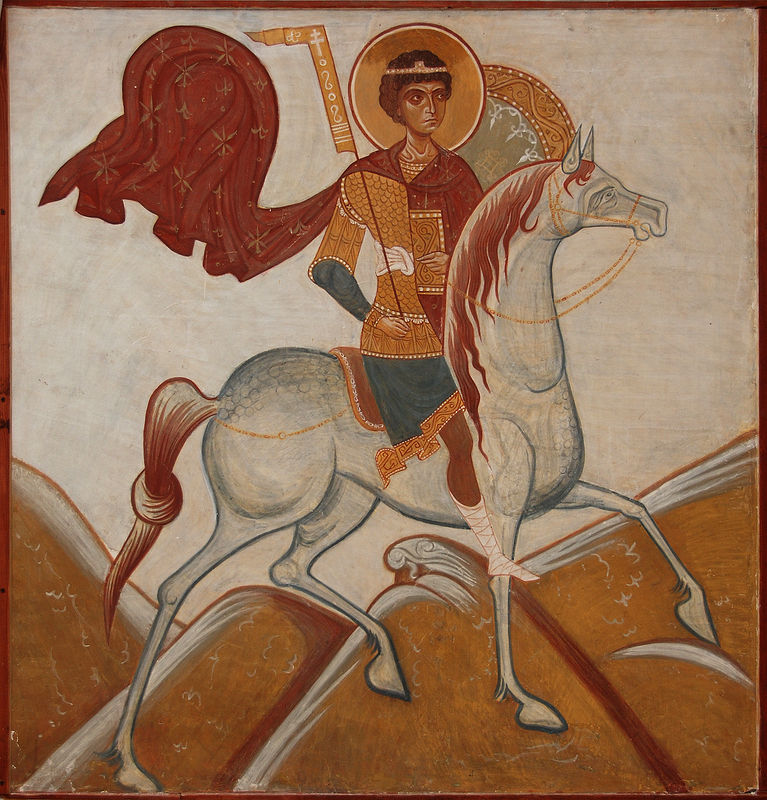
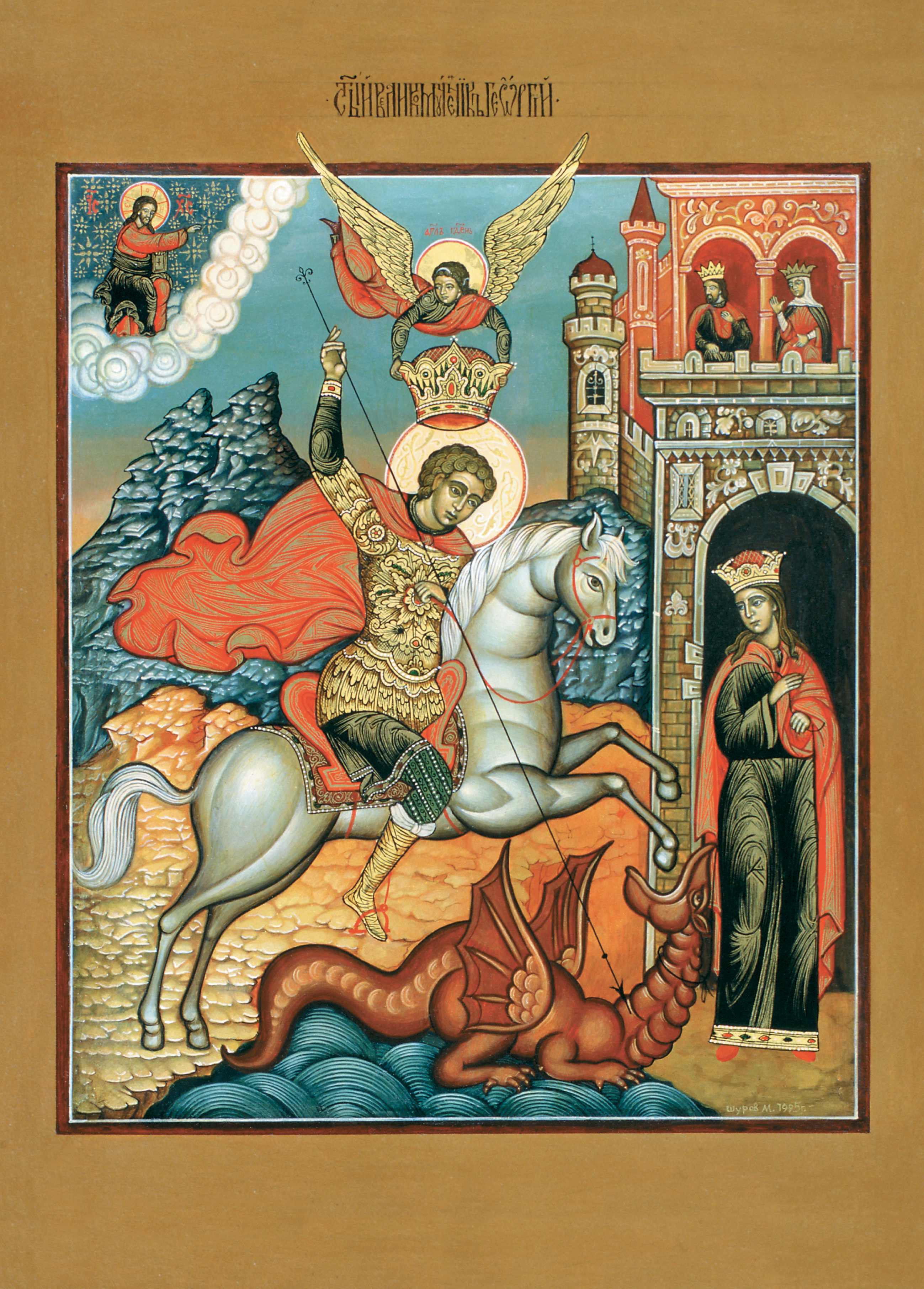
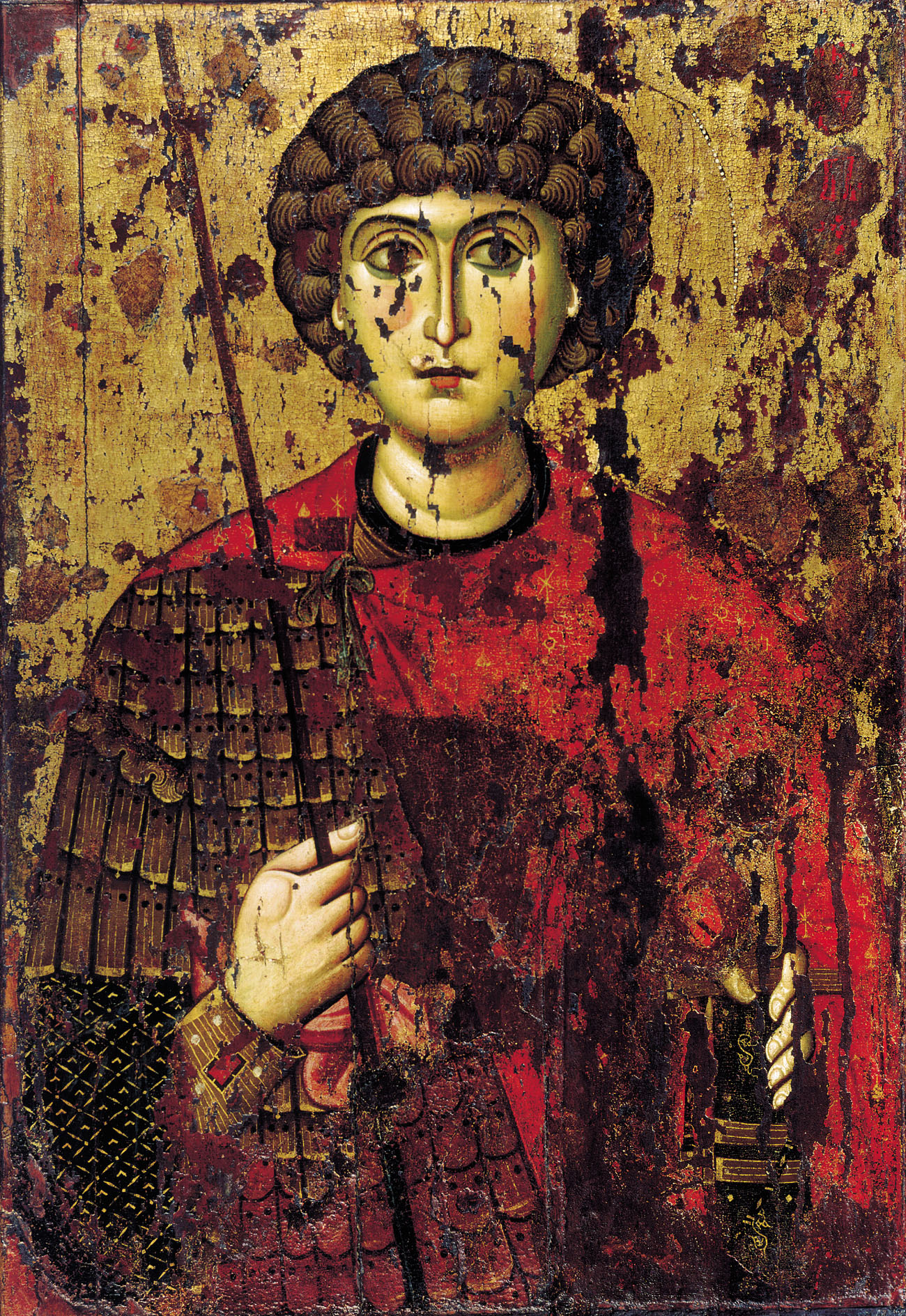
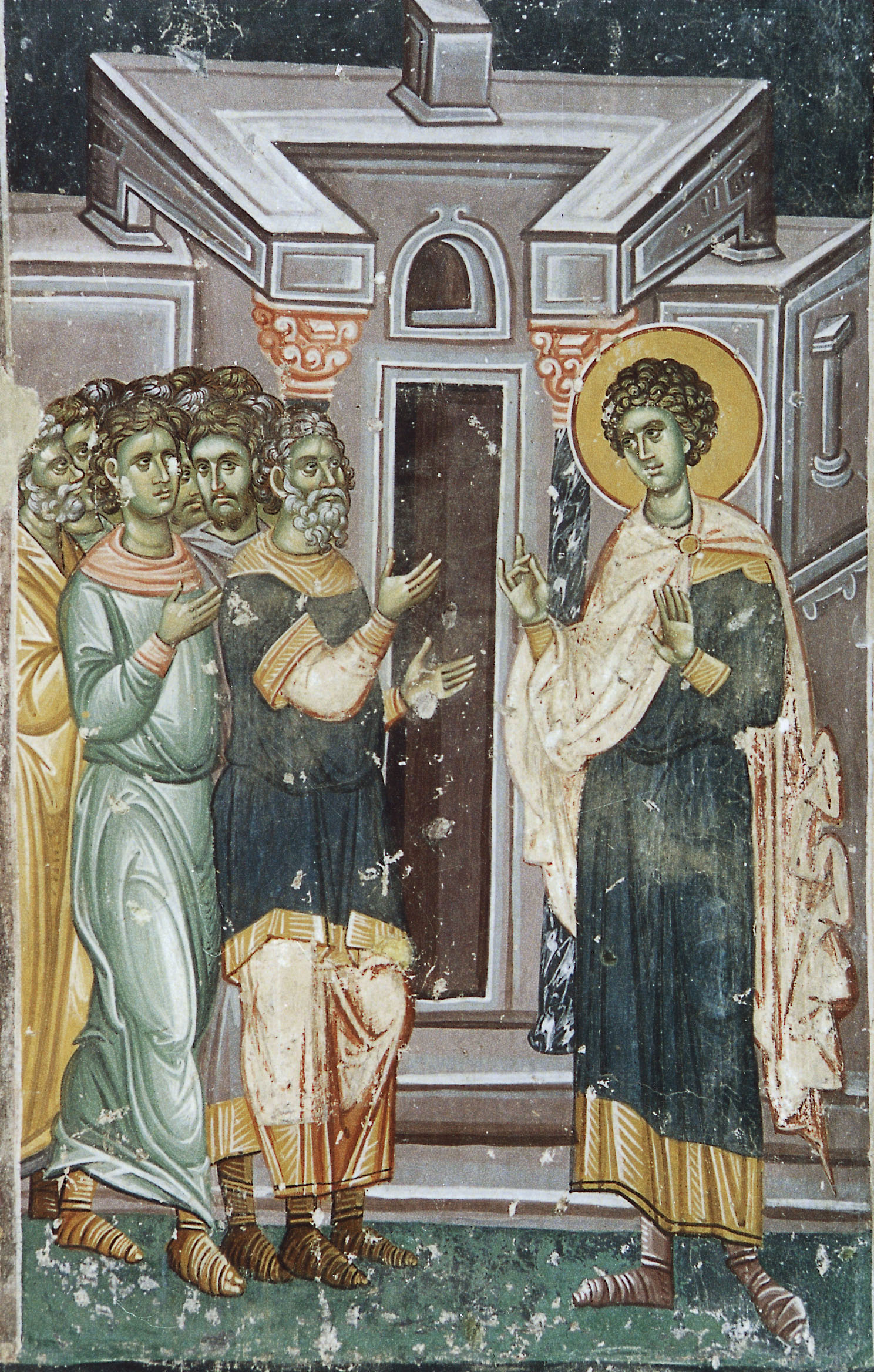
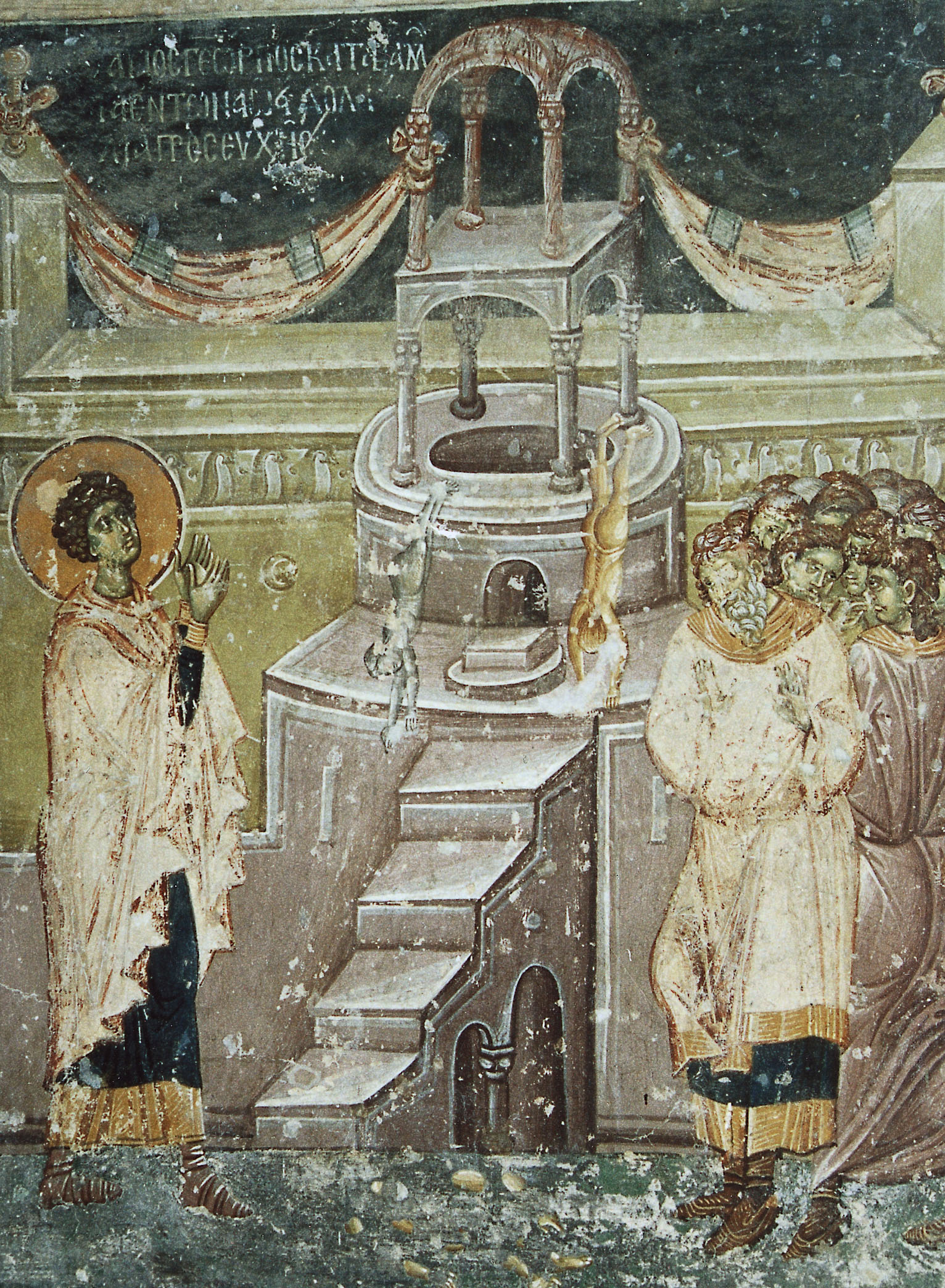
Names & Identity
- Full Russian Title
- Георгий
- Russian First Name
- Георгий
- Gender
- Male
Commemorations
Why different dates?Old Calendar: the traditional Julian calendar used for fixed commemorations in some churches. New Calendar: the Gregorian or Revised Julian dating used for fixed commemorations in other churches. In 2026, the traditional Julian calendar is 13 days behind the civil Gregorian calendar. These are this site’s calendar display labels; source traditions may vary. Select a date to explore other commemorations in Calendar Day view.- Old CalendarNovember 26↗
- New CalendarDecember 9↗
Sources & References
Recorded sources
- 🔗
Orthodox Old Believer Church Calendar (2026)Commemorated in the 2026 Old Rite Calendar.
- 🔗
Orthodox Church in America (OCA)OCA commemoration: Dedication of the Church of the Greatmartyr George at Kiev
- 🔗
Azbuka — Lives of the SaintsAzbyka: Воспоминание освящения храма великомученика Георгия в Киеве.
- 🔗
Pravoslavie.ruВеликомученик Георгий ПобедоносецВеликомученик Георгий Победоносец. Мученики Анатолий и Протолеон, Гликерий земледелец, Афанасий волхв и ВалерийКолесование святого великомученика ГеоргияОсвящение церкви святого великомученика Георгия в КиевеВеликомученик Георгий Победоносец23 апреля: Святого славного великомученика, победоносца и чудотворца Георгия26 ноября: Преподобного Алипия столпника. Освящение церкви святого великомученика Георгия, в Киеве
Sources document the information attributed to them; a listing does not imply that every detail on this page is independently verified.
Life & Witness
Main life · Orthodox Church in America (OCA) · English
The Consecration of the Church of the Great Martyr George at Kiev: Beginning with the holy Prince Vladimir (July 15), it was the pious custom of Russian princes to build a church in honor of their patron saint. Thus, Saint Vladimir (in Baptism Basil) built at Kiev and Vyshgorod temples dedicated to Saint Basil the Great (January 1).
Continue reading (159 words · 1 min read)
Prince Izyaslav I (1054-1068) (in Baptism Demetrius) built a church and monastery at Kiev in the name of the Holy Great Martyr Demetrius (October 26). Prince Yaroslav the Wise (in Baptism George) started to build a church and men’s monastery in honor of his patron saint, the Holy Great Martyr George (April 23). He also built a church named for his wife’s patron saint, the Holy Great Martyr Irene (May 5). The temple in honor of the Great Martyr George was consecrated by Saint Hilarion, Metropolitan of Kiev (October 21), and a yearly commemoration was established in honor of this event.
Other Life Sources
English
Azbuka — Lives of the Saints
Source · Azbuka — Lives of the Saints
Translated by Piece of Humanity using Safari’s built-in translation. This translation may contain errors. To help keep this record accurate, please suggest corrections in the comments below. I’ll review your suggestions carefully and update the translation where needed.
Commemoration of the consecration of the church of the Great Martyr George
Continue reading (513 words · 3 min read)
Memory of November 26
Blessed and ever-memorable Prince of the Russian land Yaroslav, son of Equal-to-the-Apostles Prince Vladimir, wanted to create a temple in honor of the Great Martyr George[7736], i.e. in the name of his Angel, since Yaroslav received the name George in holy baptism. He chose the place for this temple near St. Sophia Cathedral, to the west of it, towards the Golden Gate.
When they started building this temple, there were few doers.
Seeing this, Yaroslav called tiuna[7737] and asked him:
– Why are there few workers at the temple of God?
Tiun answered:
– Since it is a matter of the ruler (i.e. the temple is built at the prince’s own expense), people are afraid that they will not be deprived of payment for their work.
Then the prince ordered to carry his treasures under the vaults of the golden gates by wagons and to announce to people at the auction that everyone can receive from the prince a nogate[7738] per day for work. And many doers appeared, the work was more successful and the temple was soon finished.
His consecration was made on November 26, 1051 by Metropolitan Hilarion[7739]. The prince commanded to celebrate the day of consecration throughout Russia annually in honor of the Holy Great Martyr George[7740].
Tropar, voice 4:
Today the ends of the world bless you, the Divine miracles have been fulfilled, and the earth rejoices, having been drunk on your blood: the people of the city of Kiev, having rejoiced with the consecration of your Divine temple with joy, George is passionate, the vessel chosen by the Holy Spirit, the pleasing to Christ: pray to Him with faith and supplication who come to your holy temple, give the purification of your sins, to die the world, and save our souls.
Kondak, voice 2:
The divine and crowned Great Martyr of Christ George, on the enemy of the victory of the earthly overcompation, who converged by faith in the consecrated temple, we praise, God will be willing to create in his name, one resting in the saints.
* * *
Notes
No remnants have survived from St. George’s Church so far.
Tiun is the ruler of the prince, the lowest judge; and here – as an overseer during the princely construction.
Nogata is a genus of an ancient Russian coin equal to half a quarter, i.e. 12.5 kopecks.
Hilarion is the first natural Russian metropolitan in Russia. He was elected prince himself and the Council of Bishops and was honored by the rank of Metropolitan for his ascetic life and teaching; he ruled the Russian Church from 1051 to 1054. He wrote “The Word of the Law and Grace”, “Confession of Faith”, as well as other instructive messages of his words.
The same feast of St. George on November 26 existed, as it still exists, and in Greece, also on the occasion of the consecration of one Greek church in honor of this saint.
Pravoslavie.ru
Source · Pravoslavie.ru
Translated by Piece of Humanity using Safari’s built-in translation. This translation may contain errors. To help keep this record accurate, please suggest corrections in the comments below. I’ll review your suggestions carefully and update the translation where needed.
THE GREAT MARTYR GEORGE THE VICTORIOUS. MARTYRS ANATOLY AND PROTOLEON, GLYCERIUS THE FARMER, ATHANASIUS THE MAGIS AND VALERY George the Victorious George the Victorious The Holy Great Martyr George the Victorious, a native of Cappadocia (a region in Asia Minor), grew up in a deeply believing Christian family. His father accepted the martyr’s death for Christ when George was still a child.
Continue reading (2,582 words · 13 min read)
The mother, who owned estates in Palestine, moved with her son to her homeland and brought him up in strict piety.
Having entered the service of the Roman army, St. George, handsome, courageous and brave in battles, was noticed by Emperor Diocletian (284-305) and accepted into his guard with the rank of Komit – one of the senior military commanders.
The pagan emperor, who did a lot for the revival of Roman power and clearly understood the danger posed to pagan civilization by the triumph of the Crucified Savior, in the last years of his reign especially intensified the persecution of Christians. At the council of the Senate in Nicomedia, Diocletian granted all rulers complete freedom in the massacre of Christians and promised his full assistance.
Saint George, having learned about the emperor’s decision, distributed his inheritance to the poor, released the slaves and appeared in the Senate. The courageous warrior of Christ openly opposed the imperial plan, confessed himself as a Christian and called on everyone to recognize the true faith in Christ: “I am a servant of Christ, my God, and, trusting in Him, I have appeared among you of my own free will to testify to the Truth.” “What is the Truth?” one of the dignitaries repeated Pilate’s question. “The truth is Christ Himself, persecuted by you,” the saint replied.
Stunned by the bold speech of the valiant warrior, the emperor, who loved and exalted George, tried to persuade him not to destroy his youth, glory and honor, but to make, according to the custom of the Romans, a sacrifice to the gods. This was followed by a decisive response from the confessor: “Nothing in this impermanent life will weaken my desire to serve God.” Then, by order of the angry emperor, the squires began to push St. George out of the assembly hall with spears to take him to prison. But the deadly steel itself became soft and bent as soon as the spears touched the saint’s body, and did not hurt him. In the prison, the martyr’s feet were put in blocks and his chest was crushed with a heavy stone.
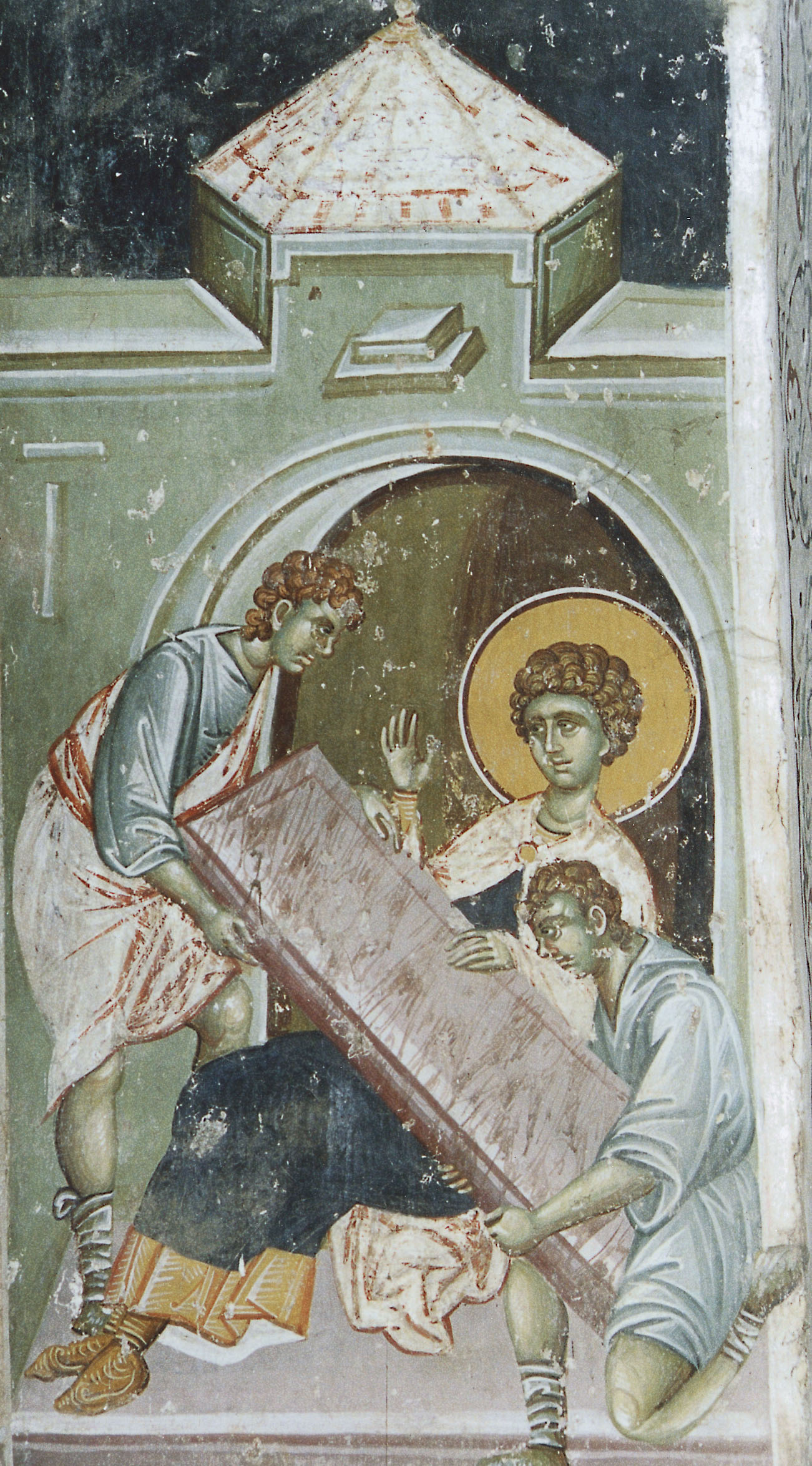
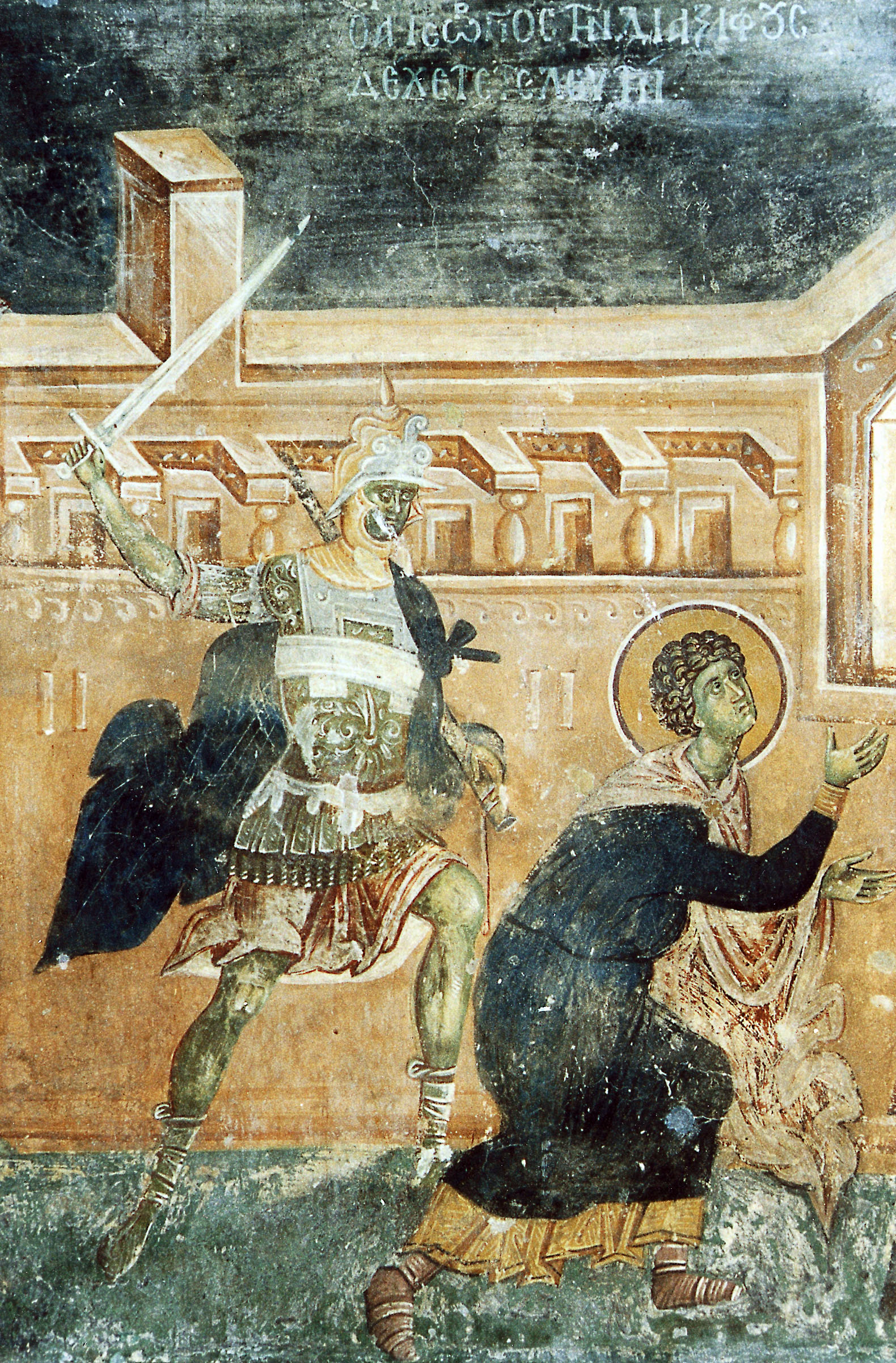
The next day, during interrogation, exhausted, but firm in spirit, Saint George again answered the emperor: “You will rather be exhausted, tormenting me, than I, tormented by you.” Then Diocletian ordered George to be subjected to the most sophisticated torture. The Great Martyr was tied to a wheel, under which boards with iron tips were arranged. When the wheel rotated, the sharp blades cut the naked body of the saint. At first, the sufferer loudly called on the Lord, but soon fell silent, without making a single moan. Diocletian decided that the tortured one had already died, and, having ordered to remove the torn body from the wheel, went to the chapel to make a sacrifice of thanksgiving. At that moment, it got dark around, thunder, and a voice was heard: “Don’t be afraid, George, I’m with you.” Then a wonderful light shone and an Angel of the Lord appeared at the wheel in the form of a light-bearing young man. And as soon as he put his hand on the martyr, saying to him: “Rejoice!” – as St. George rose up healed. When the warriors took him to the temple where the emperor was, the latter could not believe his eyes and thought that he was another person or a ghost in front of him. In bewilderment and horror, the pagans looked at St. George and were convinced that a miracle had really happened. Many Christians then believed in the Life-Giving God. Two noble dignitaries, Saints Anatoly and Protoleon, secret Christians, immediately openly confessed Christ. They were immediately cut off with a sword by order of the emperor, without trial. Queen Alexandra, the wife of Diocletian, who was in the temple, also learned the truth. She was also rushing to glorify Christ, but she was held by one of the emperor’s servants and taken to the palace.
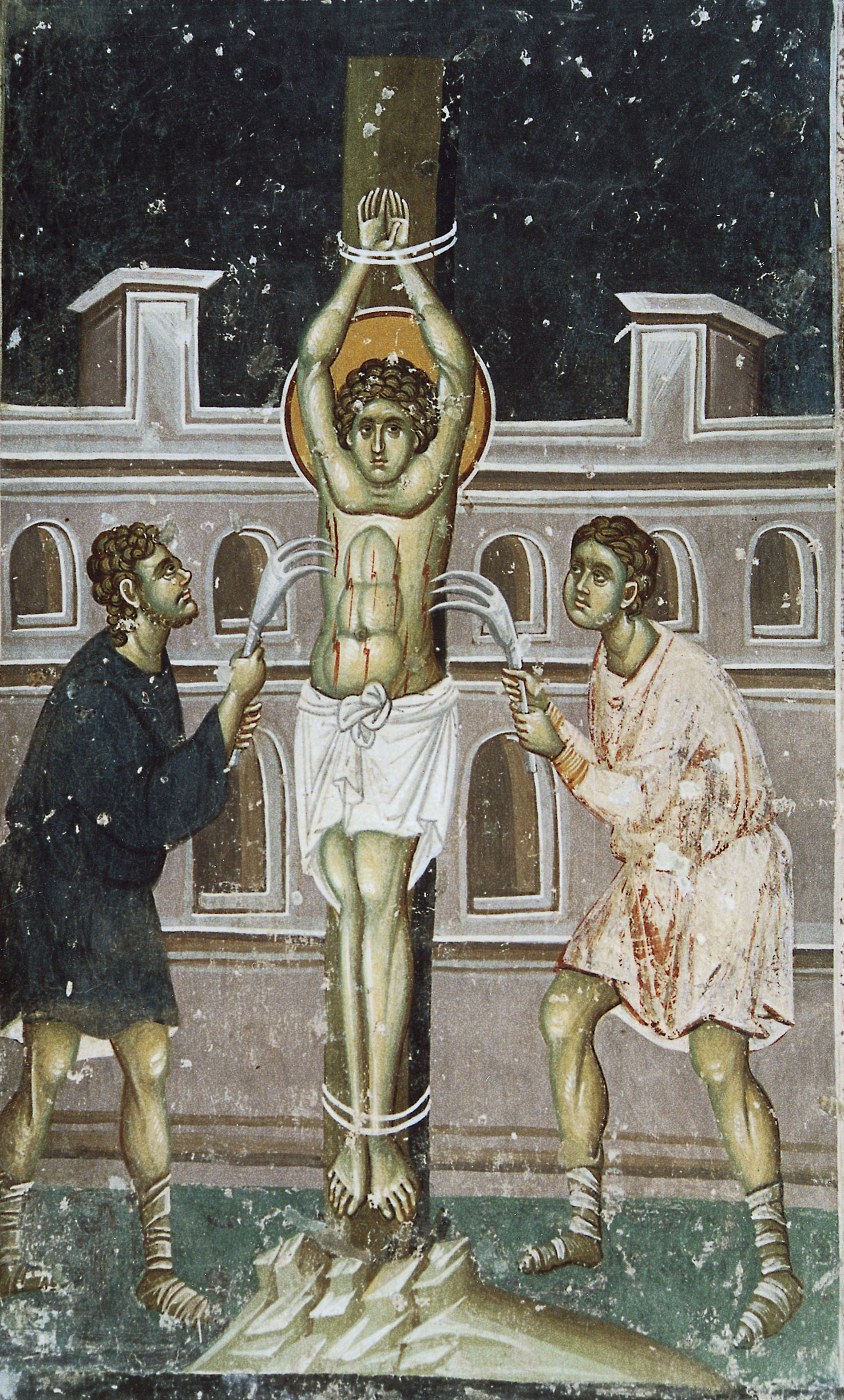
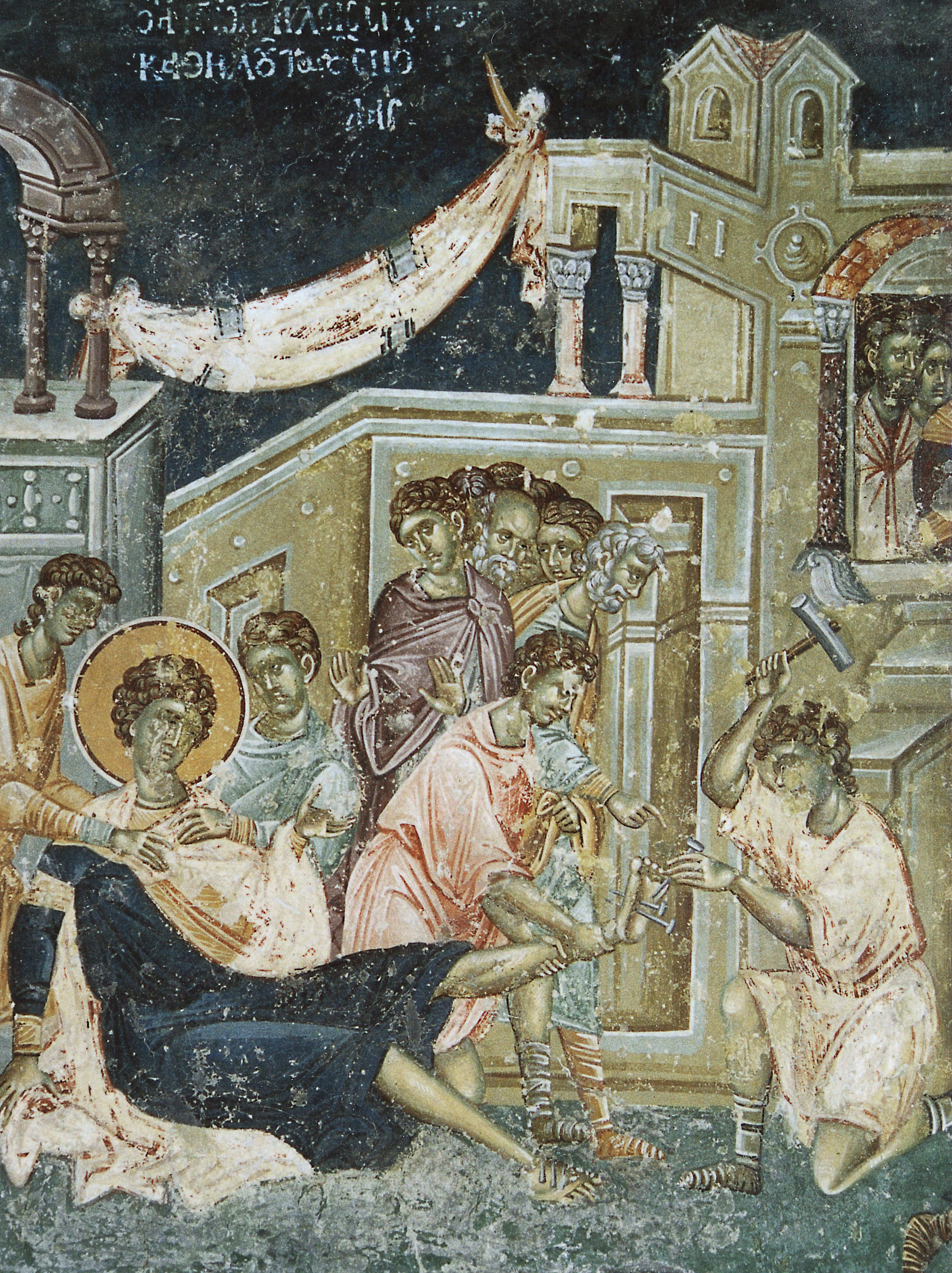
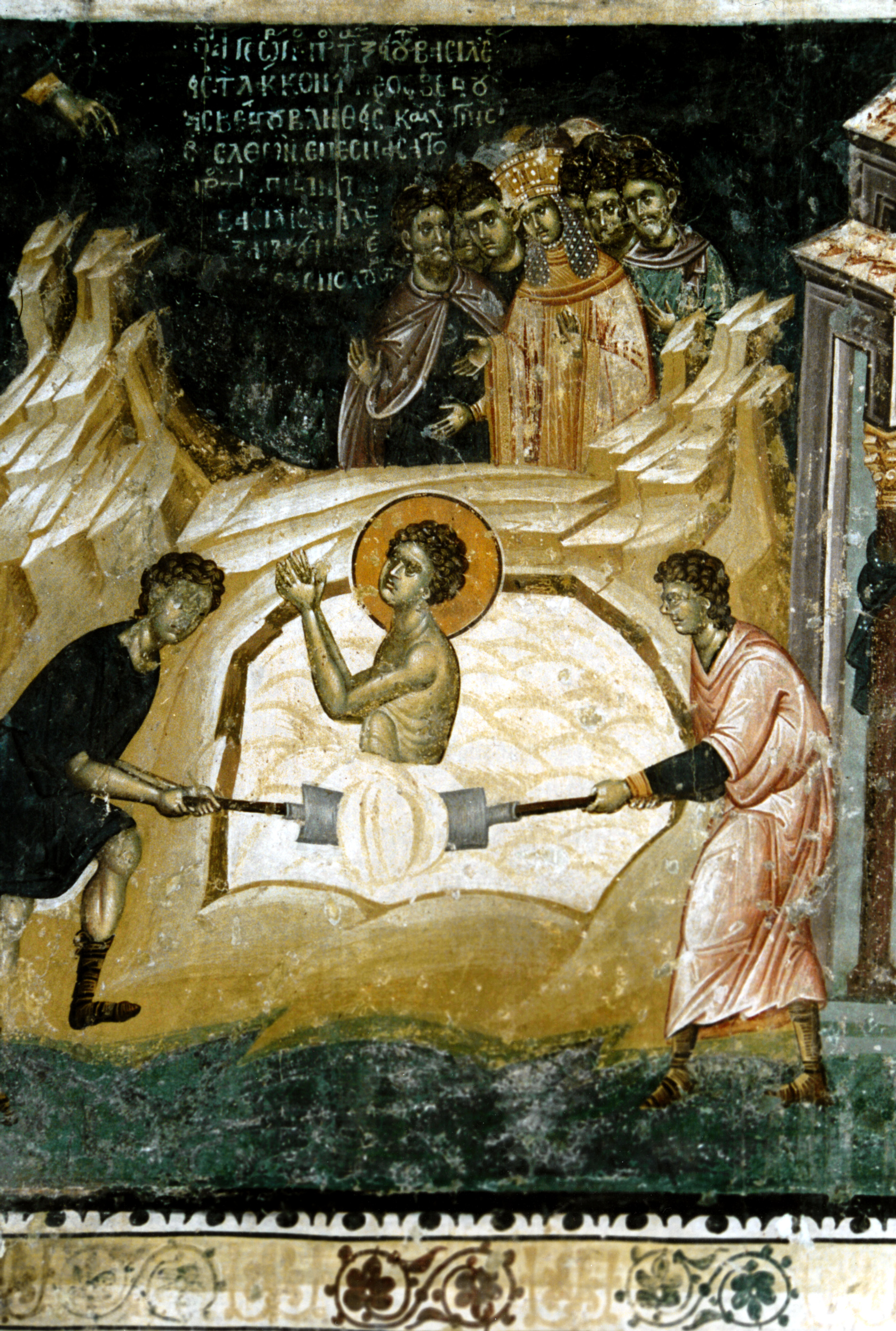
The emperor became even more fierce. Not losing hope of breaking St. George, he betrayed him to new terrible tortures. Having thrown into a deep ditch, the holy martyr was covered with unquenchable lime. Three days later he was dug up, but found happy and unharmed. The Saint was driven to the dungeon in iron boots with red-hot nails and with beatings. In the morning, when he was brought for interrogation, cheerful, with healthy legs, he told the emperor that he liked the boots. He was beaten with ox veins so that the body and blood mixed with the ground, but the courageous sufferer, supported by the power of God, remained adamant.
Deciding that magic helps the saint, the emperor called the magician Athanasius to deprive the saint of miraculous power, or poison him. The Magi presented St. George with two bowls with drugs, one of which was to make him submissive, and the other to kill him. But the potions did not work – the saint still denuned pagan superstitions and praised the True God.
To the emperor’s question, what strength helps the martyr, St. George replied: “Do not think that torment does not harm me thanks to human effort – I am saved only by invoking Christ and His power. He who believes in Him does not incitute torment and is able to do the works that Christ has done” (John. 14, 12). Diocletian asked what the works of Christ are. – “To enlighten the blind, to cleanse the lepers, to give the lame walking, the deaf – hearing, to cast out demons, to resurrect the dead.”
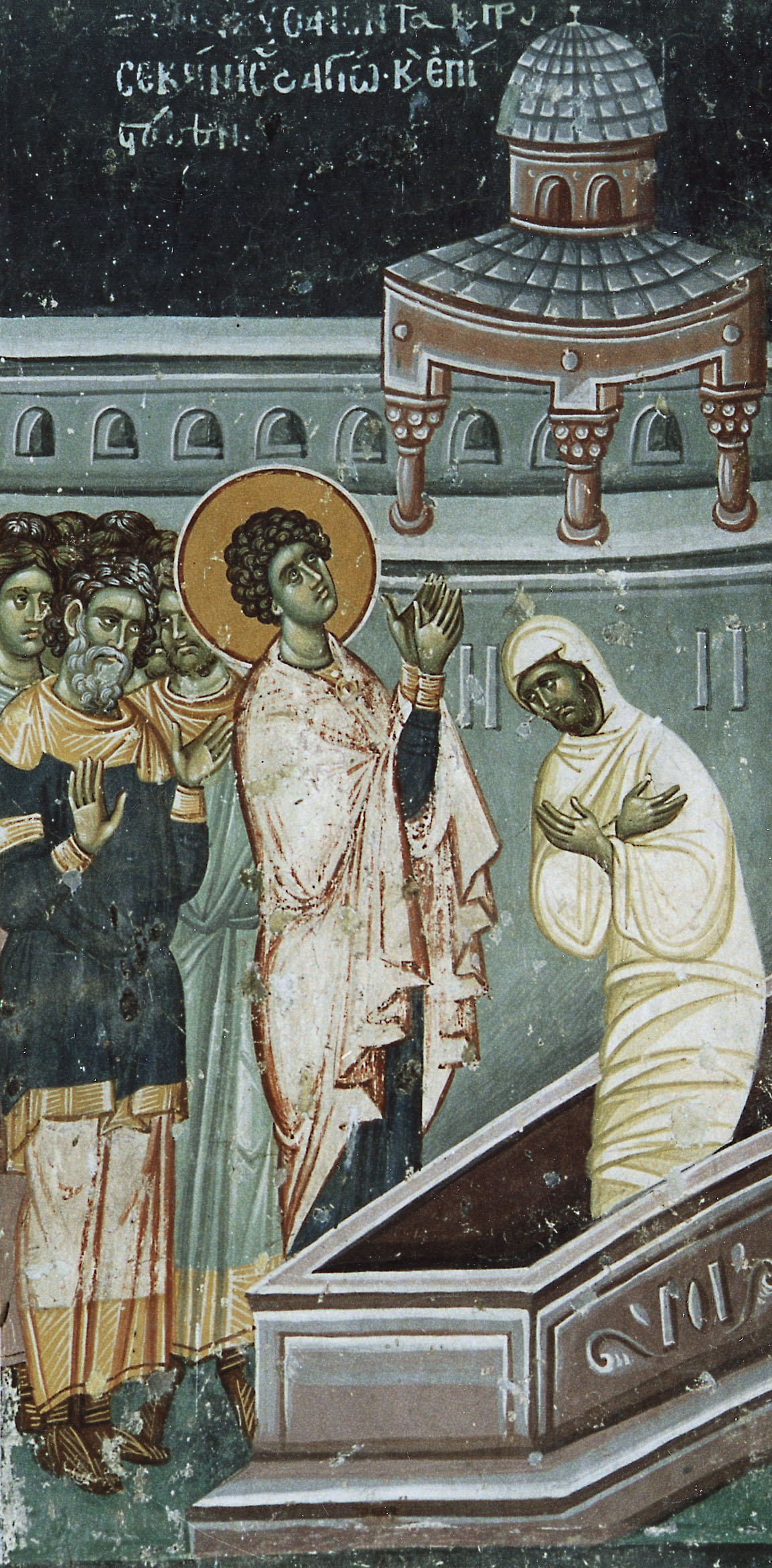
Knowing that neither the magic nor the gods known to him could ever resurrect the dead, the emperor, in order to shame the saint’s hope, ordered him to resurrect the dead before his eyes. To this the saint said, “You tempt me, but for the salvation of the people who see the work of Christ, my God will make this sign.” And when St. George was brought to the tomb, he called out: “Lord! Show those who are to come that You are the One God in all the earth, so that they may know You, the Almighty Lord.” And the earth shook, the tomb was opened, the dead man came to life and came out of it.
Seeing with their own eyes the appearance of the almighty power of Christ, the people wept and glorified the True God. The Magi Athanasius, falling at the feet of St. George, confessed Christ as the Almighty God and asked for forgiveness for sins committed in ignorance. However, the emperor, who was in wickedness, did not understand: he furiously ordered to behead the believer Athanasius, as well as the resurrected man, and again imprisoned St. George in prison. People burdened with ailments began to penetrate the prison in various ways and received healing and help from the saint there. A certain farmer Glycery, whose ox fell, also turned to him in grief. The saint comforted him with a smile and assured him that God would return the oll to life. Seeing the house of a revived ox, the farmer throughout the city began to glorify the Christian God. By order of the emperor, Saint Glycerius was captured and beheaded.
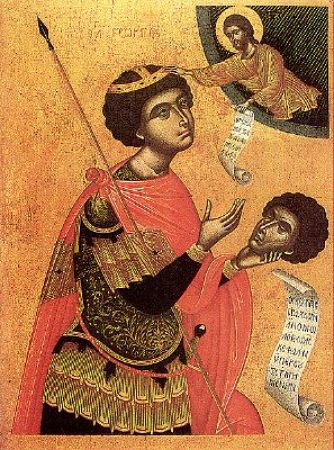
The exploits and miracles of the Great Martyr George multiplied the number of Christians, so Diocletian decided to make a last attempt to force the saint to sacrifice to idols. They began to prepare the courthouse at the temple of Apollo. On the last night, the holy martyr prayed hard, and when he dozed off, he saw the Lord Himself, who lifted him up with His hand, hugged him and kissed him. The Savior put a crown on the head of the great martyr and said, “Do not be afraid, but dare and you will be worthy to reign with Me.”
In the morning in the court, the emperor offered St. George a new test – he offered him to become his co-ruler. The holy martyr replied with feigned readiness that the emperor should not have tormented him from the very beginning, but had such mercy, and at the same time expressed a desire to immediately go to the temple of Apollo. Diocletian decided that the martyr accepted his offer and followed him to the temple accompanied by the entourage and the people. Everyone was waiting for St. George to sacrifice to the gods. He, having approached the icon, created the sign of the cross and addressed it as to the living: “Do you want to accept the sacrifice from me as God?” The bes who lived in the idol shouted: “I am not God and no one like me is God. Only the One whom you preach is only God. We have made apostates from the Angels who serve Him, and, possessed by envy, we seduce people.” “How dare you to be here when I, the servant of the True God, came here?” the saint asked. There was a noise and crying, the idols fell and broke down.
There was general confusion. The priests and many of the crowd pounced on the holy martyr in a frenzy, tied him up, began to beat him and demand immediate execution.
Holy Queen Alexandra hurried to the noise and screams. Making her way through the crowd, she shouted: “God of George, help me, because You are the One All-Power.” At the feet of the great martyr, the holy queen praised Christ, despising idols and worshiping them.
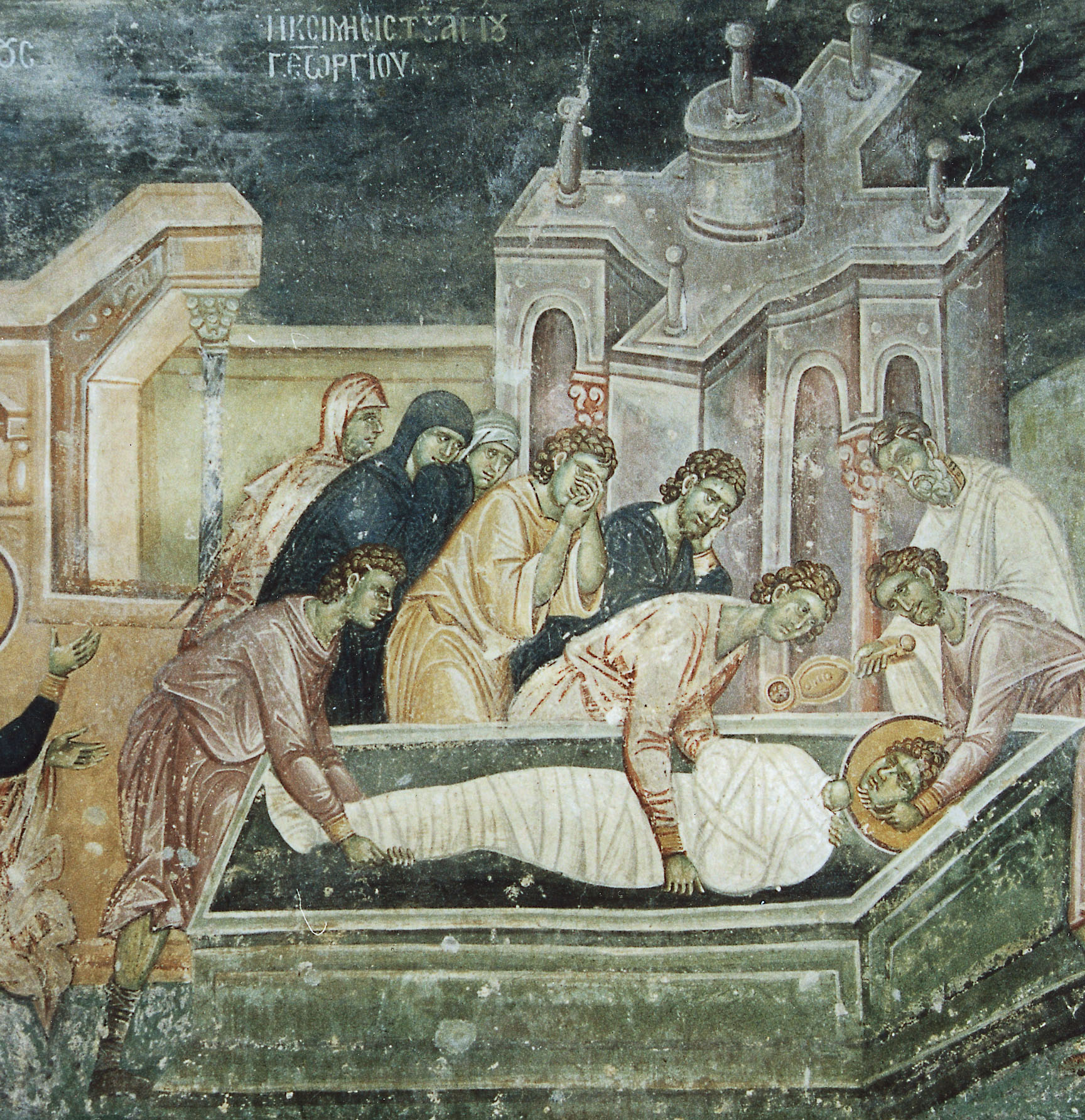
Diocletian in a frenzy immediately sentenced the Great Martyr George and Saint Queen Alexandra, who followed St. George to execution without resistance. On the way, she was tired and leaned against the wall without feeling. Everyone thought that the queen had died. Saint George thanked God and prayed that his path would end with dignity. At the place of execution, the saint in a fervent prayer asked the Lord to forgive the tormentors who did not know what they were doing, and lead them to the knowledge of the Truth. Calmly and courageously, the holy great martyr George bowed his head to the sword. It was on April 23, 303.
The executioners and judges looked at their Winner in confusion. The era of paganism ended in bloody agony and meaningless tossing. Only ten years have passed – and St. Constantine Equal-to-the-Apostles, one of Diocletian’s successors on the Roman throne, will order to draw on the banners the Cross and the Covenant, sealed with the blood of the Great Martyr and Victorious George and thousands of unknown martyrs: “This victory”.
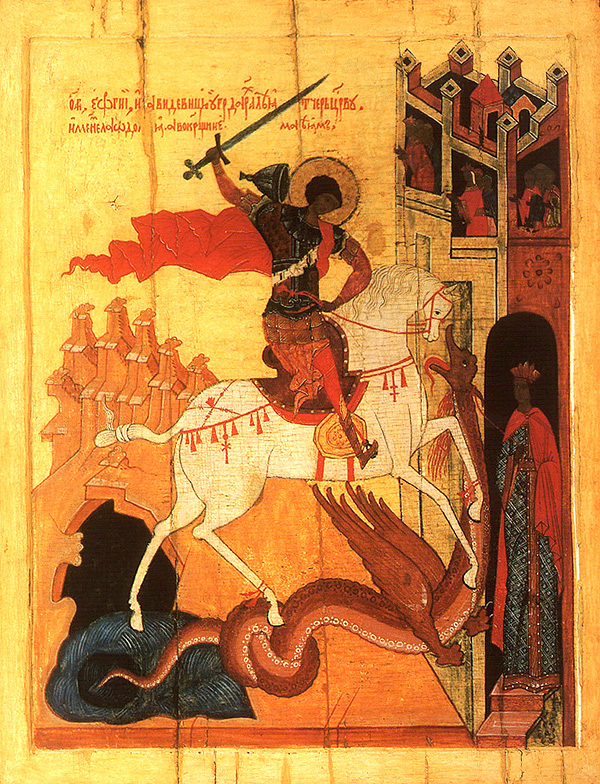
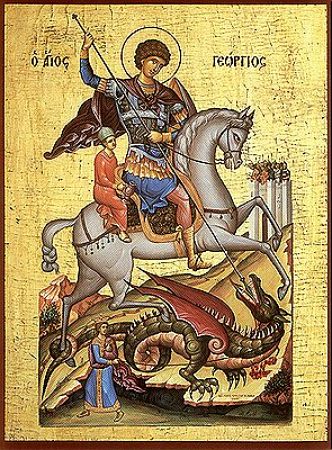
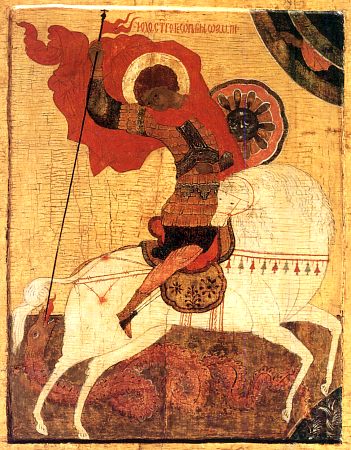
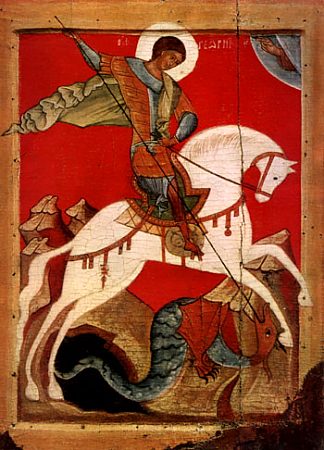
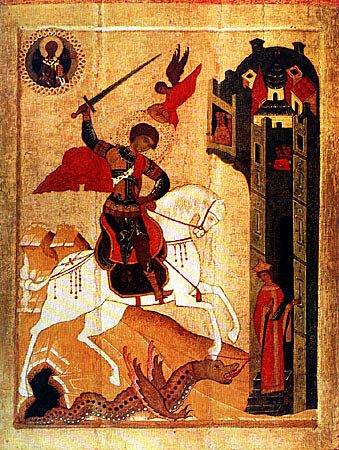
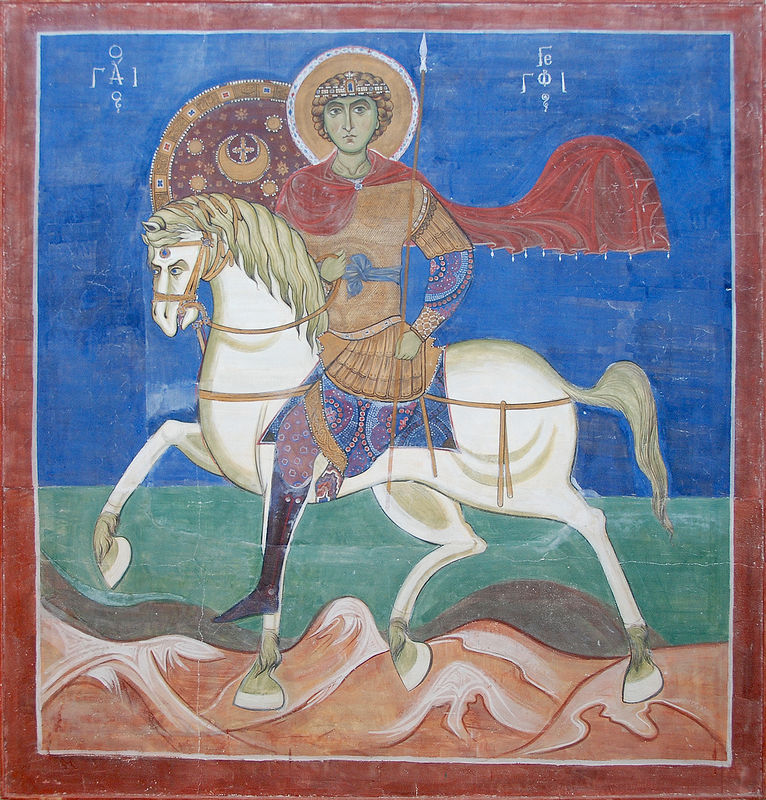
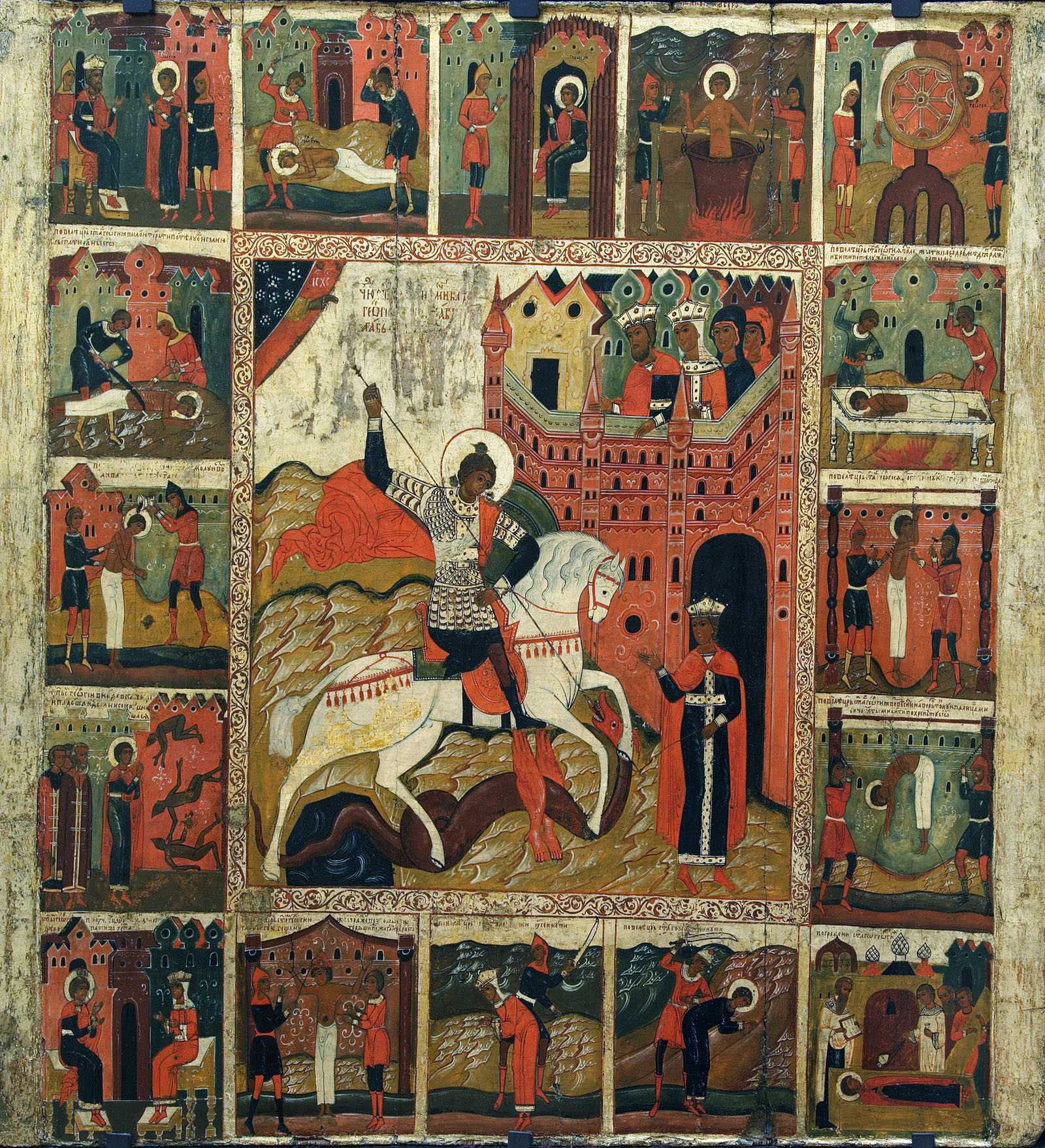
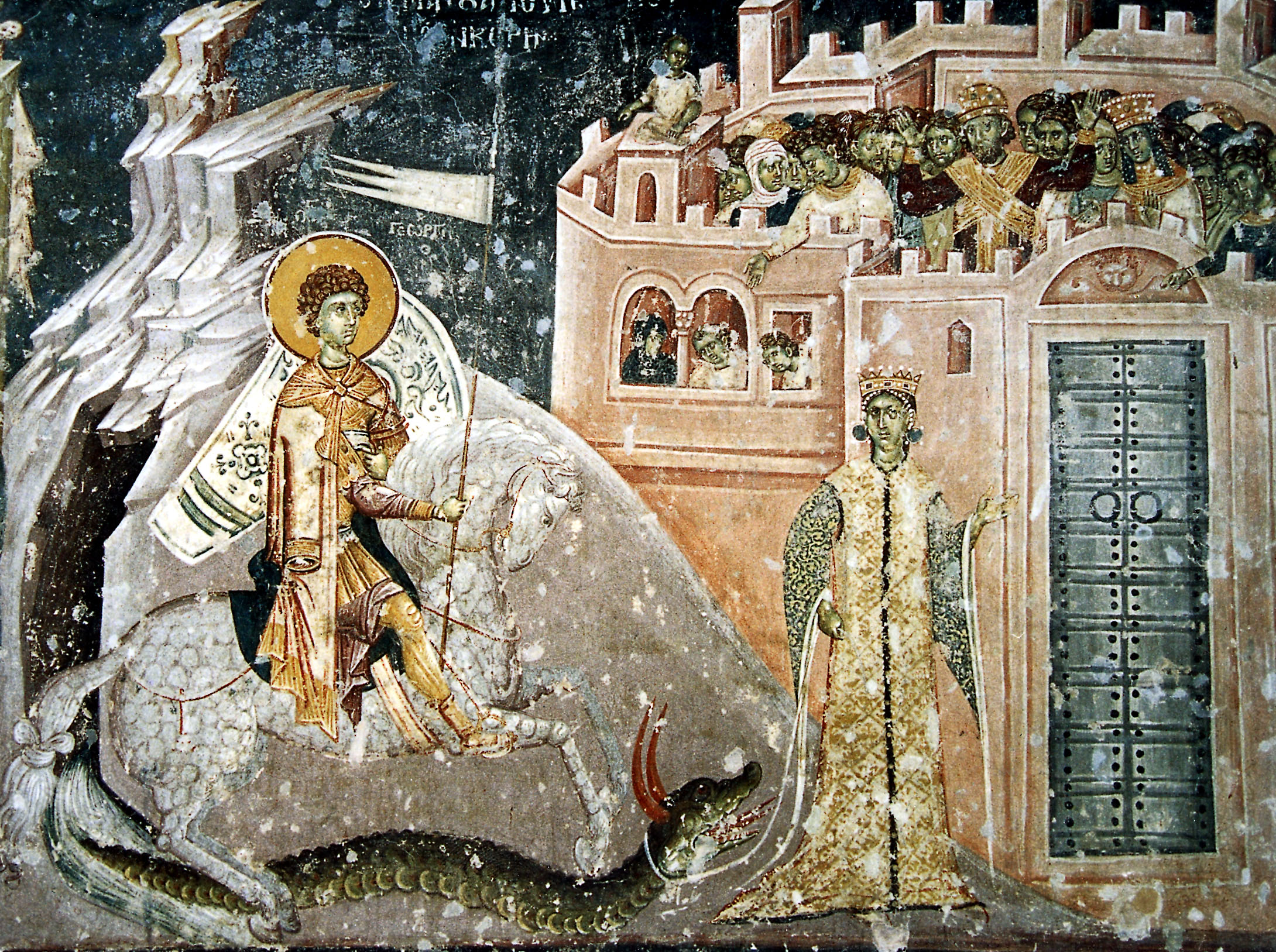
Of the many miracles performed by the Holy Great Martyr George, the most famous is captured in iconography. There were many idolaters in the saint’s homeland, in the city of Beirut. Near the city, near the Lebanese Mountains, there was a large lake in which a huge snake lived. Coming out of the lake, he devoured people, and the inhabitants could not do anything, because his breath alone infected the air.
According to the teaching of the demons who lived in idols, the king made the following decision: every day the inhabitants had to give the snake their children by lot to eat and when the turn came to him, he promised to give his only daughter. Time passed, and the king, dressing her in the best clothes, sent her to the lake. The girl cried bitterly, waiting for the hour of death. Suddenly, the Great Martyr George drove up to her on horseback with a spear in his hand. The girl begged him not to stay with her so as not to die. But the saint, seeing the snake, overshoud himself with the sign of the cross and with the words “in the Name of the Father and the Son and the Holy Spirit” rushed at him. The Great Martyr George pierced the larynx of the snake with a spear and spead it with a horse. Then he told the girl to tie the snake with her belt and, like a dog, lead it to the city. The inhabitants ran away in fear, but the saint stopped them by saying: “Do not be afraid, but trust in the Lord Jesus Christ and believe in Him, for it was He who sent me to you to save you.” Then the saint killed the snake with a sword, and the residents burned it outside the city. Twenty-five thousand people, not counting women and children, were baptized then, and a church was built in the name of the Blessed Virgin Mary and the Great Martyr George.
Saint George could become a talented commander and surprise the world with military exploits. He died when he was not even 30 years old. In a hurry to connect with the heavenly army, he entered the history of the Church as the Victorious. He became famous with this name from the very beginning of Christianity and in Holy Russia.
Saint George the Victorious was an angel and patron of several great builders of Russian statehood and Russian military power. The son of the Holy Equal-to-the-Apostles Vladimir, Yaroslav the Wise, in Holy Baptism George (+ 1054), greatly contributed to the veneration of the saint in the Russian Church. He built the city of Yuriev, founded the St. George’s Monastery in Novgorod, erected the Church of St. George the Victorious in Kiev. The day of consecration of the Kiev St. George’s Church, celebrated on November 26, 1051 by St. Hilarion, Metropolitan of Kiev and All Russia, forever entered the liturgical treasury of the Church as a special church holiday, St. George’s Day, beloved by the Russian people “autumn George”.
The name of St. George was worn by the founder of Moscow Yuri Dolgoruky (+ 1157), the creator of many St. George’s churches, the builder of the city of Yuriev-Polsky. In 1238, the heroic struggle of the Russian people against the Mongol hordes was led by Grand Duke of Vladimir Yuri (George) Vsevolodovich (1238; memory of February 4), who laid down his head in the Battle of the City. The memory of him as Yegori the Brave, the defender of his native land, was reflected in Russian spiritual verses and epics. The first Grand Duke of Moscow, during the period when Moscow became the center of collecting the Russian land, was Yuri Danilovich (+ 1325) – the son of St. Daniel of Moscow, grandson of St. Alexander Nevsky. Since that time, St. George the Victorious – a horseman striking a snake – has become the coat of arms of Moscow and the emblem of the Russian state. And this further strengthened the ties of Christian peoples and especially with the monothegy Iberia (Georgia – the country of George).
Russian
Azbuka — Lives of the Saints
Source · Azbuka — Lives of the Saints
Воспоминание освящения храма великомученика Георгия
Continue reading (297 words · 2 min read)
Память 26 ноября
Блаженный и приснопамятный князь Российской земли Ярослав, сын равноапостольного князя Владимира, захотел создать храм в честь великомученика Георгия[7736], т. е. во имя своего Ангела, так как Ярослав во святом крещении получил имя Георгия. Место для этого храма он выбрал неподалеку от Софийского собора, именно на запад от него, по направлению к золотым воротам.
Когда начали строить этот храм, то немного было делателей.
Увидев это, Ярослав призвал тиуна[7737] и спросил его:
– Почему мало трудящихся у храма Божия?
Тиун отвечал:
– Так как – дело властительское (т. е. сооружается храм на собственный счет князя), то люди боятся, чтобы за труд они не были лишены платы.
Тогда князь повелел возить под своды золотых врат возами свои сокровища и объявить на торгу людям, что каждый может получить от князя по ногате[7738] в день за работу. И явилось множество делателей, работа пошла успешней и храм вскоре был окончен.
Освящение его совершено было 26 ноября 1051 г. митрополитом Иларионом[7739]. День освящения князь заповедал праздновать во всей России ежегодно в честь святого великомученика Георгия[7740].
* * *
Примечания
От Георгиевской церкви не уцелело до настоящего времени никаких остатков.
Тиун – управитель от князя, низший судья; а здесь – как надсмотрщик при княжеской стройке.
Ногата – род древнерусской монеты, равнявшейся половине четвертака, т. е. 12,5 коп.
Иларион – первый митрополит на Руси из природных русских. Он избран был самим князем и собором епископов и почтен саном митрополита за свою подвижническую жизнь и учительность; управлял Русскою Церковию с 1051–1054 г. Им написано «Слово о Законе и Благодати», «Исповедание веры», а также сохранились и другие поучительные послания его и слова.
Этот же праздник святому Георгию 26 ноября существовал, как и доселе существует, и в Греции, также по случаю освящения в честь сего святого одной греческой церкви.
Pravoslavie.ru
Source · Pravoslavie.ru
Святой великомученик Георгий Победоносец, родом из Каппадокии (область в Малой Азии), вырос в глубоко верующей христианской семье. Его отец принял мученическую кончину за Христа, когда Георгий был еще в детском возрасте. Мать, владевшая имениями в Палестине, переселилась с сыном на родину и воспитала его в строгом благочестии.
Continue reading (1,867 words · 10 min read)
Поступив на службу в римское войско, святой Георгий, красивый, мужественный и храбрый в сражениях, был замечен императором Диоклетианом (284–305) и принят в его стражу со званием комита – одного из старших военачальников.
Император-язычник, много сделавший для возрождения римского могущества и ясно понимавший, какую опасность представляет для языческой цивилизации торжество Распятого Спасителя, в последние годы правления особенно усилил гонения на христиан. На совете сената в Никомидии Диоклитиан предоставил всем правителям полную свободу в расправе над христианами и обещал свою всемерную помощь.
Святой Георгий, узнав о решении императора, раздал нищим своё наследство, отпустил на волю рабов и явился в Сенат. Мужественный воин Христов открыто выступил против императорского замысла, исповедал себя христианином и призвал всех признать истинную веру во Христа: "Я раб Христа, Бога моего, и, уповая на Него, предстал среди вас по своей воле, чтобы свидетельствовать об Истине". "Что есть Истина?" – повторил вопрос Пилата один из сановников. "Истина есть Сам Христос, гонимый вами", – отвечал святой.
Ошеломленный дерзновенной речью доблестного воина, император, который любил и возвышал Георгия, попытался уговорить его не губить своей молодости, славы и чести, но принести, по обычаю римлян, жертву богам. На это последовал решительный ответ исповедника: "Ничто в этой непостоянной жизни не ослабит моего желания служить Богу". Тогда по приказу разгневанного императора оруженосцы стали копьями выталкивать святого Георгия из зала собрания, чтобы увести в темницу. Но сама смертоносная сталь становилась мягкой и гнулась, как только копья касались тела святого, и не причиняла ему боли. В темнице мученику забили ноги в колодки и придавили грудь тяжелым камнем.
На другой день на допросе, обессиленный, но твердый духом, святой Георгий вновь отвечал императору: "Скорее ты изнеможешь, мучая меня, нежели я, мучимый тобою". Тогда Диоклитиан повелел подвергнуть Георгия самым изощренным пыткам. Великомученика привязали к колесу, под которым были устроены доски с железными остриями. При вращении колеса острые лезвия резали обнаженное тело святого. Сначала страдалец громко призывал Господа, но вскоре затих, не испуская ни единого стона. Диоклитиан решил, что истязаемый уже умер, и, распорядившись снять истерзанное тело с колеса, отправился в капище вознести благодарственную жертву. В этот момент вокруг потемнело, грянул гром, и был слышен глас: "Не бойся, Георгий, Я с тобою". Затем воссиял дивный свет и у колеса появился Ангел Господень в образе светоносного юноши. И едва возложил он руку на мученика, сказав ему: "Радуйся!" – как святой Георгий восстал исцеленным. Когда воины отвели его в капище, где был император, последний не верил глазам своим и думал, что пред ним другой человек или призрак. В недоумении и ужасе всматривались язычники в святого Георгия и убеждались в том, что действительно произошло чудо. Многие тогда уверовали в Животворящего Бога христиан. Два знатных сановника, святые Анатолий и Протолеон, тайные христиане, тотчас открыто исповедали Христа. Их тут же, без суда, по приказу императора усекли мечом. Познала истину и царица Александра, супруга Диоклитиана, находившаяся в капище. Она тоже порывалась прославить Христа, но её удержал один из слуг императора и увел во дворец.
Император еще более ожесточился. Не теряя надежды сломить святого Георгия, он предавал его на новые страшные пытки. Сбросив в глубокий ров, святого мученика засыпали негашеной известью. Через три дня его откопали, но нашли его радостным и невредимым. Святого обули в железные сапоги с раскаленными гвоздями и с побоями погнали до темницы. Утром же, когда его привели на допрос, бодрого, со здоровыми ногами, он сказал императору, что ему понравились сапоги. Его били воловьими жилами так, что тело и кровь смешались с землей, но мужественный страдалец, подкрепляемый силой Божией, оставался непреклонным.
Решив, что волшебство помогает святому, император призвал волхва Афанасия, чтобы тот сумел лишить святого чудодейственной силы, или отравил его. Волхв преподнес святому Георгию две чаши со снадобьями, одно из которых должно было сделать его покорным, а другое – умертвить. Но и зелья не действовали – святой по-прежнему обличал языческие суеверия и славил Истинного Бога.
На вопрос императора, какая же сила помогает мученику, святой Георгий отвечал: "Не думай, что не вредят мне муки благодаря человеческому усилию, – я спасаюсь только призыванием Христа и Его силою. Верующий в Него ни во что вменяет мучения и способен сотворить дела, которые сотворил Христос" (Ин. 14, 12). Диоклитиан спросил, каковы же дела Христовы. – "Слепых просвещать, прокаженных очищать, подавать хромым хождение, глухим – слух, изгонять бесов, воскрешать умерших".
Зная, что еще никогда ни волхвование, ни ведомые ему боги не могли воскресить мертвого, император, чтобы посрамить упование святого, велел ему на его глазах воскресить умершего. На это святой сказал: "Ты искушаешь меня, но ради спасения народа, который увидит дело Христово, Бог мой сотворит это знамение". И когда святого Георгия подвели к гробнице, он воззвал: "Господи! Покажи предстоящим, что Ты Бог Единый по всей земле, да познают Тебя, Всесильного Господа". И потряслась земля, гробница отверзлась, мертвец ожил и вышел из нее.
Воочию увидев явление всемогущей силы Христовой, народ рыдал и прославлял Истинного Бога. Волхв Афанасий, припав к ногам святого Георгия, исповедал Христа Всесильным Богом и просил прощения за грехи, совершенные в неведении. Однако закоснелый в нечестии император не вразумился: он в ярости приказал обезглавить уверовавшего Афанасия, а также воскрешенного человека, а святого Георгия опять заточил в темницу. Люди, обремененные недугами, разными способами стали проникать в темницу и там получали от святого исцеление и помощь. Обратился к нему в скорби и некий земледелец Гликерий, у которого пал вол. Святой с улыбкой утешил его и заверил, что Бог возвратит вола к жизни. Увидев дома ожившего вола, земледелец по всему городу стал прославлять Бога христианского. По приказу императора святой Гликерий был схвачен и обезглавлен.
Подвиги и чудеса великомученика Георгия умножали число христиан, поэтому Диоклитиан решил сделать последнюю попытку заставить святого принести жертвы идолам. Начали готовить судилище при капище Аполлона. В последнюю ночь святой мученик усердно молился, а когда задремал, увидел Самого Господа, Который поднял его Своей рукой, обнял и поцеловал. Спаситель возложил на главу великомученика венец и сказал: "Не бойся, но дерзай и сподобишься царствовать со Мною".
Наутро в судилище император предложил святому Георгию новое испытание – он предлагал ему стать своим соправителем. Святой мученик с притворной готовностью ответил, что императору с самого начала следовало не мучить его, а оказать подобную милость, и при этом выразил желание немедленно идти в капище Аполлона. Диоклитиан решил, что мученик принимает его предложение, и последовал с ним в капище в сопровождении свиты и народа. Все ждали, что святой Георгий принесет жертву богам. Он же, подойдя к истукану, сотворил крестное знамение и обратился к нему, как к живому: "Ты ли хочешь принять от меня жертву как Бог?" Бес, обитавший в идоле, закричал: "Я не Бог и никто из подобных мне не Бог. Един Бог только Тот, которого ты проповедуешь. Мы из служащих Ему Ангелов сделались отступниками, и, одержимые завистью, прельщаем людей". "Как же дерзаете вы быть здесь, когда сюда пришел я, служитель Истинного Бога?" – спросил святой. Послышался шум и плач, идолы пали и сокрушились.
Поднялось всеобщее смятение. На святого мученика в неистовстве накинулись жрецы и многие из толпы, связали его, стали бить и требовать немедленной казни.
На шум и крики поспешила святая царица Александра. Пробираясь через толпу, она кричала: "Бог Георгиев, помоги мне. так как Ты Един Всесилен". У ног великомученика святая царица славила Христа, уничижая идолов и поклонявшихся им.
Диоклитиан в исступлении немедленно вынес смертный приговор великомученику Георгию и святой царице Александре, которая без сопротивления последовала за святым Георгием на казнь. По дороге она изнемогла и без чувств прислонилась к стене. Все решили, что царица скончалась. Святой Георгий возблагодарил Бога и молился, чтобы и его путь окончился достойно. На месте казни святой в горячей молитве просил Господа, чтобы Он простил мучителей, не ведавших, что творят, и привел их к познанию Истины. Спокойно и мужественно святой великомученик Георгий преклонил свою главу под меч. Это было 23 апреля 303 года.
В растерянности взирали на своего Победителя палачи и судьи. В кровавой агонии и бессмысленных метаниях кончалась эра язычества. Прошло всего десять лет – и святой равноапостольный Константин, один из преемников Диоклитиана на римском престоле, прикажет начертать на знаменах Крест и завет, запечатленный кровью Великомученика и Победоносца Георгия и тысяч неведомых мучеников: "Сим победиши".
Из многих чудес, совершенных святым великомучеником Георгием, наиболее известное запечатлено в иконографии. На родине святого, в городе Бейруте, было много идолопоклонников. Около города, близ Ливанских гор, находилось большое озеро, в котором жил громадный змей. Выходя из озера, он пожирал людей, и жители ничего не могли поделать, так как от одного его дыхания заражался воздух.
По научению бесов, живших в идолах, царь принял такое решение: каждый день жители должны были по жребию отдавать в пищу змею своих детей и когда очередь дойдет до него, он обещал отдать свою единственную дочь. Прошло время, и царь, нарядив ее в лучшие одежды, отправил к озеру. Горько плакала девушка, ожидая смертного часа. Неожиданно к ней подъехал на коне великомученик Георгий с копьем в руке. Девушка упрашивала его не оставаться с ней, чтобы не погибнуть. Но святой, увидев змея, осенил себя крестным знамением и со словами "во Имя Отца и Сына и Святого Духа" устремился на него. Великомученик Георгий пронзил гортань змея копьем и попрал его конем. Затем он велел девушке связать змея своим поясом и, как пса, вести в город. Жители в страхе разбегались, но святой остановил их словами: "Не бойтесь, но уповайте на Господа Иисуса Христа и веруйте в Него, ибо это Он послал меня к вам, чтобы спасти вас". Затем святой убил змея мечом, а жители сожгли его за городом. Двадцать пять тысяч человек, не считая женщин и детей, крестились тогда, и была построена церковь во имя Пресвятой Богородицы и великомученика Георгия.
Святой Георгий мог стать талантливым полководцем и удивить мир воинскими подвигами. Он скончался, когда ему не было и 30 лет. Спеша соединиться с воинством Небесным, он вошел в историю Церкви как Победоносец. С этим именем прославился он с самого начала христианства и на Святой Руси.
Святой Георгий Победоносец был ангелом и покровителем нескольких великих строителей русской государственности и русской военной мощи. Сын святого равноапостольного Владимира, Ярослав Мудрый, во святом Крещении Георгий (+ 1054), много способствовал почитанию святого в Русской Церкви. Он построил город Юрьев, основал Юрьевский монастырь в Новгороде, воздвиг храм святого Георгия Победоносца в Киеве. День освящения Киевского Георгиевского храма, совершенного 26 ноября 1051 года Святителем Иларионом, митрополитом Киевским и всея Руси, навсегда вошел в литургическую сокровищницу Церкви как особый церковный праздник, Юрьев день, любимый русским народом "осенний Георгий".
Имя святого Георгия носил основатель Москвы Юрий Долгорукий (+ 1157), создатель многих Георгиевских храмов, строитель города Юрьева-Польского. В 1238 году героическую борьбу русского народа с монгольскими ордами возглавил великий князь Владимирский Юрий (Георгий) Всеволодович ( 1238; память 4 февраля), сложивший голову в битве на Сити. Память о нем, как о Егории Храбром, защитнике родной земли, отразилась в русских духовных стихах и былинах. Первым великим князем Московским, в период, когда Москва становилась центром собирания земли Русской, был Юрий Данилович (+ 1325) – сын святого Даниила Московского, внук святого Александра Невского. С того времени святой Георгий Победоносец – всадник, поражающий змия – стал гербом Москвы и эмблемой Русского государства. И это еще глубже укрепило связи христианских народов и особенно с единоверной Иверией (Грузией – страной Георгия).
Liturgical Hymns
Hymns sung in honor of the saint in the Church’s worship. What are these?Troparion: a short liturgical hymn celebrating a saint or feast. Kontakion: a hymn reflecting on the saint’s witness or the meaning of the feast. Not every saint has individually recorded hymns.
Russian
Pravoslavie.ru (6)
Troparion · Tone 4
Яко пленных свободитель/ и нищих защититель,/ немощствующих врач,/ православных поборниче,/ победоносче, великомучениче Георгие,/ моли Христа Бога// спастися душам нашим.
Troparion · Tone 4
Подвигом добрым подвизался еси,/ страстотерпче Христов,/ верою и мучителей обличил еси нечестие,/ жертва же благоприятна Богу принеслся еси./ Темже и венец приял еси победы/ и молитвами, святе, твоими всем подавши/ прегрешений прощение.
Kontakion · Tone 4
Возделан от Бога,/ показался еси благочестия делатель честнейший,/ добродетелей рукояти собрав себе:/ сеяв бо в слезах, веселием жнеши,/ страдальчествовав же кровию, Христа приял еси,/ молитвами, святе, твоими всем подаеши// прегрешений прощение.
Kontakion · Tone 8
К возбранному и скорому заступлению Твоему прибегше, вернии,/ молим избавитися, страстотерпче Христов,/ от соблазн вражиих воспевающим тя,/ и всяких бед, и озлоблений, да зовем:// радуйся, мучениче Георгие.
Troparion · Tone 4
Днесь блажат тя мира концы,/ Божественных чудес исполншеся,/ и земля радуется, напившися крове твоей./ Христоименитии же людие града Киева/ освящением Божественнаго храма твоего радостию возвеселишася,/ страстотерпче Георгие,/ сосуде избранный Святаго Духа, угодниче Христов./ Егоже моли/ с верою и мольбою приходящим во святый твой храм/ дати очищение грехов,/ умирити мир и спасти души наша.
Kontakion · Tone 2
Божественнаго и венценоснаго великомученика Христова Георгия,/ на враги победу вземшаго одоления,/ сошедшеся верою во освященный храм, восхвалим,/ егоже благоволи Бог создати во имя его,/ Един во святых почиваяй.